The North American cannabis industry is not moving through a single, uniform stage. Newer state markets are still issuing licenses and building cultivation capacity. More established markets are consolidating around operators that have survived years of price pressure, regulatory change and shifting consumer demand.
“It’s still in a startup phase in some ways, a consolidation phase in others and a maturation phase for others,” said Art Isagholian, business development manager at Fluence.
Those differences across markets are forcing cultivators to rethink how they grow, invest and compete. Across the markets where Fluence works, Solution Architect Casey Rivero sees one consistent requirement: adaptation.
“I’ve never seen an agriculture-related industry need to adapt as frequently as the cannabis industry has,” Rivero said. Cultivators have had to respond to changing regulations, internal market conditions, government policy, buyer expectations and fluctuations in available capital.
Rivero brings more than 20 years of experience developing cultivation models, designing facilities and improving operational efficiency across multiple state markets. Isagholian brings more than 25 years of cannabis industry experience spanning cultivation, retail, manufacturing, distribution and brand development.
During the industry’s earlier “green rush,” inexpensive capital and a steady stream of new markets supported ambitious expansion plans. Today, investment is more selective. Operators are watching how they deploy capital, acquiring existing infrastructure, approaching expansion in smaller phases and demanding a clearer return from each investment.
The circumstances differ in Canada. Unlike U.S. cultivators, which remain restricted by state borders, Canadian licensed producers can export cannabis for authorized medical and scientific purposes. In 2025, Canada supplied approximately 93,000 kilograms of cannabis to Germany and 49,000 kilograms to Australia, making it a leading supplier to both medical markets. The trajectories differed Canadian shipments to Germany nearly tripled while Australian volume declined but exports continue to give Canadian producers access to demand beyond their domestic market.
Despite these regional differences, cultivators across North America are confronting the same fundamental question: How can they produce profitably with less room for error?
Price compression has narrowed the margin for error
The expectation that a cannabis license would provide a fast path to profitability has largely disappeared.
“The thing that’s changed significantly is people thinking they’re instantly going to become a millionaire,” Rivero said. “The green-rush days were quite the eye-opener for people.”
Years of wholesale price compression forced cultivators to confront their true production costs. California wholesale prices, for example, declined substantially from their pandemic-era levels while electricity, water, labor and insurance costs continued to pressure operators. The state also experienced significant reductions in active cannabis business licenses as cultivators and other operators exited the market.
The national picture is more nuanced. The U.S. Cannabis Spot Index reached a historic low of $888 per pound in Janvier 2025 before recovering to $1,078 by the end of the year. That rebound may indicate that years of consolidation, capacity adjustments and operational improvements are helping the industry move toward a more sustainable balance. It does not, however, eliminate continued volatility or the substantial differences among individual state markets.
For cultivators, the lasting effect is greater financial discipline.
“It’s tightened the margin for error,” Isagholian said. “It’s made efficiency a bigger deal.”
Operators must understand more than what it costs to produce a pound of flower. They also need to understand how yield, grade, consistency, and sell-through affect the value of that production. A high-yielding room may still underperform financially if too much of the crop misses quality targets or if the finished product does not align with buyer demand.
As a result, successful optimization cannot be measured by production volume or expense reduction alone. It must account for what the operation can consistently sell and the margin it can generate.
Labor, energy and production inputs are under greater scrutiny
For indoor and controlled-environment cultivators, labor and energy are among the largest and most consequential operating costs.
“The people and the power are the two biggest expenses,” Rivero said. “It doesn’t mean you cut out power, and it doesn’t mean you necessarily cut out people. It’s using both of those more efficiently.”
On the labor side, cultivators are examining the number of touches required during each crop cycle. That includes how many times plants are transplanted, thinned, trellised or moved between rooms. Each activity may make sense individually but repeated across thousands of plants and multiple annual harvests, unnecessary steps can add significant cost.
Automation can reduce manual intervention in activities such as irrigation, environmental management, sorting, and trimming. Some operators are also turning to temporary or task-specific workers during labor-intensive periods.
Labor requirements and employment structures vary by jurisdiction. In some markets, seasonal staffing can support labor-intensive production periods, while labor peace agreements and other local requirements may shape how operators manage their workforce. These considerations form part of the broader regulatory and operational environment cultivators must account for as they evaluate efficiency.
Isagholian sees cultivators applying similar scrutiny to recurring production inputs. One example is the transition from premixed liquid fertilizers to concentrated soluble formulations.
“We’ve seen operators transition from liquid fertilizers to soluble formulations, potentially reducing their base fertilizer costs by as much as 75%,” Isagholian said.
Actual savings depend on the existing nutrient program, formulations, cultivation scale, freight and storage expenses, and the facility’s mixing infrastructure. Soluble formulations also require dependable procedures, calibration, and training. The opportunity is not simply to purchase a less expensive input; it is to determine whether a different format can deliver the required crop performance with a lower total operating cost.
Rivero sees the same thinking extending throughout cultivation.
“People are figuring out how to optimize better, whether that’s the equipment, how the equipment functions or the labor that it takes to cultivate,” he said. “They’re trying to optimize the number of things that cost them more money per batch.”
Energy use is receiving equal attention. In the 2025 Cannabis Business Times “State of the Cannabis Lighting Market” report, managing energy costs ranked as growers’ leading lighting-related challenge for the fifth consecutive year. Managing heat load ranked second. Fifty-eight percent of participants placed energy efficiency among their five most important considerations for LED use, while 62% had explored utility rebates or incentives.
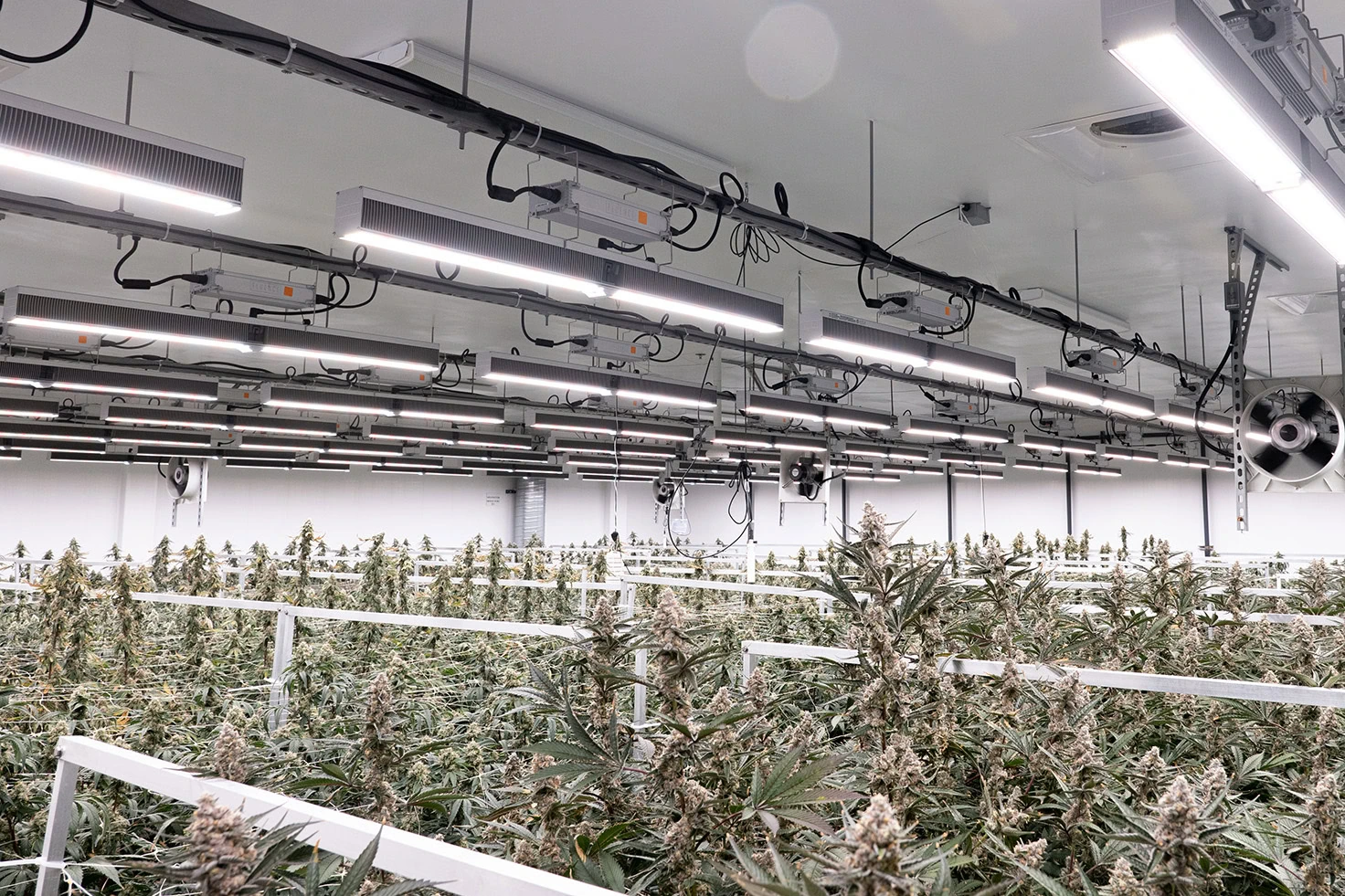
The relationship among lighting, HVAC and cultivation strategy makes energy optimization more complex than replacing one piece of equipment. A lighting change can affect heat load, irrigation demand, room conditions and how the crop responds. The strongest results come from evaluating these systems together rather than treating each as an isolated expense.
Capital is shifting from expansion toward phased optimization
Expansion has not disappeared. Emerging markets are still adding cultivation capacity, and multi-state operators continue to enter new territories. Even then, projects are generally more conservative in scale and scope than they were during the industry’s most aggressive growth period.
In mature markets, operators are more likely to acquire existing facilities, retrofit aging infrastructure or replace equipment that has become difficult and expensive to maintain. Some projects are driven by opportunity; others are driven by necessity.
Rivero frequently sees operators continue repairing equipment until the cost and disruption become harder to justify than replacement. A facility may replace power supplies repeatedly, for example, before determining that the fixtures themselves have reached the end of their practical service life.
Capital constraints are also changing how projects are structured.
“We see more phased buildouts than big projects all at once,” Rivero said. “They’re letting each phase pay back itself and then reinvesting into the next phase.”
This approach allows an operator to validate performance, manage cash flow and apply lessons from one phase before committing to the next. It also places greater importance on accurate ROI projections and clearly defined success metrics.
“Operators should keep a close eye on depreciated equipment and deploy capital where it can generate the greatest return,” Isagholian said.
That return may come through expansion within an existing facility, particularly when fixed costs can be distributed across additional production. It may also come through improvements that increase yield, protect quality, reduce labor requirements, lower utility consumption or decrease maintenance costs.
Lighting illustrates this transition. According to the 2025 State of the Cannabis Lighting Market report, LED use in flower increased from 15% in 2016 to 78% in 2025, while HPS use fell from 62% to 23%. Among cultivators not already using LEDs in flower, 60% planned to adopt them within 12 months and another 16% were considering doing so.
Utility incentives can improve retrofit economics. In the same report, 28% of participants said they had applied for and received rebates, while another 19% had submitted applications.
The potential return is facility-specific. Electricity rates, fixture efficacy, lighting design, HVAC interaction, utility rebates and cultivation practices all affect the outcome. An LED retrofit should not be treated as an automatic guarantee of higher yield, better quality or a specific energy reduction.
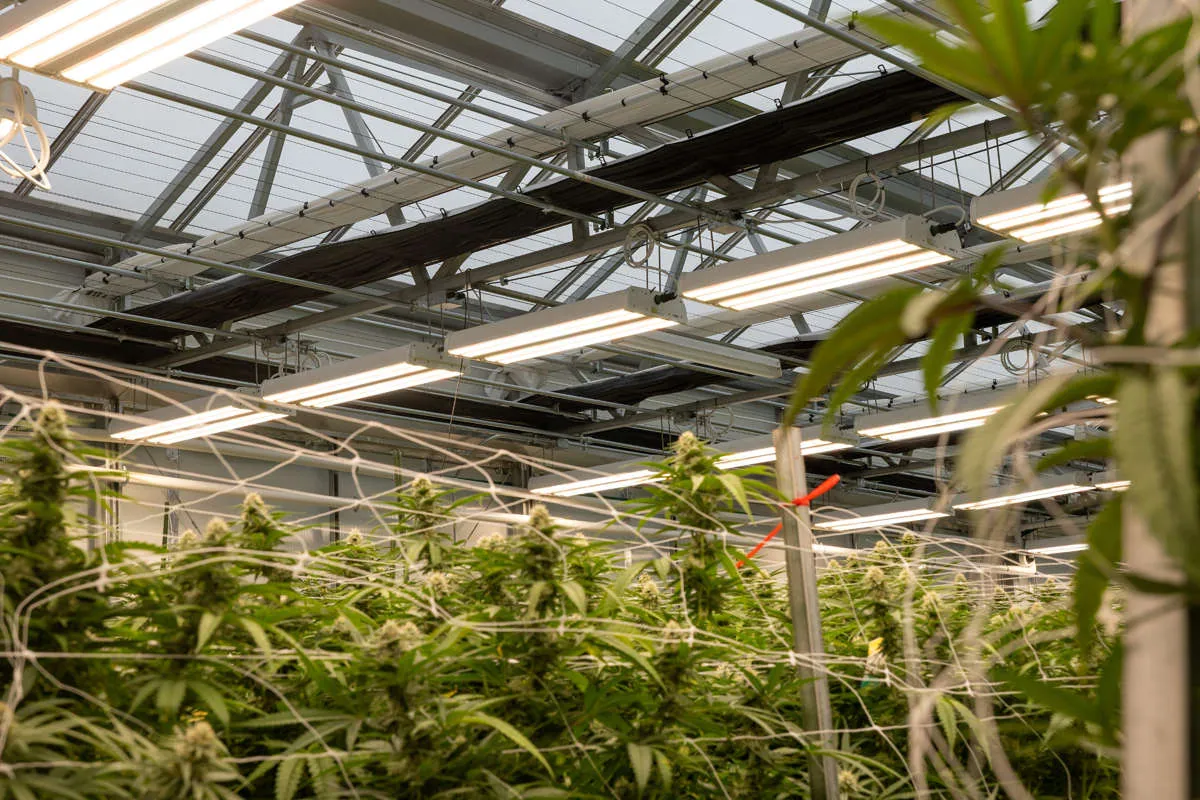
Real-world results can still demonstrate what is possible. During the early stages of Cannara Biotech’s transition from HPS to dimmable LEDs, the company reported energy-efficiency savings of 25%–30%. Cannara also used the greater flexibility of dimmable LED lighting to begin vegging and flowering plants in the same rooms, reducing plant movement and creating more adaptable cultivation space.
That type of operational flexibility can be as important as the direct reduction in energy use.
Efficiency must protect quality and market demand
Reducing cost per pound is important but producing an inexpensive crop that buyers do not want is not operational efficiency.
Cultivators must align production decisions with their commercial model. Some operators primarily supply wholesale brokers and produce the cultivars, quantities and specifications those buyers request. Others have built consumer brands capable of creating demand for proprietary genetics or a distinct product experience.
The difference is similar to the one seen in other consumer-product industries. Some companies compete by building a recognizable brand that attracts customers and creates demand for new products. Others compete by producing a consistent, specification-driven product at a competitive price, often for distributors, retailers or private-label buyers. Cannabis cultivators face a comparable choice: build demand around a distinctive brand or focus on reliably supplying products that buyers already want.
“Not only do you have to be good at growing, but then you have to be good at building the brand, marketing it, selling it and maintaining relationships with retail partners,” Rivero said.
That requires capabilities far beyond cultivation. A vertically integrated company may need sales, marketing, distribution and retail infrastructure in addition to an effective production team. A cultivation-focused wholesaler may make a different strategic choice, concentrating on dependable execution and producing what established buyers already demand.
Neither model is inherently better, but each changes the way the operator should evaluate efficiency, genetics and capital investment.
Isagholian describes the companies capable of setting trends and creating demand as “innovators, market makers and tastemakers.” Operators that can monetize those capabilities may earn stronger margins, generate higher demand or improve sell-through.
Lighting and other cultivation systems must support those commercial objectives. The 2025 State of the Cannabis Lighting Market report found that 76% of commercial growers ranked crop quality among their three leading priorities for using LEDs. Yield, energy efficiency, scientific research, fixture price and product warranty also influenced purchasing decisions.
Those findings illustrate the balance cultivators are trying to achieve. They need to control costs without treating quality, consistency and crop performance as secondary considerations.
The best investments protect the systems that determine success
When capital is limited, Rivero recommends prioritizing the people and systems whose failure would have the greatest consequences for the crop and business.
“The quality of the team and the quality of your crucial component systems are the two most important things,” he said.
Those systems include lighting, HVAC, dehumidification, irrigation, fertigation and environmental controls. Operators can evaluate each one by asking several practical questions:
Would a failure materially threaten the crop or interrupt production?
Is the current system creating excessive energy, labor, repair or maintenance costs?
Could an upgrade improve yield, quality, consistency or facility flexibility?
Can the business define and measure the expected return?
Does the supplier provide the reliability, warranty and support required for a commercial operation?
Fluence helps cultivators evaluate lighting within this larger operating system. Fixture price is only one part of that evaluation. Lighting efficacy, intensity, uniformity, dimming capabilities, heat load, HVAC interaction, reliability, warranty support and available utility incentives all contribute to the investment’s long-term value.
The same is true of the expertise behind the technology. Lighting decisions can alter irrigation demand, environmental targets, plant morphology and cultivation workflows. Technical and cultivation support can help an operator manage those interactions and capture more value from the equipment.
For Isagholian, a commercial lighting platform should deliver reliable crop performance while remaining practical to operate, maintain and support. For Rivero, the larger question is whether the purchase creates more value than a lower-cost alternative over its operating life.
“There’s saving money, and then there’s maximizing your money,” Rivero said. “A lot of people get into the trap of spending less and thinking they’re going to be more successful, instead of asking, ‘How much can this dollar get me?’”
The next phase of commercial cannabis cultivation will not be defined solely by larger facilities, more fixtures or greater production capacity. It will be defined by how intelligently operators use the facilities, people, systems and capital they already have.
Optimization does not mean minimizing every expense. It means understanding which costs create value, which processes can be improved, and which investments protect both the crop and the business over the long term.
Frequently asked questions
What are the biggest operating costs in commercial cannabis cultivation?
Labor and energy are among the largest controllable costs for indoor and controlled-environment cultivators. Their exact share varies by facility design, climate, production model and level of automation. Nutrients, irrigation, maintenance, testing, packaging and regulatory compliance also contribute to the final cost per pound.
How can cannabis cultivators reduce production costs without sacrificing quality?
Cultivators can evaluate recurring labor touches, nutrient formats, irrigation practices, room utilization, automation, environmental controls and equipment efficiency. The objective is to eliminate activities and expenses that do not contribute meaningfully to yield, quality, consistency or sell-through.
Why are cannabis cultivators moving from expansion to optimization?
Capital is more selective, margins are tighter and many mature markets already have substantial cultivation capacity. Operators are consequently prioritizing phased buildouts, retrofits, equipment upgrades and operational improvements that can produce measurable returns before committing to additional expansion.
How should cultivators prioritize capital investments?
Cultivators should begin with the people and critical systems whose failure would most directly threaten the crop or business. Lighting, HVAC, dehumidification, irrigation and environmental controls should be evaluated for reliability, operating cost, maintenance requirements and their effects on crop performance.
Can LED lighting reduce cannabis cultivation costs?
LED lighting can reduce lighting energy use and heat load compared with older HPS systems, but actual savings depend on fixture efficacy, lighting design, electricity rates, HVAC interaction and cultivation practices. Utility rebates may also reduce initial project costs. Operators should evaluate a retrofit according to its total operating value rather than fixture price alone.