L'intérêt de cultiver dans un environnement contrôlé est d'établir la prévisibilité et la stabilité. Il peut être difficile de contrôler tous les aspects d'une serre, mais les producteurs peuvent résoudre le problème critique des fluctuations de la lumière naturelle grâce aux LED. L'intégrale de lumière quotidienne (DLI) mesure la quantité de rayonnement photosynthétiquement actif (PAR) par mètre carré par photopériode et constitue l'un des facteurs les plus importants pour les cultivateurs. Il est connu que le PPFD a une forte corrélation avec la croissance des plantes, il est donc nécessaire d'utiliser un système qui offre un éclairage suffisant pour compléter le DLI local et maintenir une efficacité maximale...
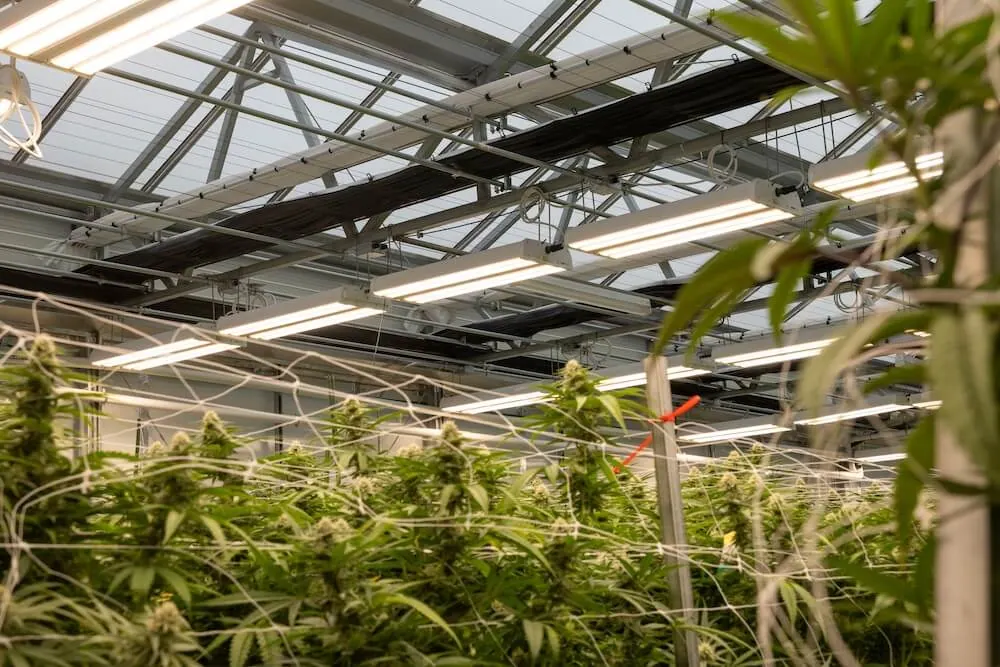
Retrofitting a greenhouse with LED lighting improves DLI management capabilities by lowering by-product heat associated with HPS systems and by stabilizing PPFD levels.
Concevoir pour la DLI
La plupart des cultivateurs sont conscients de leur DLI tout au long de l'année, mais l'éclairage d'appoint peut toujours être influencé par des facteurs extérieurs :
- Latitude: Facilities near the Arctic Circle experience radical DLI seasonality that equatorial locations do not.
- Climate: Seasonal weather patterns influence DLI independent of day length, as do altitude and coastal proximity.
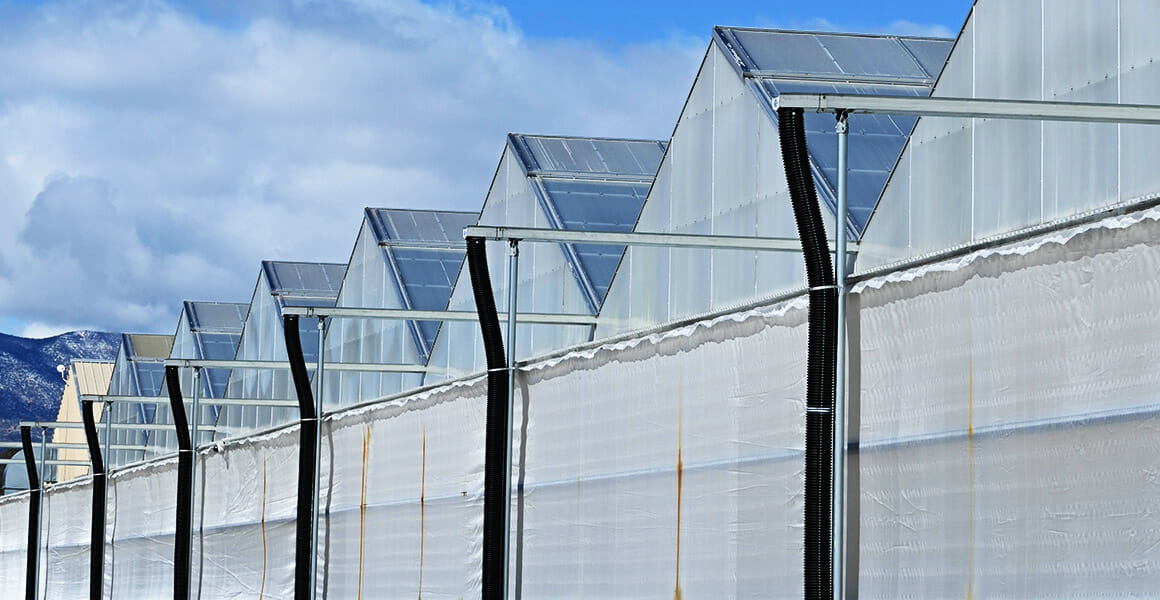
- Greenhouse features: Coverings limit 60 to 65 percent of the natural light transmission, depending on anti-reflective coatings and haze treatments. Infrastructure, like trusses, racks and fixtures also obstruct natural light.
Fortunately, you don’t have to use trial and error to calculate DLI changes. Climatologists now offer DLI maps for growing regions on a global scale. Outside DLI can top 65 mols in some areas. Meanwhile, the United Kingdom can experience an average DLI as low as 15 mols. By applying these maps in the system design process, lighting engineers can more precisely equalize month-to-month DLI and, therefore, better regulate production.
Fluence takes it one step further by using modeling software that predicts light conditions using historic weather patterns, which enables us to predict anomalies and variations that could impact crop conditions.
As one Fluence expert states, “Natural sunlight may still be suboptimal during the warmer seasons. But with low-heat LEDs from Fluence, cultivators can run their lighting systems into the late spring for production gains that weren’t possible with HPS.”
Finding the right lighting system involves more than just accounting for DLI. It considers crop requirements, production goals, operational factors and costs, and much more. This is why we recommend working with experts to guarantee that all facets of your lighting strategy are working towards your growing goals.
Les LED augmentent la DLI tout au long de l'année de deux manières principales :
1. Year-round Production Gains
HPS lighting is inherently and systematically flawed because of the amount of by-product heat it produces and the problems that can arise from this excess heat (or its sudden loss). Managing DLI with HPS systems means increasing light intensity during the winter, dropping it during the spring, then rarely using it during the fall. HPS lighting is only helpful for DLI when PPFD is critically low. The main goal is to lessen the extremity of the DLI bell curve by providing supplemental light.
LED lighting flattens the bell curve and provides consistent lighting and optimal PPFD through all seasons to approach a given crop’s saturation point. Additionally, because LED lighting is decoupled from heating, plants are able to thrive with ideal light saturation and without the fear of damaging crops through overheating, loss of heating, or radical shifts in the plant’s proximate climate
2. Daylight Harvesting Lowers Costs
When lighting exceeds a crop’s saturation threshold, growers not only waste energy and money but also risk photobleaching and plant damage, which is why daylight harvesting is crucial.
Daylight harvesting is the practice of using daylight to offset electrical lighting loads, which helps growers precisely meet PPFD set points without wasting resources. To that end, growers should consider installing a PAR meter and dimming their lights to accommodate moment-to-moment light levels, adjusting the DLI when needed.
Unfortunately, HPS systems are unable to modulate their PPF. But an LED retrofit with a PAR meter will allow you to modulate PPF quite easily while cutting down on electrical costs and maintaining the integrity of your lighting system.
Installer un éclairage respectueux des DLI grâce à Fluence
Although indoor operations provide much more control over crop cycles and production than outdoor farms do, greenhouse growers still must consider numerous external factors when optimizing their technology and procedures. Fluence approaches these factors through an academic lens in order to provide the most efficient lighting strategy to support your crops through every season.
If your crops have suffered under HPS lights and you are thinking of upgrading to high-quality LED lighting, contact us today so we can learn more about your individual needs.