Einfluss von Lichtintensität und -qualität
Plant growth and development, such as production of leaves, stems, roots, and floral organs is a result of primary metabolic processes. Byproducts of photosynthesis are shuttled throughout the plant and utilized in developing tissues. However, there are several other processes in plants such as coloration, warding off predators and infection, promoting pollination and symbiotic relationships, and defense against environmental conditions such as light and temperature. This is what we refer to as secondary metabolism. When these processes come into play, resources are diverted away from the primary metabolism (growth) and used to generate various attributes crucial to crop quality from a human consumption standpoint.
When we consume plants as food or medicine, many of these compounds can have powerful effects on basic body functions, alleviation of chronic disease symptoms, prevention of cancers, and provide relief to general psychological issues like anxiety and stress. Within controlled environments, we can influence these natural defense mechanisms in plants by manipulating light intensity and light quality. It’s important to consider that there is a tradeoff between encouraging plant growth (primary metabolism) and boosting production of secondary metabolites that may increase the quality of your crop. In this article, we focus on the secondary metabolites (flavonoids, terpenes, cannabinoids, and others) plants produce in response to environmental cues, how they affect crop quality, and what you can do to take advantage of these mechanisms.
Flavonoide
In plants, flavonoids primarily serve as insect attractants (coloring pollen), signals for forming relationships with soil microbes, antioxidants (which scavenge and eliminate compounds that may cause photobleaching and growth inhibition), and photo-protectants (which dissipate harmful wavelengths to protect cells). Anthocyanins are a class of flavonoids visible as a red to purple coloration of leaf tissue. Red-leaf lettuce and herbs often contain high amounts of these flavonoids, essentially functioning as sunblock for plants. When a leaf surface is exposed to blue (400-500nm) or ultraviolet (300-400nm) wavelengths of a high enough intensity (differs between species), the plant’s secondary metabolism is triggered for a few reasons. Blue and ultraviolet (UV) light have very high frequencies which means they carry a tremendous amount of energy that can be damaging to various cellular functions within the plant. In order to both protect these tissues from incoming energy as well as clean up any “free radicals” produced in the cell, plants will produce anthocyanins.
Accumulation of anthocyanins in response to blue or UV light scales up with increasing light intensity. Eventually, an equilibrium of photoprotection by anthocyanins and light capture by terpenoids (chlorophyll and carotenoids) is established. Its important to reinforce that this is a secondary process of the plant, which diverts energy away from growth. If the intensity is high enough, a visible change in crop coloration can be observed. Green light (500-550 nm) can reverse many functions in plants that are otherwise stimulated by exposure to blue light. Too much green light relative to blue can completely reverse this response. A red-leaf lettuce grown under a high proportion of green may not turn red at all. Those growing under HPS lamps (which have a very small proportion of blue light relative to green, especially compared to broad-spectrum LED fixtures) may struggle to stimulate anthocyanin production in salad crops. Incorporating a fixture providing additional blue-light isn’t likely to stimulate crop coloration unless there is significantly more blue than the portion of green supplied by the HPS. In this case, it may be useful to alter crop lighting just before harvest after the desired amount of growth has occurred. This is referred to as an “end-of-production” light treatment or EOP.
Recent EOP work by Dr. Garrett Owen and Dr. Roberto Lopez demonstrated an increase in coloration (from green to red/dark red) of four lettuce varieties when provided with 100 µmol/m2/s by supplemental LED lighting (red, blue, and a 1:1 ratio) for 5 to 7 days prior to harvest. Their research also demonstrated that incremental increases in supplemental light intensity from 0 to 100 µmol/m2/s resulted in increasing amounts of pigmentation. These varieties were also grown under HPS fixtures (providing an additional 70 µmol/m2/s), however, this EOP treatment was of insufficient light quality to reach the desired level of crop coloration for market. The take away message for implementing EOP treatments to increase crop quality is that crop coloration is more responsive to blue light so long as it is provided at a sufficient intensity. Furthermore, to prevent growth inhibition, this type of supplemental lighting is more efficient when used as an EOP treatment.
Terpene
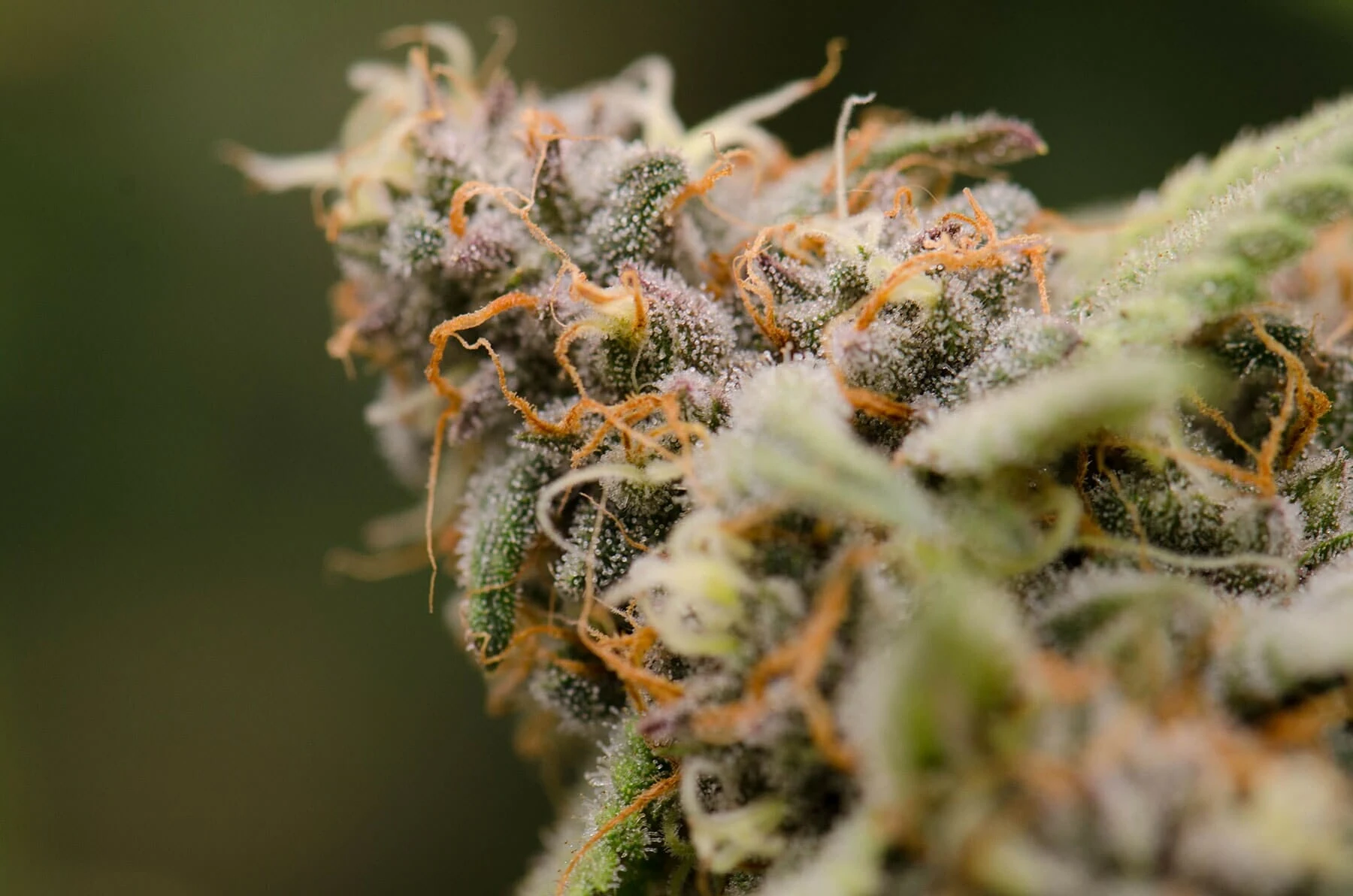
Im Gegensatz zu Flavonoiden, die meist als bitter empfunden werden, haben Terpene einen ausgeprägten Geruch und Geschmack. Es handelt sich um sehr flüssige Öle, die Blumen, Kräutern und Heilpflanzen wunderbare Eigenschaften verleihen und die Produktqualität erheblich steigern, wenn sie in ausreichenden Mengen produziert werden. So ist beispielsweise Limonen das wichtigste Terpen im ätherischen Öl von Zitronen und Myrcen bei Mangos. Die gleichen Terpene können auch in anderen Arten wie verschiedenen Kräutern und sogar Cannabis produziert werden. Die größte Konzentration findet sich in der Regel in den nicht drüsigen Trichomen (z. B. Blatthaare auf Tomaten- oder Cannabisblättern) und in den drüsigen Trichomen (z. B. die knolligen Köpfe auf Zuckerblättern und die Kelche von Cannabis). Die Auswirkungen verschiedener Wellenlängen auf die Terpenbiosynthese sind nur begrenzt erforscht, aber mehrere Pflanzenphysiologen glauben, dass bestimmte Wellenlängen für die Aktivierung der notwendigen Stoffwechselkomponenten erforderlich sind. Außerdem veranlasst eine höhere Lichtintensität bestimmte Pflanzen dazu, mehr Drüsentrichome zu bilden. Es gibt einige Hinweise darauf, dass diese zusätzlichen Trichome als Ort für die Sekretion von Flavonoiden zur Verteidigung gebildet werden (wie bereits erwähnt, schützen diese Verbindungen vor übermäßiger Lichtintensität und UV-Licht). Die vermehrte Synthese von Drüsentrichomen schafft neue Stellen für die Terpenbiosynthese und -speicherung, was die Gesamtkonzentration von Terpenen in verschiedenen Pflanzenarten beeinflussen kann. Insgesamt ist die Terpensynthese ein wichtiges Thema für Forscher, die die Auswirkungen von Lichtintensität und Lichtqualität untersuchen.
Cannabinoide
Cannabinoids are a unique class of compounds found only in Cannabis. These sticky resinous oils are produced within trichomes during the flowering period and are thought to both protect the developing flowers from insects (sticky trap) as well as excess heat under shifting solar conditions. There are over a hundred different cannabinoids including Δ9-tetrahyrdocannabinol (THC), cannabidiol (CBD), cannabigerol (CBG), cannabinol (CBN) and many others. CBG-A (the carboxylated acidic form of CBG) is the precursor substrate for production of THC and CBD. It does not produce the typical marijuana “high,” but certain researchers are evaluating specific medicinal effects, such as alleviating symptoms from neuropathy, degenerative brain disorders, glaucoma, certain cancers, and anxiety. Most varieties of Cannabis have been bred to produce high amounts of THC and/or CBD, leaving behind low concentrations of most other cannabinoids that carry many medicinal qualities. Due to the current legal status of Cannabis with most federal governments, there is very little scholarly research that investigates the effects of various wavelengths and intensity on production of cannabinoids. The work that has been done was with cultivars of inferior quality compared to anything on the market today. However, there is more and more peer-reviewed research being conducted on Cannabis, and as laws change quality research will be published in this area.
We do know that UV light and possibly even short wavelength (~400-420nm) blue light can stimulate production of cannabinoids, although production of these secondary metabolites will occur regardless and this effect is only a “boost” in production as opposed to being a requirement. We cannot say much about which wavelengths of light result in increased content of specific cannabinoids, however we are continually investigating the effects of different wavelengths on secondary metabolites.
Photo-Akklimatisierung
So long as carbon dioxide, water, and nutrients are not limiting growth of the plant and it is a fast-growing species, higher light intensities will result in faster growth and increased production of secondary metabolites. However, too high of a light intensity can be damaging to cells, especially in sensitive species, producing free radicals such as hydrogen peroxide within cells. On the surface, you might notice this effect as photobleaching (tan to white patches on leaves) if the plant is not photoacclimated to that intensity. Many growers notice this issue when they are transferring plants from a seedling propagation or rooting phase in which light intensity is low, into a highly productive phase under high light intensity. As a part of the photoacclimation process, highly productive or fast-growing species will likely accumulate more chlorophyll to harvest more light. If intensity is too high, production of various carotenoids (for more info, refer to […pigments & photoreceptors]) is increased to protect the photosynthetic reaction centers and dissipate some light.
This is why increasing light intensity can have diminishing returns since more light is dissipated in response to higher light intensity. To photoacclimate your plants productively with little to no photobleaching (which inhibits growth), it is best to incrementally increase light intensity or use a shade cloth for a week or two. Slowly acclimating plants to higher light intensities can be achieved using dimmable lights after determining what your desired PPFD will be (depending on your fixture capability and species) and creating a series of incremental increases in intensity (beginning slightly above the propagation intensity) over time. A less sophisticated way to achieve this same outcome (if your lights are not capable of dimming) would require you to start with the plant-lamp separation distance much larger than desired and then slowly move the lamp closer to the plants (or vice versa) over the same duration.
As previously mentioned, anthocyanins can accumulate in leaves of many species in response to blue or UV light of sufficient intensity. A similar mechanism protects the fruit of some crops such as tomatoes and peppers. When growing green peppers, you may notice that some fruit surfaces exposed to more light have patches of yellow to orange coloration. This accumulation of photoprotective carotenoids prevents damage to the fruit. Lycopene, an orange to red carotenoid, plays a similar role in tomato fruits. Just like most other light-induced secondary metabolites, production of these carotenoids occurs at a faster rate as light intensity increases.
Schlussfolgerung
Es ist bekannt, dass der Anteil der Wellenlängen, der den Pflanzen zugeführt wird, sowie die Intensität die photomorphogenen Ergebnisse sowie die Konzentrationen von Phytochemikalien (Sekundärmetaboliten) vollständig verändern. Mit zunehmender Lichtintensität wird die Produktion verschiedener Sekundärmetaboliten in den Pflanzen als eine Form des Schutzes induziert. Blaues und UV-Licht haben im Vergleich zu anderen Wellenlängen den stärksten Einfluss auf den Sekundärstoffwechsel, der mit der Intensität zunimmt. Vom Standpunkt der Produktion aus gesehen, verbessern diese Metaboliten häufig die Produktqualität, sowohl aufgrund ihrer medizinischen Vorteile für den Menschen als auch aufgrund ihrer färbenden Wirkung auf die Pflanzen. Dies hängt von der Genetik ab, die bei den einzelnen Arten sehr unterschiedlich ist. Einige Arten sind toleranter gegenüber dieser Reaktion und benötigen höhere Lichtintensitäten, um eine Reaktion zu zeigen, während dies bei anderen nicht der Fall ist. Eine bewährte Methode, um "das Beste aus beiden Welten" zu erhalten, ist eine EOP-Behandlung, bei der die Pflanzen unter optimalen Bedingungen für den Primärstoffwechsel (Breitspektrum) wachsen und sich entwickeln und dann vor der Ernte, nachdem das Hauptwachstum stattgefunden hat, einer den Sekundärstoffwechsel fördernden Lichtbehandlung (höhere Intensität oder spezifische Wellenlängen) unterzogen werden. Der wichtigste Aspekt, den man sich merken sollte, ist, dass der Sekundärstoffwechsel Ressourcen vom Pflanzenwachstum abzieht. Bei der Auswahl oder Änderung Ihres Beleuchtungssystems sollten Sie diese angeborenen Reaktionen der Pflanzen berücksichtigen, um sicherzustellen, dass Ihr System für die gewünschte Art und den Markt optimal ist.