Influencia de la intensidad y la calidad de la luz
El crecimiento y el desarrollo de las plantas, como la producción de hojas, tallos, raíces y órganos florales, son el resultado de procesos metabólicos primarios. Los subproductos de la fotosíntesis se distribuyen por toda la planta y se utilizan en los tejidos en desarrollo. Sin embargo, existen otros procesos en las plantas, como la coloración, la protección frente a depredadores e infecciones, el fomento de la polinización y las relaciones simbióticas, y la defensa frente a condiciones ambientales como la luz y la temperatura. A esto es a lo que nos referimos como metabolismo secundario. Cuando estos procesos entran en juego, los recursos se desvían del metabolismo primario (el crecimiento) y se utilizan para generar diversas características cruciales para la calidad de los cultivos desde el punto de vista del consumo humano.
Cuando consumimos plantas como alimento o medicina, muchos de estos compuestos pueden tener efectos potentes sobre las funciones básicas del organismo, el alivio de los síntomas de enfermedades crónicas, la prevención de cánceres y proporcionar alivio a problemas psicológicos generales como la ansiedad y el estrés. En entornos controlados, podemos influir en estos mecanismos de defensa naturales de las plantas manipulando la intensidad y la calidad de la luz. Es importante tener en cuenta que existe un equilibrio entre fomentar el crecimiento de las plantas (metabolismo primario) y potenciar la producción de metabolitos secundarios que pueden aumentar la calidad de tu cultivo. En este artículo, nos centramos en los metabolitos secundarios (flavonoides, terpenos, cannabinoides y otros) que las plantas producen en respuesta a señales ambientales, cómo afectan a la calidad del cultivo y qué puedes hacer para aprovechar estos mecanismos.
Flavonoides
En las plantas, los flavonoides actúan principalmente como atrayentes de insectos (dando color al polen), señales para establecer relaciones con los microorganismos del suelo, antioxidantes (que capturan y eliminan compuestos que pueden provocar el fotoblanqueo y la inhibición del crecimiento) y fotoprotectores (que disipan las longitudes de onda nocivas para proteger las células). Las antocianinas son una clase de flavonoides que se manifiestan como una coloración de rojo a púrpura en el tejido foliar. La lechuga de hoja roja y las hierbas aromáticas suelen contener grandes cantidades de estos flavonoides, que actúan esencialmente como protector solar para las plantas. Cuando la superficie de una hoja se expone a longitudes de onda azules (400-500 nm) o ultravioletas (300-400 nm) con una intensidad lo suficientemente alta (que varía según la especie), se activa el metabolismo secundario de la planta por varias razones. La luz azul y la ultravioleta (UV) tienen frecuencias muy altas, lo que significa que transportan una enorme cantidad de energía que puede resultar perjudicial para diversas funciones celulares de la planta. Con el fin tanto de proteger estos tejidos de la energía entrante como de eliminar los «radicales libres» producidos en la célula, las plantas producen antocianinas.
La acumulación de antocianinas en respuesta a la luz azul o ultravioleta aumenta a medida que crece la intensidad luminosa. Finalmente, se establece un equilibrio entre la fotoprotección que proporcionan las antocianinas y la captura de luz por parte de los terpenoides (clorofila y carotenoides). Es importante destacar que se trata de un proceso secundario de la planta, que desvía energía del crecimiento. Si la intensidad es lo suficientemente alta, se puede observar un cambio visible en la coloración del cultivo. La luz verde (500-550 nm) puede revertir muchas funciones en las plantas que, de otro modo, se verían estimuladas por la exposición a la luz azul. Un exceso de luz verde en relación con la azul puede revertir por completo esta respuesta. Una lechuga de hoja roja cultivada bajo una alta proporción de luz verde puede que no se vuelva roja en absoluto. Quienes cultivan bajo lámparas HPS (que tienen una proporción muy pequeña de luz azul en relación con la verde, especialmente en comparación con los dispositivos LED de amplio espectro) pueden tener dificultades para estimular la producción de antocianinas en los cultivos de lechuga. Es poco probable que la incorporación de una luminaria que proporcione luz azul adicional estimule la coloración de los cultivos, a menos que haya una cantidad significativamente mayor de luz azul que la proporción de luz verde suministrada por la lámpara HPS. En este caso, puede resultar útil modificar la iluminación de los cultivos justo antes de la cosecha, una vez que se haya alcanzado el nivel de crecimiento deseado. A esto se le denomina tratamiento lumínico de «fin de producción» o EOP.
Un estudio reciente sobre la optimización del periodo de maduración (EOP) realizado por el Dr. Garrett Owen y el Dr. Roberto López demostró un aumento de la coloración (de verde a rojo/rojo oscuro) en cuatro variedades de lechuga cuando se les proporcionó una intensidad de 100 µmol/m²/s mediante iluminación LED complementaria (roja, azul y en una proporción de 1:1) durante un periodo de entre 5 y 7 días antes de la cosecha. Su investigación también demostró que los aumentos graduales de la intensidad de la luz suplementaria, de 0 a 100 µmol/m²/s, dieron lugar a un aumento de la pigmentación. Estas variedades también se cultivaron bajo lámparas HPS (que proporcionaban 70 µmol/m²/s adicionales); sin embargo, este tratamiento de EOP no ofrecía una calidad de luz suficiente para alcanzar el nivel deseado de coloración del cultivo para su comercialización. La conclusión clave para la aplicación de tratamientos EOP destinados a mejorar la calidad de los cultivos es que la coloración de estos responde mejor a la luz azul, siempre que se proporcione con una intensidad suficiente. Además, para evitar la inhibición del crecimiento, este tipo de iluminación suplementaria resulta más eficaz cuando se utiliza como tratamiento EOP.
Terpenos
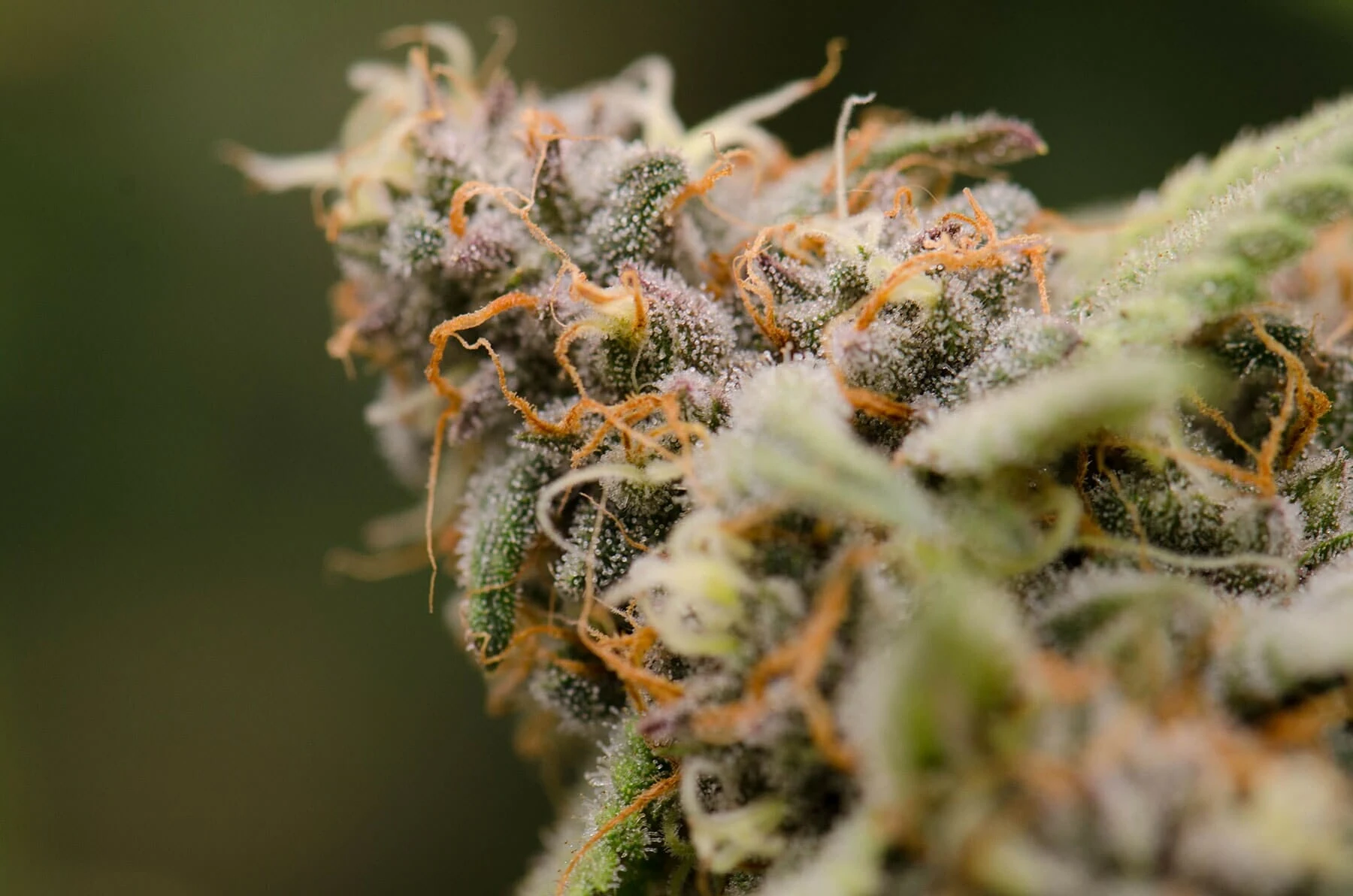
A diferencia de los flavonoides, que se perciben sobre todo como amargos, los terpenos tienen olores y sabores distintivos. Son aceites muy fluidos que confieren atributos maravillosos a flores, hierbas y plantas medicinales y aumentan enormemente la calidad del producto si se producen en cantidades suficientes. Por ejemplo, el limoneno es el principal terpeno presente en el aceite esencial de los limones y el mirceno en el de los mangos. Estos mismos terpenos pueden producirse en otras especies, como diversas hierbas e incluso el Cannabis. La mayor concentración se encuentra normalmente en los tricomas no glandulares (como los pelos de las hojas del tomate o del Cannabis) y en los tricomas glandulares (como las cabezas bulbosas que se ven en las hojas de azúcar y en los cálices del Cannabis). Se han realizado pocas investigaciones sobre el impacto de las distintas longitudes de onda en la biosíntesis de terpenos, pero varios fisiólogos de plantas creen que se requieren longitudes de onda específicas para la activación de los componentes metabólicos necesarios. Además, el aumento de la intensidad de la luz hace que algunas plantas produzcan más tricomas glandulares. Existen pruebas de que estos tricomas adicionales se generan como lugar de secreción de flavonoides defensivos (como ya se ha mencionado, estos compuestos protegen contra el exceso de intensidad luminosa y la luz ultravioleta). El aumento de la síntesis de tricomas glandulares crea nuevos lugares para la biosíntesis y el almacenamiento de terpenos, lo que puede influir en las concentraciones generales de terpenos en varias especies de plantas. En general, la síntesis de terpenos es un tema candente para los investigadores que estudian los efectos de la intensidad y la calidad de la luz.
Cannabinoides
Los cannabinoides son una clase única de compuestos que solo se encuentran en el cannabis. Estos aceites resinosos y pegajosos se producen en el interior de los tricomas durante el periodo de floración y se cree que protegen las flores en desarrollo tanto de los insectos (trampa pegajosa) como del exceso de calor en condiciones solares cambiantes. Existen más de un centenar de cannabinoides diferentes, entre los que se incluyen el Δ9-tetrahidrocannabinol (THC), el cannabidiol (CBD), el cannabigerol (CBG), el cannabinol (CBN) y muchos otros. El CBG-A (la forma ácida carboxilada del CBG) es el sustrato precursor para la producción de THC y CBD. No produce el típico «subidón» de la marihuana, pero algunos investigadores están evaluando efectos medicinales específicos, como el alivio de los síntomas de la neuropatía, los trastornos cerebrales degenerativos, el glaucoma, ciertos tipos de cáncer y la ansiedad. La mayoría de las variedades de cannabis se han seleccionado para producir altas cantidades de THC y/o CBD, dejando de lado las bajas concentraciones de la mayoría de los demás cannabinoides que poseen numerosas cualidades medicinales. Debido a la situación legal actual del cannabis en la mayoría de los gobiernos federales, hay muy pocos estudios académicos que investiguen los efectos de diversas longitudes de onda e intensidades en la producción de cannabinoides. El trabajo que se ha realizado se ha llevado a cabo con variedades de calidad inferior en comparación con las que se encuentran actualmente en el mercado. Sin embargo, cada vez se realizan más investigaciones revisadas por pares sobre el cannabis y, a medida que cambien las leyes, se publicarán estudios de calidad en este ámbito.
Sabemos que la luz ultravioleta y, posiblemente, incluso la luz azul de longitud de onda corta (~400-420 nm) pueden estimular la producción de cannabinoides, aunque la producción de estos metabolitos secundarios se producirá de todos modos y este efecto solo supone un «impulso» a la producción, en lugar de ser un requisito imprescindible. No podemos afirmar con certeza qué longitudes de onda de luz dan lugar a un mayor contenido de cannabinoides específicos; sin embargo, seguimos investigando continuamente los efectos de las diferentes longitudes de onda sobre los metabolitos secundarios.
Fotoaclimatación
Siempre que el dióxido de carbono, el agua y los nutrientes no limiten el crecimiento de la planta y se trate de una especie de crecimiento rápido, unas intensidades lumínicas más elevadas darán lugar a un crecimiento más rápido y a una mayor producción de metabolitos secundarios. Sin embargo, una intensidad lumínica demasiado alta puede resultar perjudicial para las células, especialmente en especies sensibles, ya que genera radicales libres, como el peróxido de hidrógeno, en el interior de las células. A simple vista, este efecto puede observarse como fotoblanqueo (manchas de color tostado a blanco en las hojas) si la planta no está fotoaclimatada a esa intensidad. Muchos cultivadores observan este problema cuando trasladan las plantas desde una fase de propagación de plántulas o de enraizamiento, en la que la intensidad luminosa es baja, a una fase altamente productiva bajo una intensidad luminosa elevada. Como parte del proceso de fotoaclimatación, es probable que las especies altamente productivas o de crecimiento rápido acumulen más clorofila para captar más luz. Si la intensidad es demasiado alta, aumenta la producción de diversos carotenoides (para más información, véase […pigmentos y fotorreceptores]) con el fin de proteger los centros de reacción fotosintética y disipar parte de la luz.
Por eso, aumentar la intensidad luminosa puede tener un rendimiento decreciente, ya que se disipa más luz a medida que aumenta la intensidad. Para aclimatar tus plantas a la luz de forma eficaz y con poco o ningún fotoblanqueo (que inhibe el crecimiento), lo mejor es aumentar la intensidad luminosa de forma gradual o utilizar una malla de sombreo durante una o dos semanas. La aclimatación gradual de las plantas a intensidades lumínicas más altas se puede lograr utilizando luces regulables, tras determinar cuál será el PPFD deseado (en función de la capacidad de tus luminarias y de las especies) y creando una serie de aumentos graduales de la intensidad (comenzando ligeramente por encima de la intensidad de propagación) a lo largo del tiempo. Una forma menos sofisticada de lograr este mismo resultado (si tus luces no son regulables) consistiría en empezar con una distancia entre la planta y la lámpara mucho mayor de lo deseado y, a continuación, acercar poco a poco la lámpara a las plantas (o viceversa) durante el mismo periodo de tiempo.
Como se ha mencionado anteriormente, las antocianinas pueden acumularse en las hojas de muchas especies en respuesta a la luz azul o ultravioleta de intensidad suficiente. Un mecanismo similar protege los frutos de algunos cultivos, como los tomates y los pimientos. Al cultivar pimientos verdes, es posible que observes que algunas superficies de los frutos expuestas a más luz presentan manchas de color amarillo a naranja. Esta acumulación de carotenoides fotoprotectores evita que los frutos sufran daños. El licopeno, un carotenoide de color naranja a rojo, desempeña un papel similar en los tomates. Al igual que la mayoría de los demás metabolitos secundarios inducidos por la luz, la producción de estos carotenoides se produce a un ritmo más rápido a medida que aumenta la intensidad de la luz.
Conclusión
Sabemos que la proporción de longitudes de onda suministradas a las plantas, así como la intensidad, modifican completamente los resultados fotomorfogénicos, así como las concentraciones de fitoquímicos (metabolitos secundarios). El aumento de la intensidad de la luz induce la producción de diversos metabolitos secundarios en las plantas como forma de protección. La luz azul y ultravioleta son las que más influyen en el metabolismo secundario en comparación con otras longitudes de onda, y esto varía con la intensidad. Desde el punto de vista de la producción, estos metabolitos suelen mejorar la calidad del producto, tanto por sus beneficios medicinales para el ser humano como por sus efectos en la coloración de los cultivos. Esto difiere en función de la genética en juego, con mucha variabilidad entre especies. Algunas especies son más tolerantes a esta respuesta y requieren mayores intensidades de luz para mostrar alguna respuesta, mientras que otras no. Un método probado para "obtener lo mejor de ambos mundos" es utilizar un tratamiento EOP en el que las plantas crecen y se desarrollan en condiciones óptimas para el metabolismo primario (amplio espectro), y luego se transfieren bajo un tratamiento de luz que promueve el metabolismo secundario (mayor intensidad o longitudes de onda específicas) antes de la cosecha después de que se haya producido un crecimiento importante del cultivo. En general, el aspecto más importante que hay que recordar es que el metabolismo secundario desvía recursos del crecimiento de la planta. A la hora de seleccionar o realizar cualquier cambio en su sistema de iluminación, tenga en cuenta estas respuestas innatas de la planta para asegurarse de que su sistema es óptimo para la especie y el mercado previstos.