Cannabis ist aus photobiologischer Sicht eine einzigartige Pflanze, da sie mehr Licht aufnehmen kann als die meisten kommerziellen Kulturpflanzen, ohne dass dies nennenswerte negative Auswirkungen hat. Da Cannabis sogar noch mehr seiner wertvollen Inhaltsstoffe produziert, wenn es an seine Grenzen gebracht wird, hat unser Team kürzlich in einem Webinar zum Thema „Der Einfluss von Spektren auf die Cannabisproduktion in Innenräumen und Gewächshäusern“ eine Reihe bahnbrechender Erkenntnisse vorgestellt.
In Zusammenarbeit mit der Wageningen University & Research und Compassionate Cultivation ist Fluence stolz darauf, die Ergebnisse einer Reihe bahnbrechender photobiologischer Forschungsstudien bekannt zu geben, in denen untersucht wurde, wie sich Lichtspektren auf das Wachstum und die Entwicklung von Cannabis auswirken. Diese Studien sind die ersten ihrer Art und liefern wichtige Erkenntnisse für kommerzielle Cannabiszüchter, die ihre Produktion maximieren, die Produktqualität verbessern und die Effizienz ihrer Betriebe optimieren möchten.
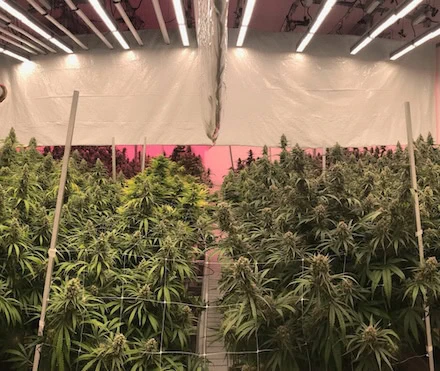
Die Geheimnisse der Photobiologie von Cannabis entschlüsseln
Cannabis ist eine hochwertige Kulturpflanze in der kommerziellen Landwirtschaft, doch liegen derzeit nur sehr wenige wissenschaftliche Erkenntnisse vor, die als Grundlage für seine Vermarktung dienen könnten. Aus diesem Grund hat sich das Forschungsteam von Fluence darauf konzentriert, Erkenntnisse über Cannabis zu gewinnen, die sich unmittelbar in die Praxis umsetzen lassen. Die Forschung erfolgte im Rahmen von zwei Studien, die sich damit befassten, wie sich die gewünschten Eigenschaften von Cannabis in kommerziellen Gewächshaus- und Indoor-Anlagen durch den Einsatz von Beleuchtung weiter verbessern lassen.
Jedes Experiment wurde sorgfältig konzipiert, um die Auswirkungen von Breitband-Weißlicht, Breitband-Rosa-Licht und Schmalband-Rot-/Blaulicht zu untersuchen, die bei der VYPR 3p-Serie zum Einsatz kamen. Jede Lichtbehandlung unterscheidet sich in ihrer spektralen Zusammensetzung. Der Zweck der Untersuchung jeder dieser Behandlungen besteht darin, besser zu verstehen, welches Lichtspektrum für die jeweiligen Gewächshaus- oder Innenraumumgebungen am besten geeignet ist – für Cannabis vom Typ I (hoher THC-Gehalt), vom Typ III (hoher CBD-Gehalt) und vom Typ II (ausgewogenes Verhältnis von THC und CBD).
Abbildung 1: Fluence-Top-Lichtspektren, die in Forschungsstudien eingesetzt werden. Zum Vergrößern anklicken.
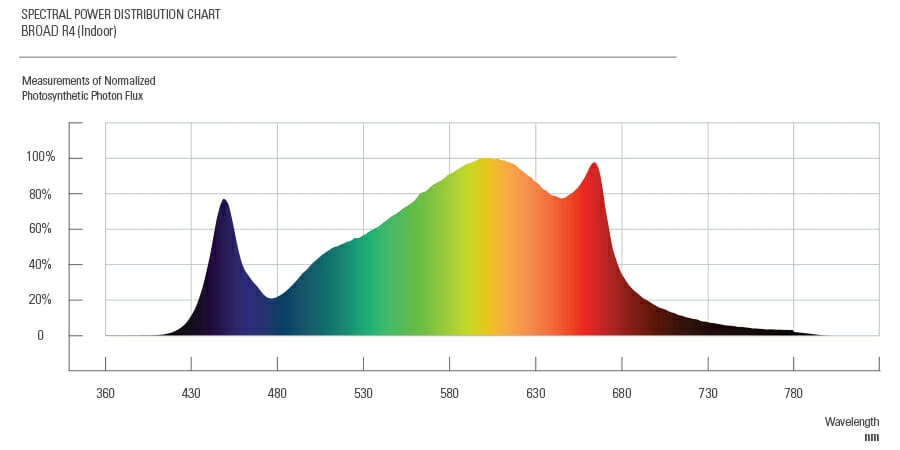
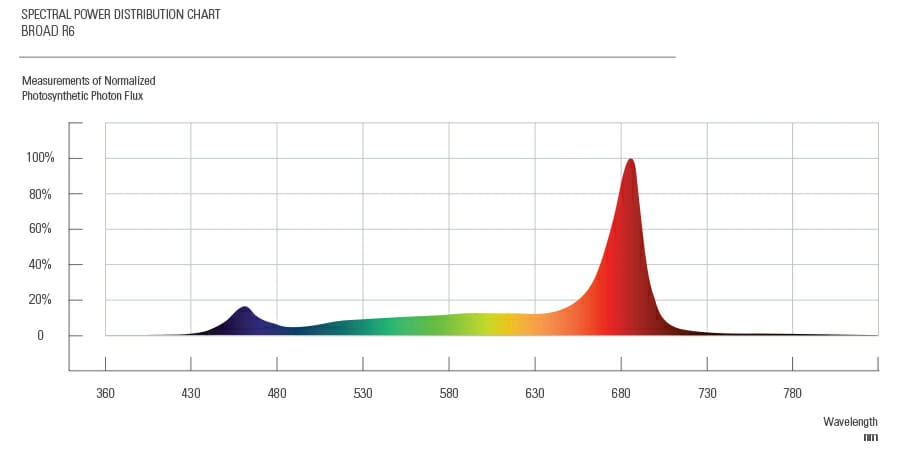
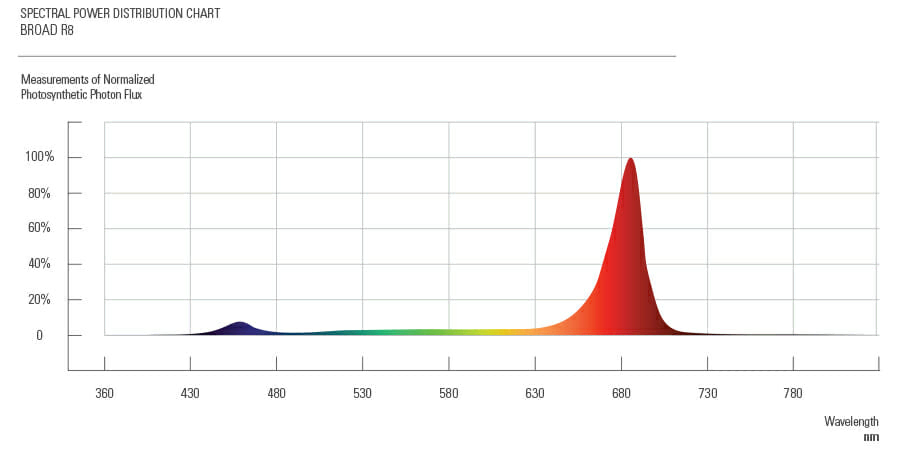
Anhand dieser Studien konnte Fluence acht wichtige Erkenntnisse zur Steuerung des Wachstums von Cannabis gewinnen, die bei korrekter Anwendung tiefgreifende Auswirkungen auf die kommerzielle Cannabisproduktion haben können:
-
-
-

Abbildung 2: Auswirkungen von Rotlicht auf die Terpenproduktion In erster Linie hat Fluence nachgewiesen, dass bei einigen Sorten ein geringerer Anteil an rotem Licht mit einem Anstieg der Cannabinoidkonzentration einhergeht.
- Noch interessanter ist, dass sich mit rotem Licht das Terpenverhältnis in Cannabis manipulieren lässt (siehe Abbildung 2).
- Bei niedriger zusätzlicher Lichtintensität im Gewächshaus erzielen alle getesteten Fluence-Spektren vergleichbare Erträge.
- In Innenräumen - wo Lichtquellen mit höherer Intensität emittieren - ergaben die Spektren Broad White R4 und R8 höhere Werte als R6.
- In Innenräumen erzielte R4 bei bestimmten Cannabissorten vom Typ I mit hohem THC-Gehalt bis zu 17 % höhere Erträge als die nächstbeste Spektrallösung.
- In Innenräumen lieferte R4 durchweg höhere Erträge und hat den zusätzlichen Vorteil, dass es kein Photobleaching verursacht, während Spektren wie R8, die einen wesentlich höheren Anteil an rotem Licht haben, Photobleaching verursachen.
- Bei beiden Arten von Umgebungen ist die Empfindlichkeit des Spektrums von der Sorte abhängig.
- Wenn man diese Erkenntnisse auf die Umgebung eines Anbaubetriebes anwendet, können R4- und R8-Beleuchtung eingesetzt werden, um die geschätzte Bruttomarge des Anbaubetriebes erheblich zu erhöhen.
-
-

Diese Erkenntnisse sind von großer Bedeutung, da sie von Züchtern, die spezifische chemische und morphologische Effekte in ihren Cannabispflanzen erzielen wollen, sofort genutzt werden können. In beiden Studien konnte Fluence die Tatsache bestätigen, dass Lichtspektren einen erheblichen Einfluss auf Ihre Cannabispflanzen haben können, unabhängig davon, ob sie im Innenbereich oder in einem Gewächshaus angebaut werden.
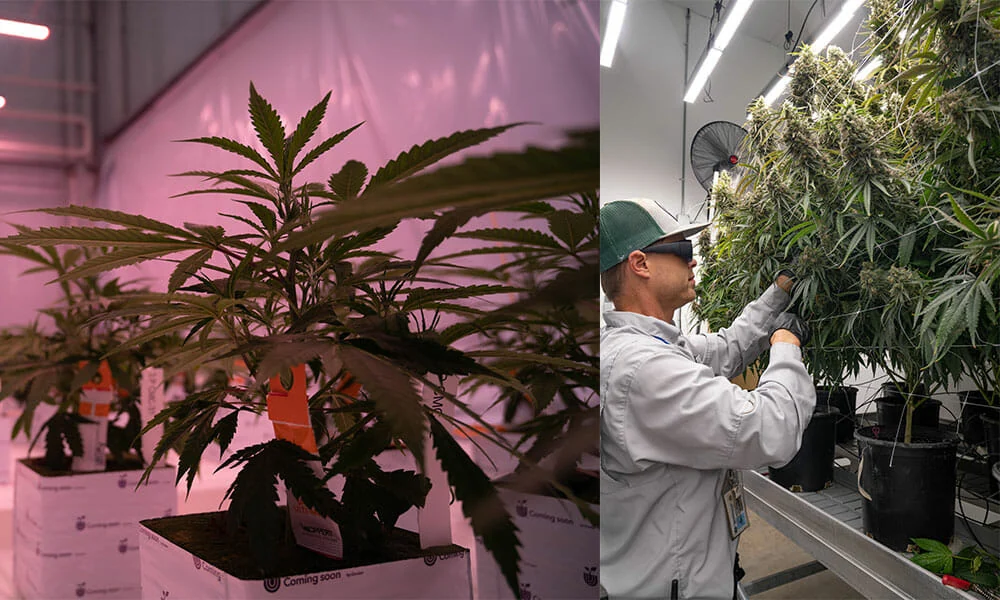
Was bedeutet das für Ihr Wachstum?
Ein wesentlicher Vorteil des Webinars bestand darin, dass die Landwirte ihre Fragen in Echtzeit stellen konnten und so genau erfuhren, wie sie die Forschungsergebnisse von Fluence nutzen können, um die Reaktion der Pflanzen und die Produktivität in ihren jeweiligen Anbaubedingungen zu beeinflussen. Hier einige Beispiele für Fragen, die während des Webinars gestellt wurden:
F: Welches Lichtspektrum ist für meine Cannabispflanzen am besten geeignet?
A: Das hängt stark von Ihren Anbauzielen ab. Wie die obigen Ergebnisse zeigen, werden Cannabinoide, Terpene und Ertrag in unterschiedlichem Maße von der Wahl des Spektrums beeinflusst. Ganz gleich, ob Sie Ihre Ernte als Blüten oder als Extrakt verkaufen möchten – Fluence kann Ihnen dabei helfen, die richtigen Spektren zu ermitteln, um Ihre Investition in die Beleuchtung optimal zu nutzen.
F: Sollte ich UV- oder Fernrot-Beleuchtung verwenden?
A: Zwar besteht außerhalb von PAR großes Interesse, doch gibt es ein deutliches Missverständnis hinsichtlich des Nutzens dieser Lichtquellen und ihrer Auswirkungen auf den Ertrag oder die Pflanzenchemie. Fernrotes Licht eignet sich gut zur Auslösung einer Schattenvermeidungsreaktion und sorgt bei Cannabispflanzen für eine größere Kronenfläche sowie eine Streckung der Pflanzen, was für Sorten mit dichtem Blattwerk von Vorteil sein kann. Das Forschungsteam von Fluence wird dieses Thema in einem bevorstehenden Webinar ausführlicher behandeln.
F: Wie wirken sich die Spektren auf die Pflanzenmorphologie aus?
A: In Innenräumen traten keine erkennbaren Anzeichen einer Streckung auf. Im Gewächshaus kam es unter der R8-Beleuchtungsbehandlung jedoch zu einer deutlichen Ausdehnung der Kronen. Unsere Arbeitshypothese lautet, dass eine geringere Pflanzdichte im Gewächshaus es den Pflanzen in dieser Studie ermöglichte, sich stärker auszubreiten und zu strecken. In der Innenraumstudie wurde zudem unter Spektren mit einem höheren Rotlichtanteil eine Photobleiche beobachtet, die sich negativ auf den Marktwert der geernteten Blüten auswirkte.
F: „Wie hoch sollte die Lichtintensität für den Cannabisanbau in meiner Region sein?“
A: In dieser Studie wurde im Gewächshaus eine PPFD von 480–500 und im Innenbereich eine PPFD von 1.100 verwendet. Wir haben gesehen, dass viele Erzeuger die Lichtintensität erfolgreich weit über diese Werte hinaus steigern, doch die Toleranz gegenüber hoher Lichtintensität kann sortenabhängig sein. Wenn Sie eine Zusatzbeleuchtung im Gewächshaus in Betracht ziehen, ist es immer am besten, die Lichtdurchlässigkeit Ihres Gewächshauses zu messen und sich von einem Fluence-Spezialisten beraten zu lassen, um auf der Grundlage Ihres jährlichen DLI eine Beleuchtungsstrategie für Ihren angestrebten PPFD-Wert zu entwickeln.
Im Rahmen des Webinars wurden zudem eine Reihe weiterer Fragen behandelt, darunter die Ursachen des Photobleichens, die Bedeutung von DLI-Messungen, der Einfluss von Licht auf die Pflanzenmorphologie sowie eine detaillierte Erläuterung der Durchführungsweise der einzelnen Experimente.
Wenn Sie mehr über die Forschungsarbeit von Fluence erfahren möchten oder Zugang zum Webinar erhalten möchten, wenden Sie sich bitte direkt an einen Vertriebsmitarbeiter von Fluence.
Wenn Sie weitere Forschungsergebnisse und bewährte Verfahren kennenlernen möchten, die für Ihr Unternehmen relevant sein könnten, empfehlen wir Ihnen, auch unsere laufende Webinar-Reihe zu verfolgen.