Cannabis is a unique plant to study from a photo-biological perspective, because it can take on more light than most commercial crops with almost no ill effects. In fact, because cannabis produces more of its valuable commodities when it is pushed to its limits, our team recently discussed a series of revolutionary insights in a webinar discussing the Impact of Spectra on Indoor & Greenhouse Cannabis Production.
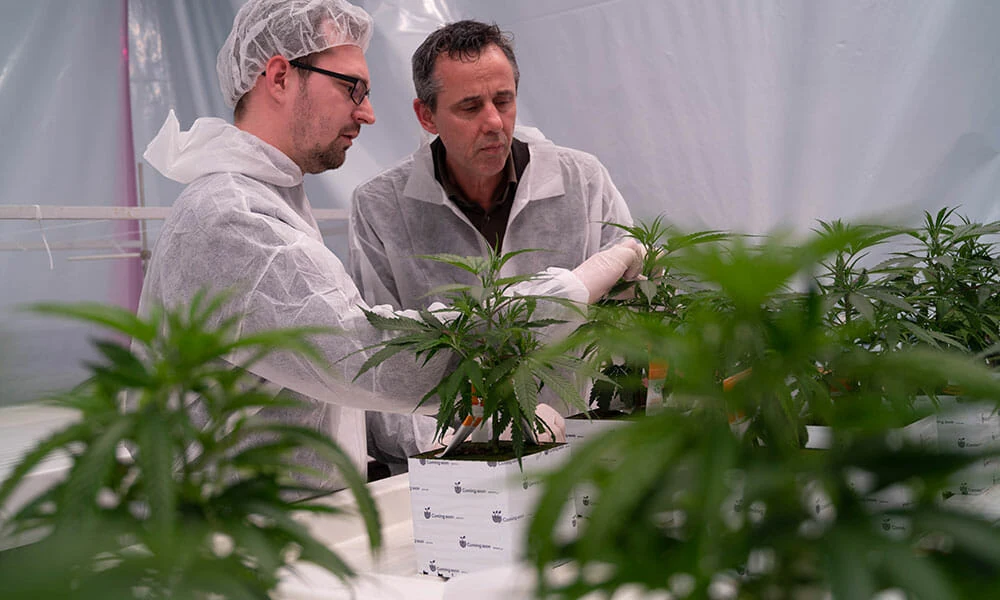
In collaboration with Wageningen University & Research and Compassionate Cultivation, Fluence is proud to announce the findings of a series of groundbreaking photobiology research studies examining how light spectra affect cannabis growth and development. These studies are the first of their kind and provide key insights for commercial cannabis growers looking to maximize production, improve product quality and optimize efficiencies in their farms.
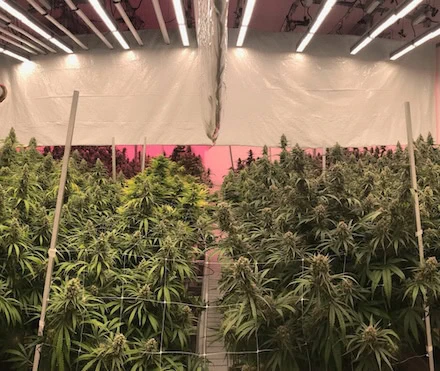
Percer les secrets de la photobiologie du cannabis
Cannabis is a high value crop in commercial agriculture, but it currently has very limited scientific documentation to guide its commercialization. Because of this, the Fluence research team has been focused on discovering insights about cannabis that are immediately actionable. Research was conducted in two studies focused on how lighting can be used to further enhance the desirable aspects of cannabis in commercial greenhouse and indoor settings.
Each experiment was carefully designed to examine the effects of broad spectrum white light, broad spectrum pink light and narrow band red/blue light deployed on the VYPR 3p Series. Each light treatment is distinct in spectral composition. The purpose of examining each of these treatments is to further understand which light spectra is most appropriate for corresponding greenhouse or indoor environments for Type I cannabis (high in THC), Type III cannabis (high in CBD) and Type II cannabis (a balance of THC and CBD).
Figure 1 : Spectres de lumière supérieure de fluence utilisés dans les études de recherche. Cliquez sur l'image pour l'agrandir.
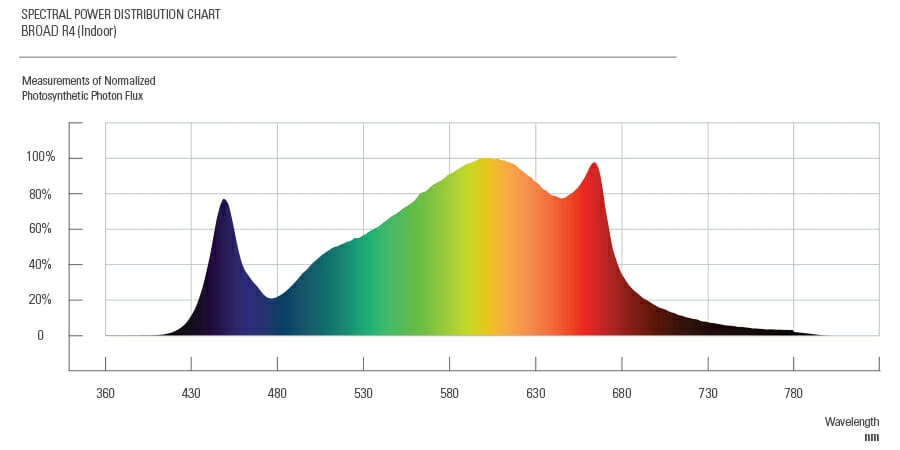
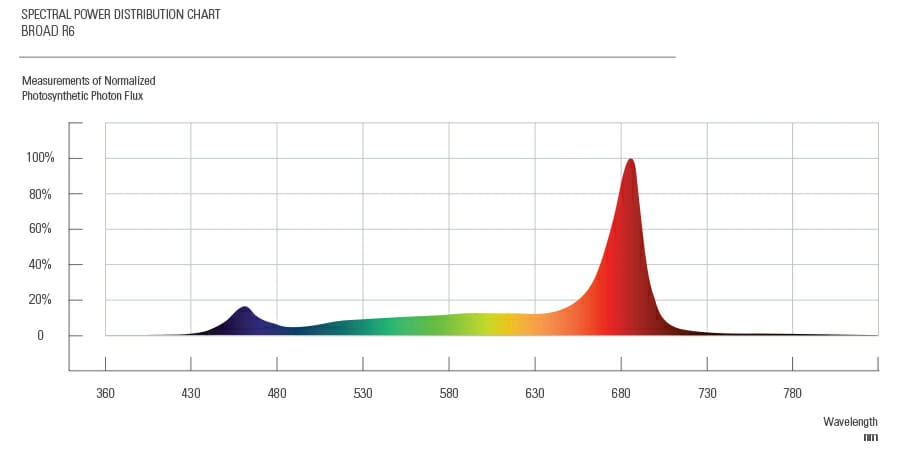
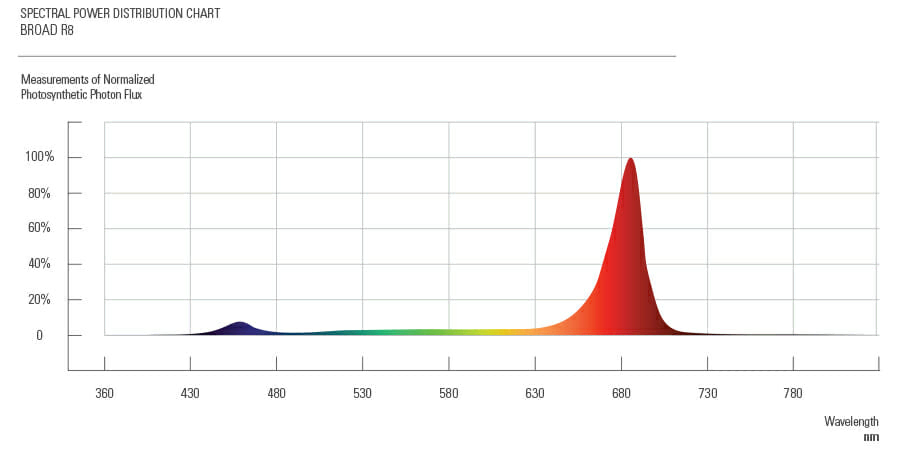
Through these studies, Fluence was able to determine eight key insights in manipulating the development of cannabis that can have a profound effect on commercial cannabis production when applied correctly:
-
-
-

Figure 2 : Impact de la lumière rouge sur la production de terpènes Fluence a tout d'abord vérifié que chez certains cultivars, un pourcentage plus faible de lumière rouge est corrélé à une augmentation des concentrations en cannabinoïdes.
- Plus intéressant encore, la lumière rouge peut être utilisée pour manipuler les ratios de terpènes dans le cannabis (voir figure 2).
- En serre, à de faibles intensités lumineuses supplémentaires, tous les spectres Fluence testés permettent d'obtenir des rendements comparables.
- Dans un environnement intérieur - où les sources lumineuses émettent à des intensités plus élevées - les spectres Broad White R4 et R8 ont donné des résultats supérieurs à ceux de R6.
- En intérieur, R4 a donné un rendement jusqu'à 17 % supérieur à la meilleure solution spectrale suivante pour certains cultivars de cannabis de type I à forte teneur en THC.
- Si l'on considère les environnements intérieurs, le R4 a toujours produit des rendements plus élevés et présente l'avantage supplémentaire de ne pas provoquer de photoblanchiment, alors que les spectres comme le R8, qui ont une fraction considérablement plus élevée de lumière rouge, provoquent un photoblanchiment.
- Dans les deux types d'environnement, la sensibilité au spectre dépend du cultivar.
- Enfin, en appliquant ces connaissances à l'environnement d'un cultivateur, les éclairages R4 et R8 peuvent être déployés pour augmenter de manière significative la marge brute estimée du cultivateur.
-
-

Ces informations sont très importantes car elles peuvent être immédiatement exploitées par les cultivateurs qui cherchent à produire des effets chimiques et morphologiques spécifiques sur leurs cultures de cannabis. Dans les deux études, Fluence a pu valider le fait que les spectres lumineux peuvent avoir un impact significatif sur vos cultures de cannabis, qu'elles soient cultivées en intérieur ou en serre.
Qu'est-ce que cela signifie pour votre croissance ?
A primary benefit of the webinar is how growers were able to address their questions in real-time, learning exactly how they can leverage Fluence’s research to impact plant response and productivity in their current environments. A few examples of questions asked during the webinar include:
Q: What is the right spectrum for my cannabis crops?
A: This is highly dependent on your cultivation goals. As evidenced by the results above, cannabinoids, terpenes and yield are all affected by spectra choice, to varying degrees. Whether you are looking to sell your crops as flower or extract, Fluence can help you determine the right spectra to maximize your investment into lighting.
Q: Should I be using UV or far-red lighting?
A: While there is a lot of interest outside of PAR, there is a clear misconception of the value of these light sources and their impact on yield or plant chemistry. Far-red light is good for eliciting a shade avoidance response, and it will give cannabis plants a larger canopy and stretch out the plants, which can be good for cultivars that have dense foliage. The Fluence research team will discuss this topic in more detail in an upcoming webinar.
Q: What is the impact on plant morphology between spectra?
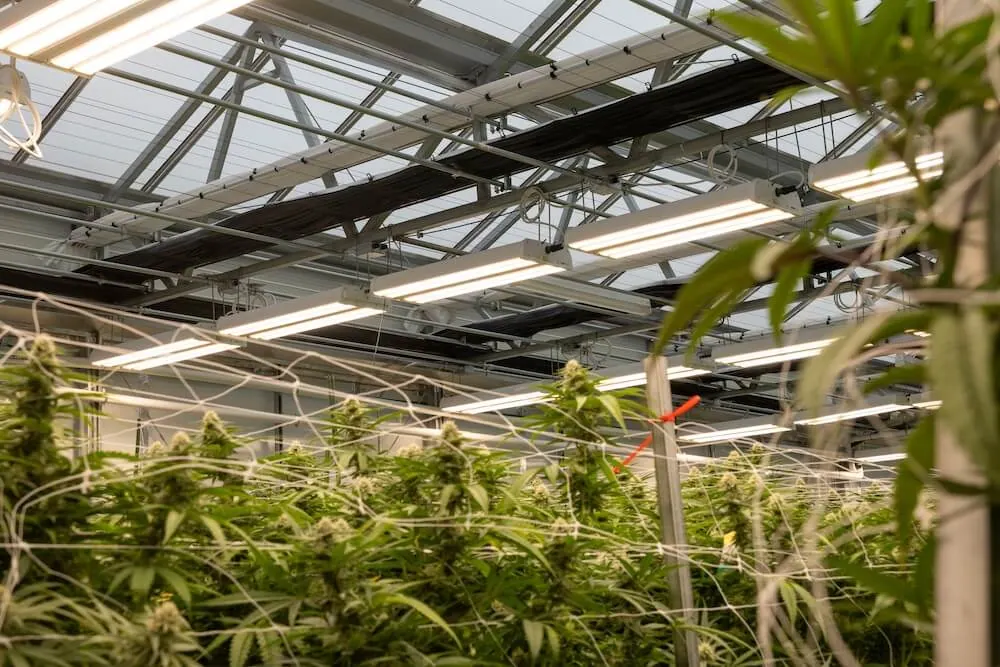
A: In indoor settings, no noticeable evidence of stretch occurred. However, in the greenhouse environment, there was significant canopy expansion under the R8 light treatment. Our working theory is that a lower potting density in the greenhouse environment enabled the plants to spread and stretch more in that study. In the indoor study, photobleaching was also observed under spectra containing higher levels of red-light, negatively impacting market value of the harvested bud.
Q: What is the appropriate light level for cannabis crops in my region?”
A: This study utilized a PPFD of 480-500 in the greenhouse environment and a PPFD of 1,100 in the indoor environment. We have seen many growers push light levels well beyond these metrics with success but the tolerance for high light intensity can be cultivar dependent. If you are considering supplemental lighting in a greenhouse it is always best to measure the transmissivity of your greenhouse and consult with a Fluence specialist to develop a lighting strategy for your targeted PPFD based on your annual DLI.
A number of other questions including the reasons why photobleaching occurs, the importance of DLI measurements, how light affects plant morphology and a deep-dive into how each experiment was conducted were also addressed during the webinar.
If you are interested in learning more about Fluence research, or if you would like to gain access to the webinar, contact a Fluence sales representative directly.
For more research insights and best practices that might be relevant to your business, we encourage you to tune into our ongoing webinar series as well.