Defining Craft: It Starts with Mindset, Not Scale
In today’s cannabis market, “craft” has become a widely used term, often applied to everything from small-batch production to premium priced flower. But among experienced growers, the definition is far more precise. Craft cannabis isn’t about scale, it’s about intention, execution, and the ability to consistently deliver a differentiated product in an increasingly commoditized market.
Conversations with Casey Rivero and Art Isagholian, both part of the Fluence Business Development Team, make one thing clear: craft is not a label, but a system built around quality.
At its core, craft cultivation begins with a deliberate shift in priorities. While many operators optimize for yield, throughput, or cost efficiency, craft growers focus on producing flower they can stand behind. As Art explains, “craft is driven by quality above all else… it’s about putting quality first and letting that speak for itself over time,” a mindset that prioritizes long-term differentiation over short-term efficiency. Casey reinforces that idea, emphasizing that “it’s not about the size of the operation, rather it’s about where the focus is at,” shifting attention back to the plant and the final product rather than purely the business mechanics around it.
That distinction matters. In a market where production methods are becoming more standardized, quality becomes the only meaningful lever for standing out.
Authenticity and Experience Separate Craft from Commodity
Craft cannabis cannot be manufactured through branding alone. It is built through experience, repetition, and a deep understanding of plant behavior over time.
One of the clearest indicators of a true craft grower is how they engage with their plants. As Casey describes it, “they know how their plants grow, how they smell, how they look,” reflecting a level of familiarity that only comes from hands-on experience and continuous refinement. That level of understanding doesn’t come from theory; it comes from time spent observing, adjusting, and learning directly from the plant itself.
Art expands on this idea by emphasizing authenticity and earned credibility, noting that “you don’t become craft by calling yourself craft… it comes from experience and paying your dues.” In cannabis, that validation happens quickly. Consumers recognize quality, and they reward it. As Casey puts it, “there’s no hype until there’s proof,” and that proof ultimately shows up in the product.
This is what makes craft both difficult and valuable. It requires discipline, patience, and a willingness to prioritize long-term reputation over short-term gains.
From Genetics to Environment: Where Lighting Shapes Outcomes
While craft cultivation often starts with premium genetics, those genetics only reach their full potential when paired with the right environment. Lighting plays a central role in that equation.
As Casey explains, “genetics are selected under specific conditions… and when you change that environment, the plant reacts differently,” highlighting the importance of maintaining or intentionally adjusting the conditions that allow a cultivar to perform at its best.
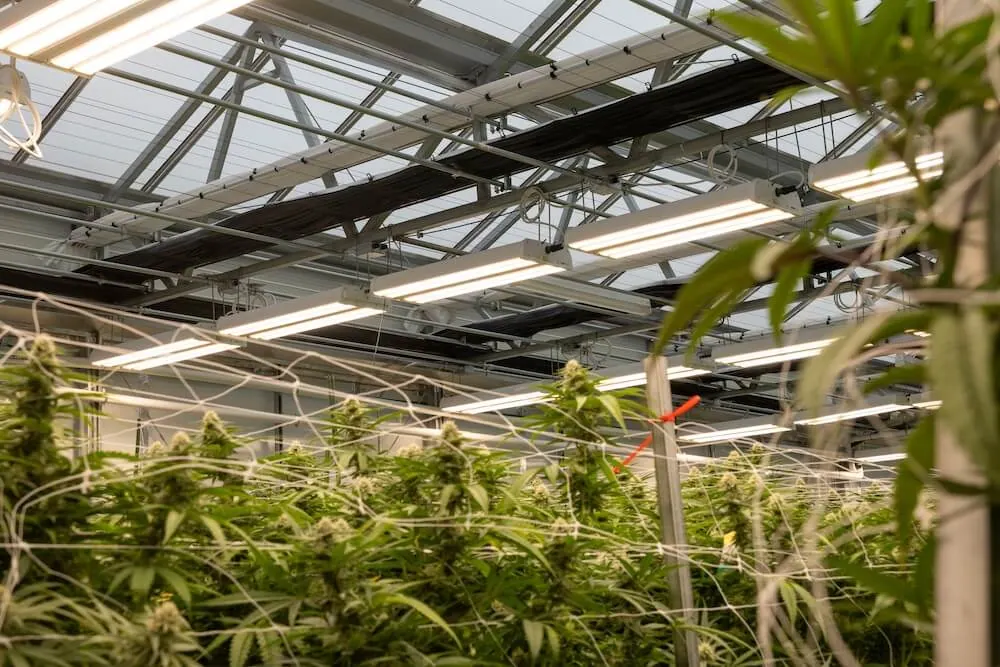
This is where modern LED technology has become a defining tool for craft growers. Solutions like the Fluence SPYDR Series and Fluence RAPTR 2 provide the ability to control light intensity and spectrum, enabling growers to fine-tune plant responses throughout the lifecycle.
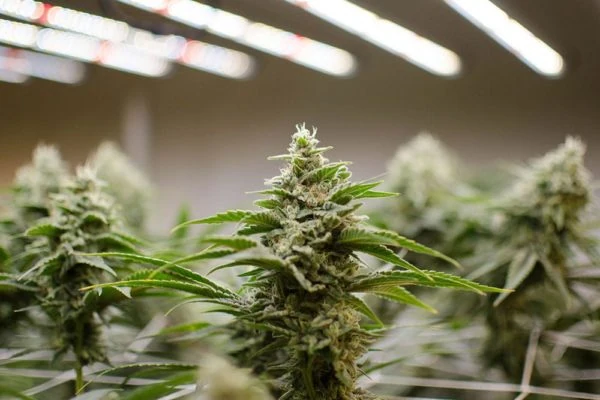
That level of control directly impacts key quality drivers such as terpene expression, flower density, and overall consistency. As Art notes, “it’s one of the most important components… light impacts both yield and quality depending on how you apply it,” reinforcing that lighting is not just a supporting factor, but a central lever in achieving craft outcomes.
For craft growers, this transforms lighting from a fixed input into a precision tool used to shape and refine the final product.
Why Craft Breaks Down and How to Protect It
A common misconception is that craft is inherently lost as operations scale. In reality, scale itself is not the issue. The breakdown occurs when precision is lost across the cultivation process.
Casey points to a familiar turning point, explaining that “it’s when the economics start to outweigh what the plant needs to reach its full potential.” As growers look to improve margins, they may begin to adjust inputs or streamline processes in ways that gradually impact quality. Those changes are often subtle at first, but over time they accumulate.
Art emphasizes that maintaining craft requires consistency across every stage of production, noting that “every step matters from genetics, to cultivation, to post-harvest… if one breaks down, it impacts the final product.” Post-harvest, in particular, is often underestimated. Limitations in drying, curing, or storage capacity can quickly erode quality, regardless of how well the crop was grown. Even time spent on a retail shelf can influence whether a product is ultimately perceived as “craft” by the consumer.
This reinforces a critical point: craft is not a moment in the process. It is the result of maintaining standards from start to finish.
The Role of Control in Modern Craft Cultivation
Advancements in LED technology have expanded what growers can achieve, particularly by improving control over the growing environment.
One of the most significant shifts is the ability to deliver higher light intensities without the heat-related risks associated with legacy systems. As Casey explains, “LED allows you to use more light without damaging your plants,” creating new opportunities to push performance while preserving quality. At the same time, reduced radiant heat helps protect volatile compounds like terpenes and cannabinoids, which are essential to the sensory experience that defines craft cannabis.
Beyond intensity, spectral control introduces another layer of precision. Growers can now adjust lighting strategies to better match specific cultivars or desired outcomes. Art summarizes this advantage simply, noting that “it gives you more control, and that control directly affects quality,” reinforcing the connection between environmental precision and final product outcomes.
For growers focused on producing premium flower, that level of control is not optional. It is foundational.
The Discipline of Craft
Craft cannabis is ultimately defined by discipline. It is the result of aligning genetics, environment, and process into a cohesive system, where every decision is made with the final product in mind. It requires a commitment to quality at every stage, even when that commitment introduces complexity.
As Casey puts it, “it’s not just a craft grower. It’s a craft product,” a reflection of the end-to-end mindset required to deliver true differentiation in today’s market.
Fluence continues to work alongside leading genetics companies, research institutions, and craft-focused growers worldwide, providing lighting solutions designed to help unlock the full potential of every harvest.