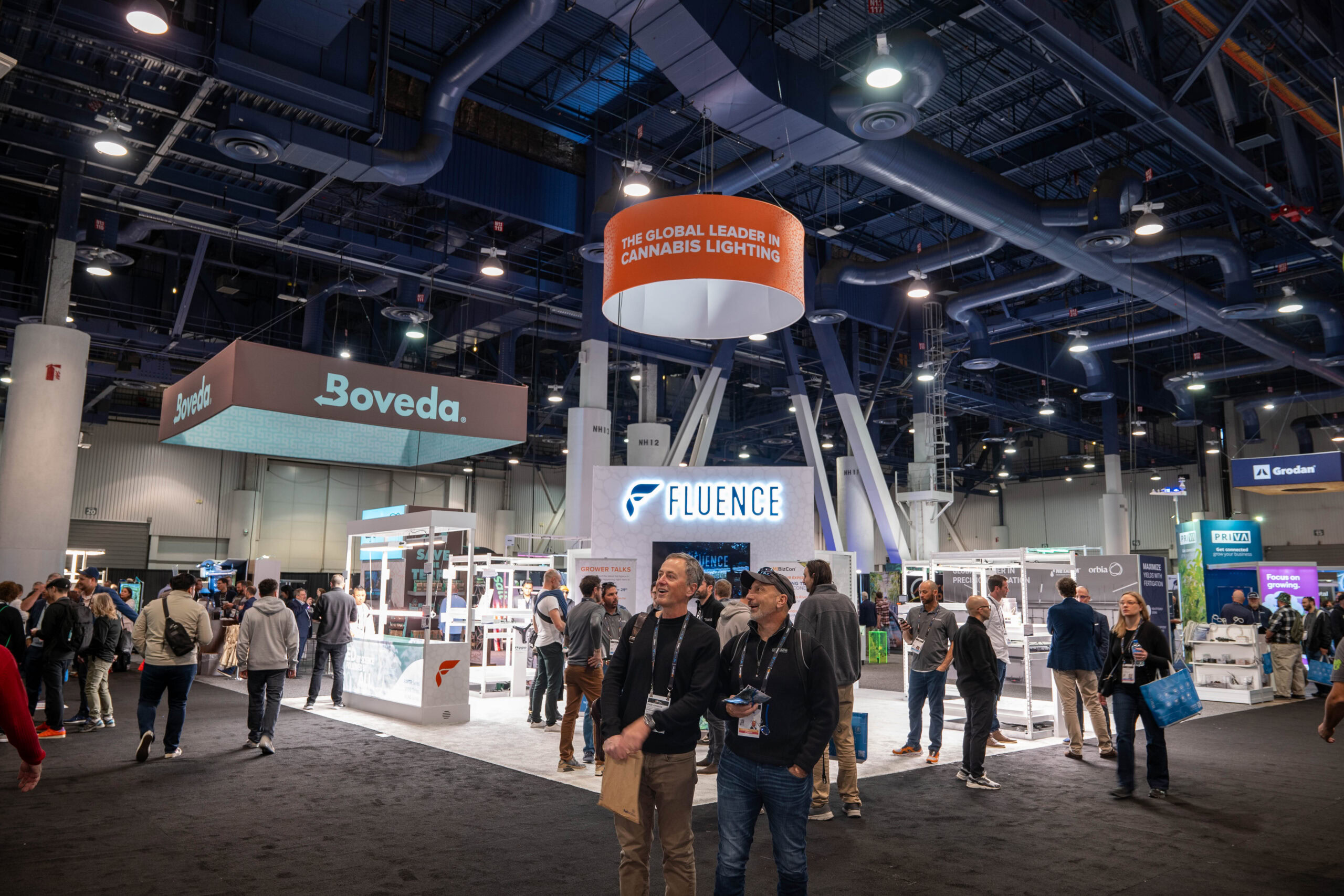
Auf der MJBizCon 2024 präsentierte Dr. David Hawley, Leiter der Forschungs- und Entwicklungsabteilung von Fluence, umfassende Erkenntnisse über die Beleuchtung zwischen den Baumkronen (ICL) und unter den Baumkronen (SCL) im Cannabisanbau. Sein Vortrag zielte darauf ab, diese Beleuchtungstechniken zu entmystifizieren und die widersprüchlichen Aussagen auf dem Markt über ihre Wirksamkeit zu erklären.
Verstehen der Grundsätze der ICL/SCL-Technologie
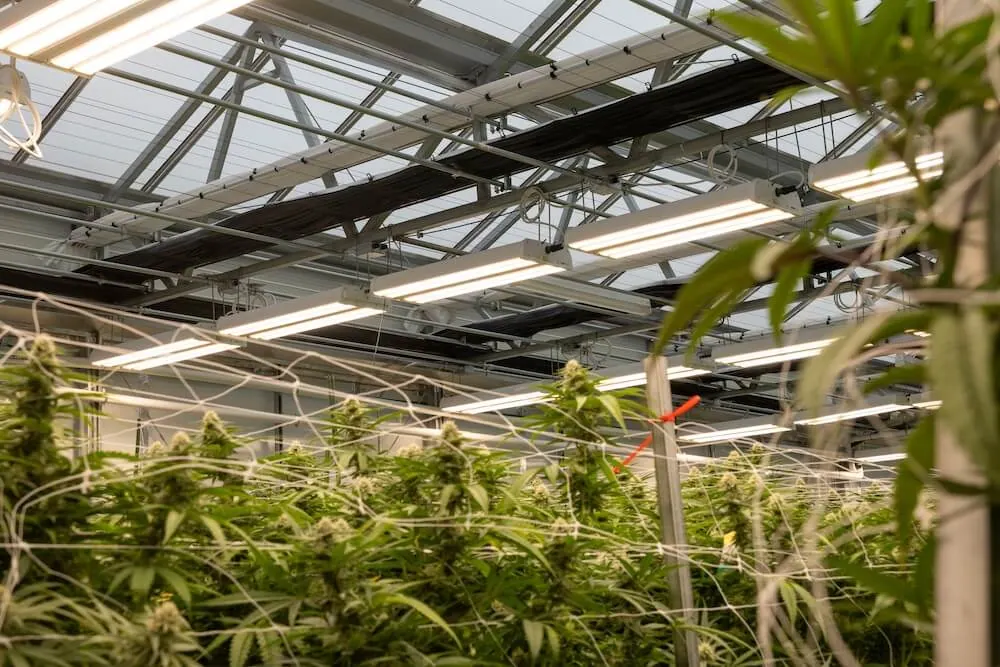
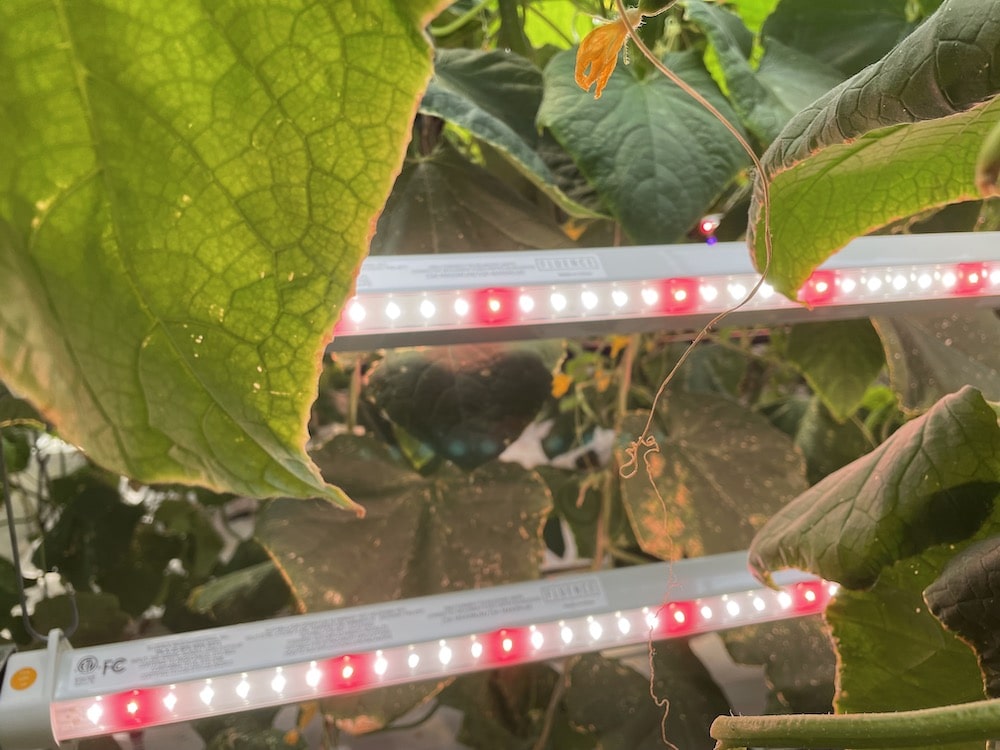
Bei ICL und SCL wird das Licht innerhalb des Cannabisdaches hinzugefügt oder umverteilt, indem entweder die Beleuchtung von oben ergänzt oder ein Teil des Lichts von oben auf die unteren Bereiche umverteilt wird. Das Prinzip hinter ICL/SCL ist, dass die Blätter als Sonnenkollektoren in der Pflanzenfabrik fungieren. In dichten oder hohen Baumkronen erhalten die unteren Blätter oft nicht genügend Licht, um zur Photosynthese beizutragen, was eine Verschwendung von Potenzial darstellt. Indem diese Bereiche mit Licht versorgt werden, soll die photosynthetische Aktivität gesteigert und die Knospenentwicklung in der gesamten Pflanze verbessert werden.
Vorteile von ICL Lighting
Fluence’s research revealed several key findings about ICL’s impact. When used as supplemental lighting (adding energy), yields increase proportionally. However, when the same total energy is redistributed between top and subcanopy lighting, total yield generally remains unchanged. The relationship between light intensity and yield remains largely linear up to high intensities, reaching 2500 μmol/m²/s for some cultivars.
Consistently, ICL improved bud grade, with B-grade buds becoming A-grade and C-grade becoming B-grade. It also enhanced bud uniformity in terms of mass and volume, though it showed no significant impact on THC content or other chemical properties.
The research demonstrated that ICL can help prevent morphological issues that occur at high light intensities, with fewer instances of re-vegging and fox tailing compared to equivalent top-lighting. Regarding spectrum considerations, Hawley emphasized that the same principles apply to ICL as top lighting. Too much red light can cause photobleaching, with cultivar-dependent sensitivity, while white-dominant spectra generally perform well.
Vergleich von Intercanopy-Beleuchtung und Subcanopy-Beleuchtung
When comparing ICL to SCL, the research showed that SCL delivered approximately 7.1% better yields than ICL in standard North American growing conditions. However, the choice between ICL and SCL heavily depends on cultivation style. Tall plants benefit more from ICL, while short plants (sea of green) benefit more from SCL. Row crops with significant spacing may not benefit from either approach.
Dr. Hawley attributed market confusion about ICL effectiveness to several factors. Experimental design varies significantly, with some studies comparing additional ICL to existing top light versus redistributing the same energy. Measurement methodology also creates confusion, as PPFD (Photosynthetic Photon Flux Density) measurements can be misleading for ICL, while PPF (Photosynthetic Photon Flux) provides more accurate comparisons. Additionally, variables such as plant spacing, canopy architecture, growing style, HVAC systems, and genetics all affect ICL effectiveness but aren’t always considered in studies.
Forschungsgestützte Implementierungsrichtlinien
For most growers, Hawley recommended adding top light rather than implementing ICL/SCL, citing similar yield benefits with less complicated infrastructure, easier maintenance, and fewer obstacles to labor activities. However, ICL/SCL might be worth considering for operations with tall plants, those seeking improved bud grade, dealing with dense canopies, or operating in specific facility configurations. When implementing ICL/SCL, growers should focus on creating uniform light distribution, consider total energy rather than just light intensity at specific points, match spectrum to cultivation goals and genetic sensitivity, and account for facility-specific factors.
Dr. Hawley concluded by emphasizing that while ICL and SCL can provide benefits, growers should carefully evaluate their specific situation and needs before implementation, as the technology isn’t universally advantageous despite marketing claims suggesting otherwise.