Editor’s note: As part of the upcoming release of the Fluence Cannabis Cultivation guide (available later this month), we have released best practices how to maintain a healthy grow environment (Part 1, Part 2). Published below, Part 3 of this series dives into two Q&A sessions with Fluence Project Manager, Sean Sangster, and how he advises Fluence customers on how to adjust and maintain a healthy cultivation environment for cannabis under high-intensity LEDs.
P: ¿Varía la VPD de una planta a otra y de una hoja a otra? En caso afirmativo, ¿cómo se determinan los ajustes apropiados para permanecer en la zona de ricitos de oro para VPD para una instalación de cannabis?
La VPD es un indicador, no una medida directa de la transpiración en la planta. Comprender la VPD ayuda a realizar los ajustes necesarios en los factores ambientales para mantener la VPD óptima. Entendiendo esto, debería ver la VPD como una guía para el rango de temperatura y humedad que debería mantener en sus instalaciones.
P: ¿Cómo se identifica la quema de nutrientes y qué puede hacer un agricultor para solucionarla o mitigar futuros problemas?
A: First check the root zone. If you have a trellis in place, make sure to remove it and then see if there is any damage to the roots. You are looking for discoloration. White furry roots are ideal. If it is brown, orange, or there are little to no “hairs,” a common issue may be that soluble salts in the root zone are high. If this is the case, leach the media to check pH and EC. If you are above the range you would normally target, leach the solution down to ensure further damage does not occur.
Another way to diagnose the issue is to examine the leaf tissue itself, or edges of the leaf for “burn” (the edges will be brown/tan, dry and shriveled). Most states allow for cannabis leaves to be transported to a lab for analysis. A lab test is the best way to diagnose exactly what may be the root of the problem.
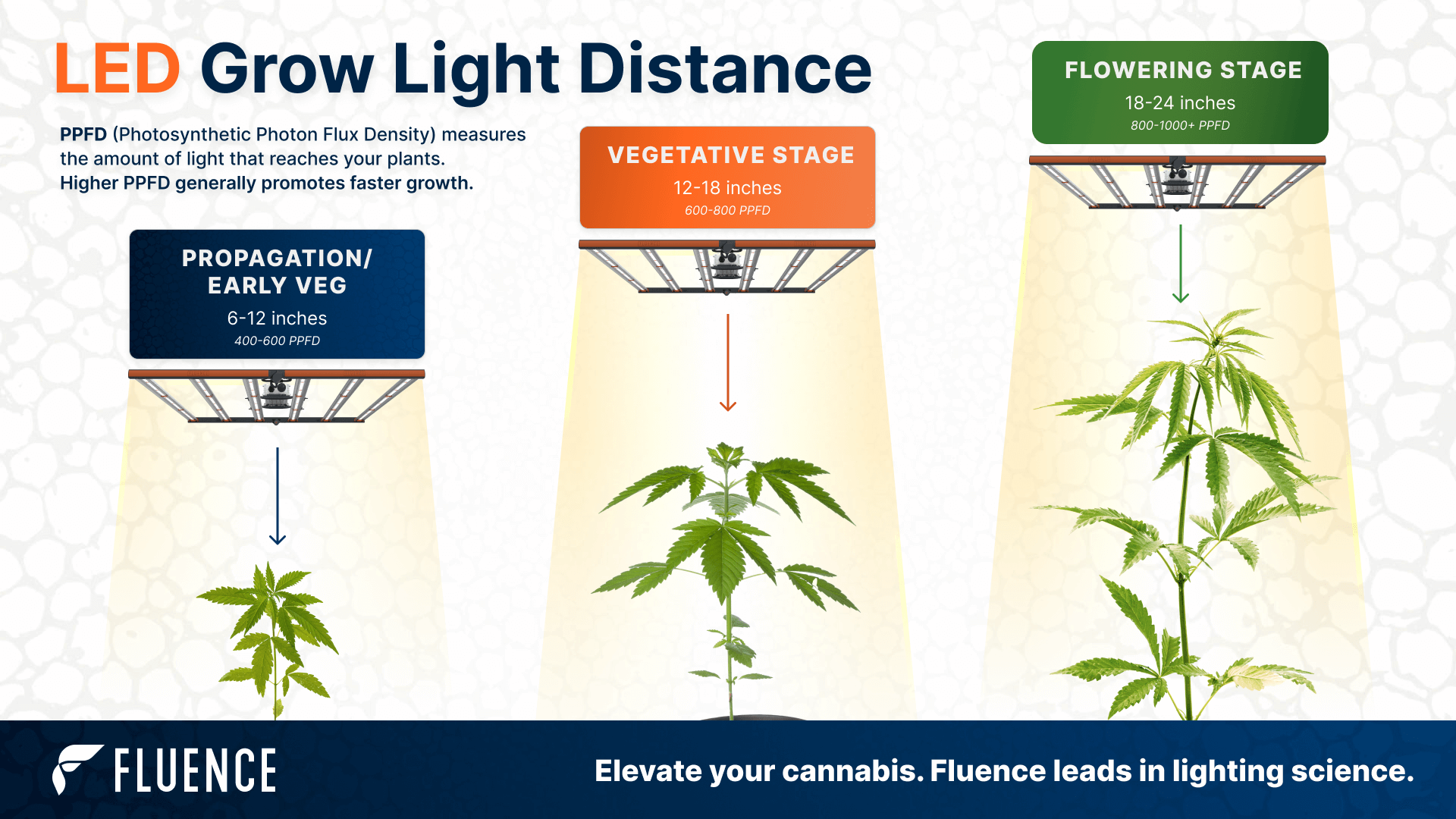
P: ¿Cuál es la PPFD máxima que recomendaría? ¿Han hecho pruebas y han encontrado una PPFD que sea demasiado alta y, por tanto, ineficaz/perjudicial para la planta?
He visto cultivadores que han llegado a los 1.500 PPFD, lo que equivaldría a unos 60-65 DLI, y han tenido un gran éxito. Sin embargo, también he oído hablar de casos en los que investigadores de universidades están forzando sus plantas hasta más de 1.800 PPFD y aún no han encontrado el punto de saturación de la luz. Estoy deseando ver adónde nos lleva la investigación, pero advierto a los cultivadores que piensen en el panorama general y tengan en cuenta la regla de los rendimientos decrecientes.
P: Cuando la PPFD es alta, ¿cuán frecuente es el agua frecuente?
Para empezar, hay que trabajar con el proveedor de riego y conocer los caudales de riego. Esto depende del tamaño de la maceta, pero normalmente nuestros cultivadores riegan alrededor de 1 litro por planta y día. A partir de ahí, se divide la suma de 1 litro y se riega durante el fotoperiodo de la planta. Por ejemplo, para un fotoperiodo de 12 horas, lo dividiríamos en 12 eventos de riego, que administrarían entre 2,0 y 2,5 onzas de agua por evento de riego, para dar a la planta la oportunidad de absorber lo que se le echa.
P: ¿Cuál es la PPFD ideal en salas de flores sin suplementos de CO2? Debe haber un punto de inflexión, ¿no?
Once cannabis flowers hit 800-850 PPFD, it is crucial to get CO2 in the environment. Without CO2 you are doing two disservices to your business: the plants need it because of photos it otherwise limits it but under
P: ¿Cuáles son las principales causas de la decoloración lumínica?
This is correlated with the xanthophyll cycle and goes beyond normal day-to-day growing knowledge. However, basically: understanding how chlorophyll A and B are overloaded by certain narrowband spectrums, which causes de-epoxidation, is what allows photobleaching to happen.
P: Utilizo soluciones Fluence en todo mi proceso de cultivo y he observado estrías púrpuras en mis cultivos de cannabis. A qué se debe esto y cómo puedo eliminar esta coloración?
A: This coloration occurs because it shows the presence of anthocyanin, an anti-oxidant present in blueberries, acai berries and in lesser amounts in many other fruits and vegetables.
If you would like to hear more from Sean Sangster, be sure to check out his talk about the 9 Key Parameters of Plant Production for commercial cannabis. Alternatively, you can learn more about how to grow successfully under high-intensity lighting by Adjusting Your Environment for cannabis production.