L'éclairage est la pierre angulaire de la croissance et du rendement des plantes dans la culture du cannabis. Comme le savent les cultivateurs, toutes les lumières ne sont pas égales. Le moment, l'intensité et l'adaptabilité de l'éclairage peuvent avoir un impact significatif sur la qualité de la récolte et l'efficacité opérationnelle. Alors que de nombreux cultivateurs de cannabis utilisent des commandes d'éclairage de base telles que des minuteries et des gradateurs, l'adoption de stratégies avancées à partir d'applications d'éclairage général commercial offre de nouvelles possibilités intéressantes pour optimiser l'efficacité énergétique, la qualité des récoltes et la durabilité globale de la culture.
Adapter la lumière aux stades de croissance
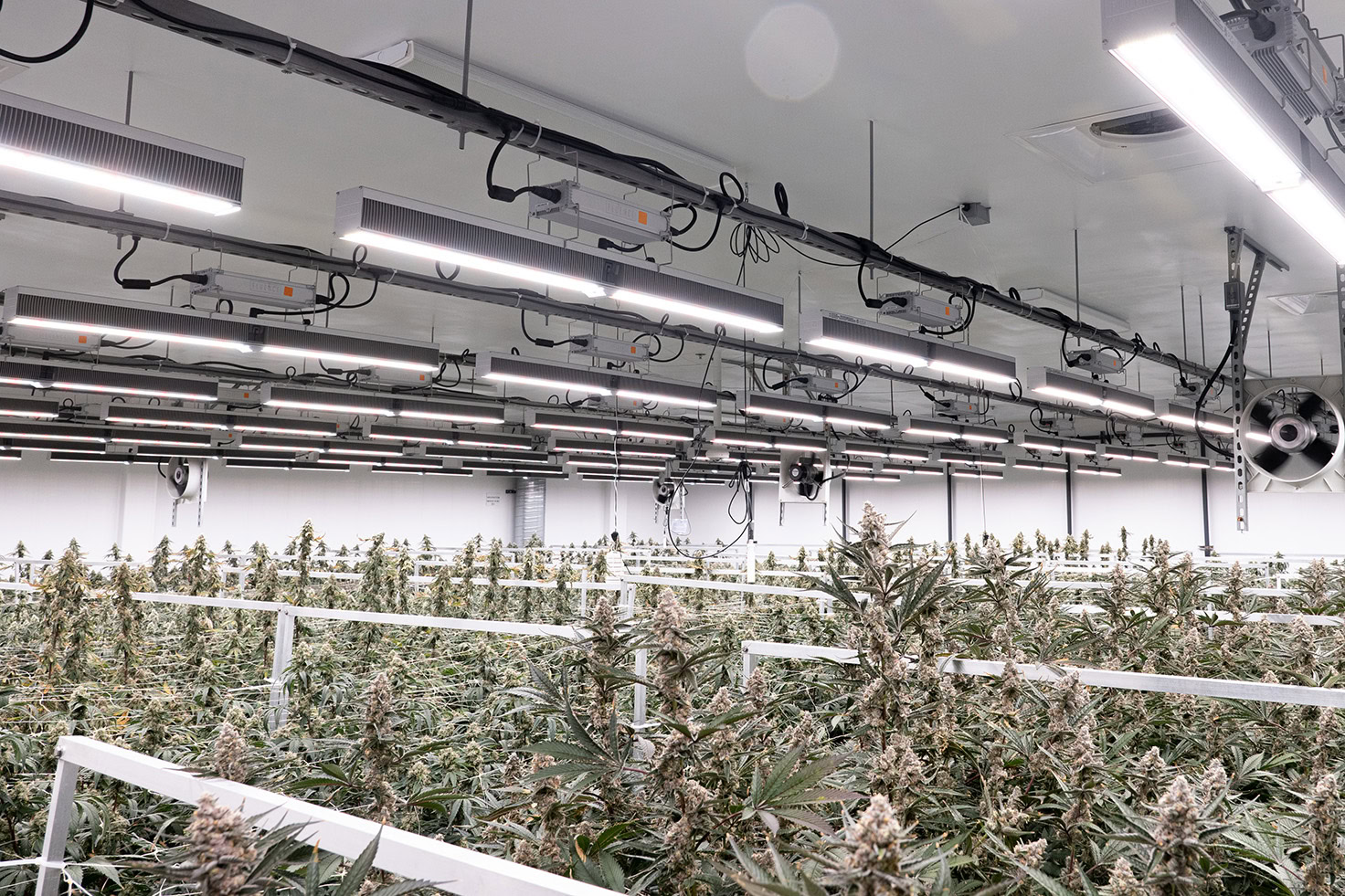
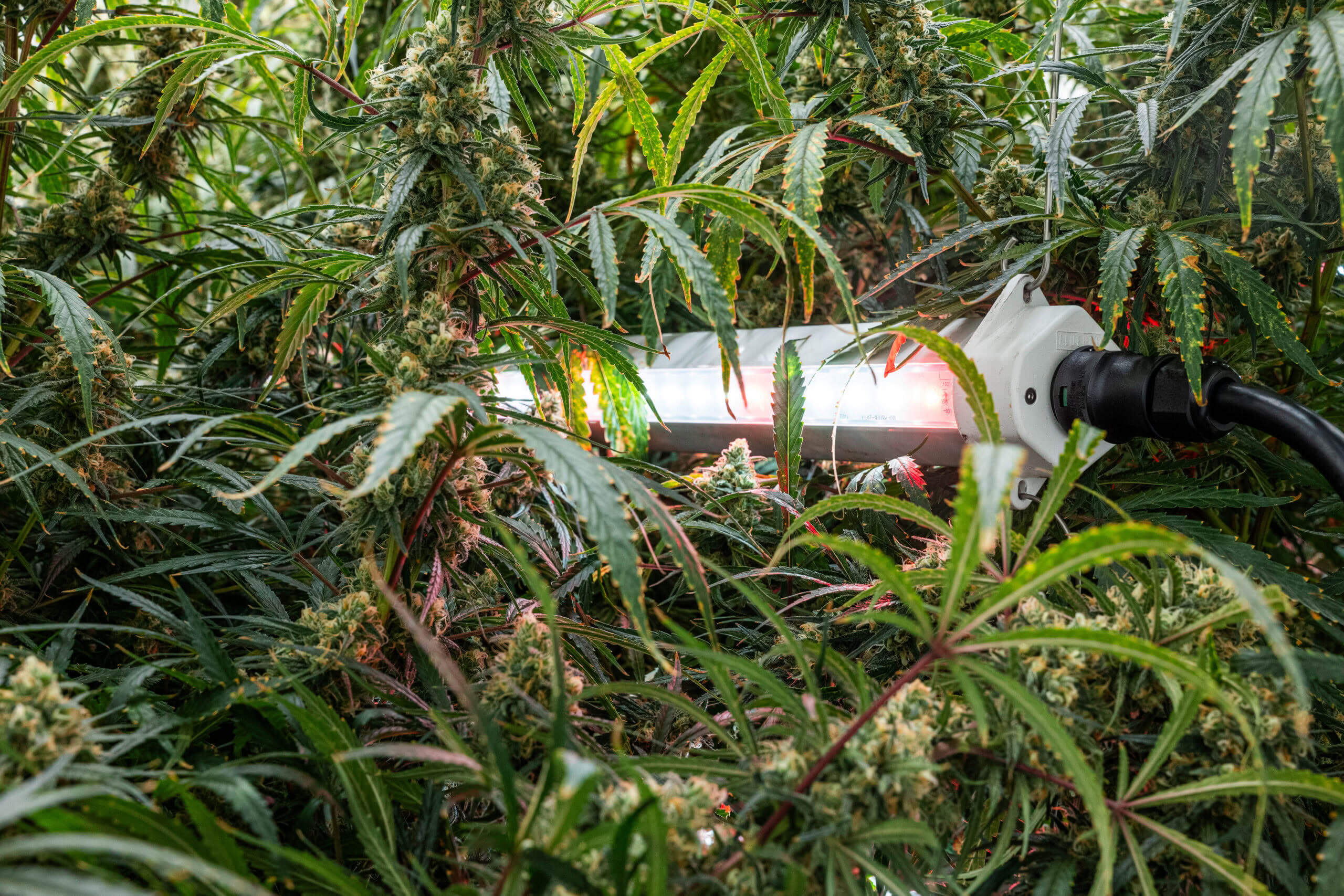
Cannabis plants have different lighting needs throughout their life cycle, from seedling to vegetative growth to flowering. While standard dimming provides some flexibility, advanced dynamic dimming systems allow growers to fine-tune light intensity to match each stage more precisely. Seedlings and young plants, for example, require less light than mature plants, reducing both energy consumption and plant stress. As plants mature, they can be gradually exposed to more intense light, promoting vigorous growth and maximizing yields.
Dynamic dimming systems can be automated, removing the need for manual adjustments and allowing lighting to adapt as plants progress. This capability reduces energy usage when possible, ensures that each growth phase receives ideal lighting, and supports healthier plants, leading to measurable energy savings and improved yield quality.
SHYFT Light Scheduler
Fluence’s SHYFT Light Scheduler enables seamless dimming control and advanced features such as Photoacclimation control, enabling cannabis growers to automatically adjust light intensity to support each growth stage while achieving energy efficiencies.
Un contrôle pour chaque type de culture
L'éclairage par zone, largement utilisé dans les bâtiments commerciaux, permet aux cultivateurs de cannabis de personnaliser l'éclairage dans les différentes zones d'une installation de culture. Les commandes de base peuvent traiter l'ensemble de l'espace de manière uniforme, mais un zonage avancé permet aux cultivateurs d'adapter l'éclairage aux besoins des plantes dans chaque zone, ce qui optimise l'utilisation de l'énergie et améliore la qualité des récoltes. Ceci est particulièrement utile pour les cultivateurs qui gèrent différentes souches ayant des besoins en lumière uniques ou qui travaillent dans des installations à plusieurs stades de croissance des plantes.
Gradation Flex sans fil
Grâce aux commandes sans fil de Fluence, les cultivateurs peuvent gérer et personnaliser les zones d'éclairage sans installer de câbles de gradation et sans avoir à refaire le câblage pour effectuer des changements. Cette flexibilité permet aux cultivateurs de contrôler précisément l'intensité, la durée et même le spectre de l'éclairage, si nécessaire, pour répondre aux besoins spécifiques de chaque type de plante ou de chaque phase de croissance. En créant des zones indépendantes, les cultivateurs peuvent réduire le gaspillage d'énergie, éviter le stress lumineux et maximiser le potentiel de croissance de chaque zone. Par exemple, les zones de floraison peuvent recevoir des intensités lumineuses plus élevées, tandis que les zones végétatives bénéficient d'un éclairage plus doux et économe en énergie, ce qui permet d'améliorer le rendement global et de maintenir une utilisation rentable de l'énergie.
Maximiser la lumière naturelle
In greenhouse settings, predictive lighting adjustments allow growers to maximize the use of natural light by adjusting artificial lighting in response to weather conditions. By incorporating real-time and forecasted weather data, advanced control systems can anticipate bright, sunny periods and automatically scale back artificial lighting to balance energy savings with plant needs. For cannabis cultivators, this means artificial lighting is reduced on sunny days, cutting down on unnecessary energy use without compromising light exposure.
On a bright day, Fluence’s lighting could be dimmed in certain zones or turned off when natural sunlight suffices. This approach not only lowers energy costs but also reduces strain on equipment, promoting a sustainable and cost-effective way of meeting the plants’ daily light requirements.
Aligner les horaires d'éclairage sur les tarifs de l'énergie
Energy rates vary throughout the day, with peak rates often occurring when demand is high. While basic timers can help growers set light schedules, load-shifting strategies enable advanced control to optimize these schedules and take advantage of lower off-peak energy rates. By aligning high-demand lighting activities, such as during the flowering phase, with off-peak hours, cannabis growers can maintain consistent light levels while reducing energy expenses.
For cultivators, load shifting doesn’t disrupt plant health; it simply reconfigures timing to align with cost-saving opportunities. This is particularly advantageous for indoor cannabis operations with 24/7 lighting requirements, where even small shifts can lead to substantial savings over time.
Contrôleurs de lumière
With Fluence’s control solutions, growers can easily program lighting schedules for off-peak use, contributing to a more stable grid and enjoying financial savings.
Travailler avec les fournisseurs d'énergie
Cannabis cultivators are increasingly exploring demand response programs to cut costs and support broader energy grid stability. Demand response programs provide incentives for growers who can reduce their energy use during peak demand periods. By temporarily adjusting light levels or dimming during specific hours, cultivators can reduce their operating costs while supporting grid stability.
Fluence’s wireless control systems make it easy to adjust lighting dynamically, allowing for smooth participation in demand response programs without impacting crop health. Growers can plan temporary reductions in light intensity during peak hours, aligning adjustments with plant rest periods to ensure minimal effect on growth while gaining utility cost benefits. By working with energy providers, cannabis growers can support grid stability and save on operational costs.
Un éclairage adapté à des conditions changeantes
Environmental monitoring is another advanced strategy gaining traction among growers looking to fine-tune lighting to match plants’ needs. By integrating sensors that track ambient light, temperature, humidity, and other environmental factors, control systems can be programmed to adjust automatically based on current conditions.
In a greenhouse or indoor farm, fluctuating environmental factors affect plant growth just as much as lighting does. Real-time monitoring allows lighting systems to respond dynamically, modifying light levels when ambient light changes or when temperatures rise, reducing energy expenditure when extra lighting is unnecessary. For example, if humidity levels are high, some crops may require less light to avoid stress or disease susceptibility.
This real-time adjustment offers a level of control that goes beyond basic automation, ensuring optimal growing conditions while minimizing waste. The integration of such environmental feedback systems represents a step toward truly smart horticulture, where systems automatically harmonize lighting with the natural environment.
Construire l'avenir avec les commandes d'éclairage
Adopting these advanced lighting control strategies doesn’t just benefit energy efficiency; it creates a more adaptive and resilient growing environment. As the horticultural industry grows, so does the need for precision, flexibility, and sustainability in how we cultivate plants. For commercial growers already familiar with basic lighting controls, integrating these strategies can unlock new levels of operational efficiency and crop quality.
Transitioning to a more sophisticated lighting control approach can require some initial investment, but the long-term rewards—in terms of energy savings, enhanced crop performance, and environmental sustainability—are well worth it. Today’s horticultural lighting systems offer opportunities to go beyond the status quo, tailoring light not only to plants but also to the daily rhythm of energy usage, weather, and changing environmental conditions.
Former et responsabiliser les producteurs
As with any change, education and support are key to a successful transition. Growers partnering with lighting manufacturers, consultants, contractors, and energy providers will benefit from training and collaboration. Understanding the technology behind dynamic dimming, predictive weather-based adjustments, and demand response programs is essential to maximizing their potential.
Many of these technologies have roots in commercial lighting applications but require tailoring to meet horticultural needs. The key is to focus on learning how to integrate these controls smoothly into projects, leveraging their benefits without causing disruption to other systems. This approach ensures that the growing industry can meet new standards of productivity, sustainability, and energy efficiency.
La voie à suivre pour la culture du cannabis
As growers, engineers, and lighting experts work together, the future of horticulture will be defined by smart, sustainable practices. Advanced lighting control strategies allow growers to operate with precision, responding to each crop’s unique needs while conserving energy. By combining deep horticultural knowledge with the latest lighting and controls innovations, growers can shape a future where lighting is not just a utility but a sophisticated tool for maximizing plant health and yield.
With continued research and development, horticultural lighting will become even more adaptive, with tools like AI and machine learning on the horizon to further refine and automate these controls. For now, however, the strategies outlined here—tailoring lighting to plant growth stages, implementing zone-specific control, load shifting, predictive adjustments, demand response participation, and real-time environmental monitoring—are powerful tools for today’s commercial grower, creating a sustainable path toward a brighter, more efficient future.