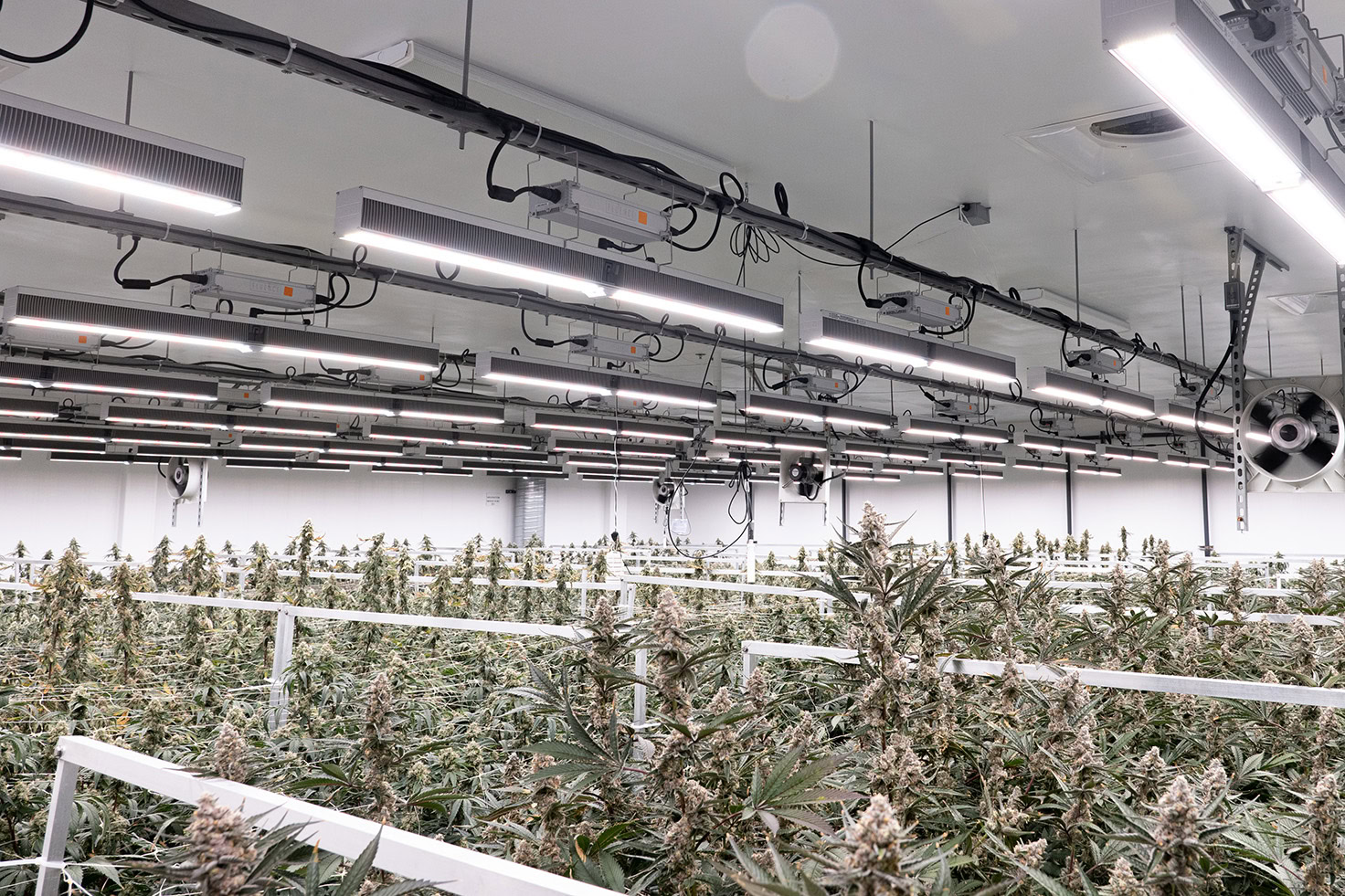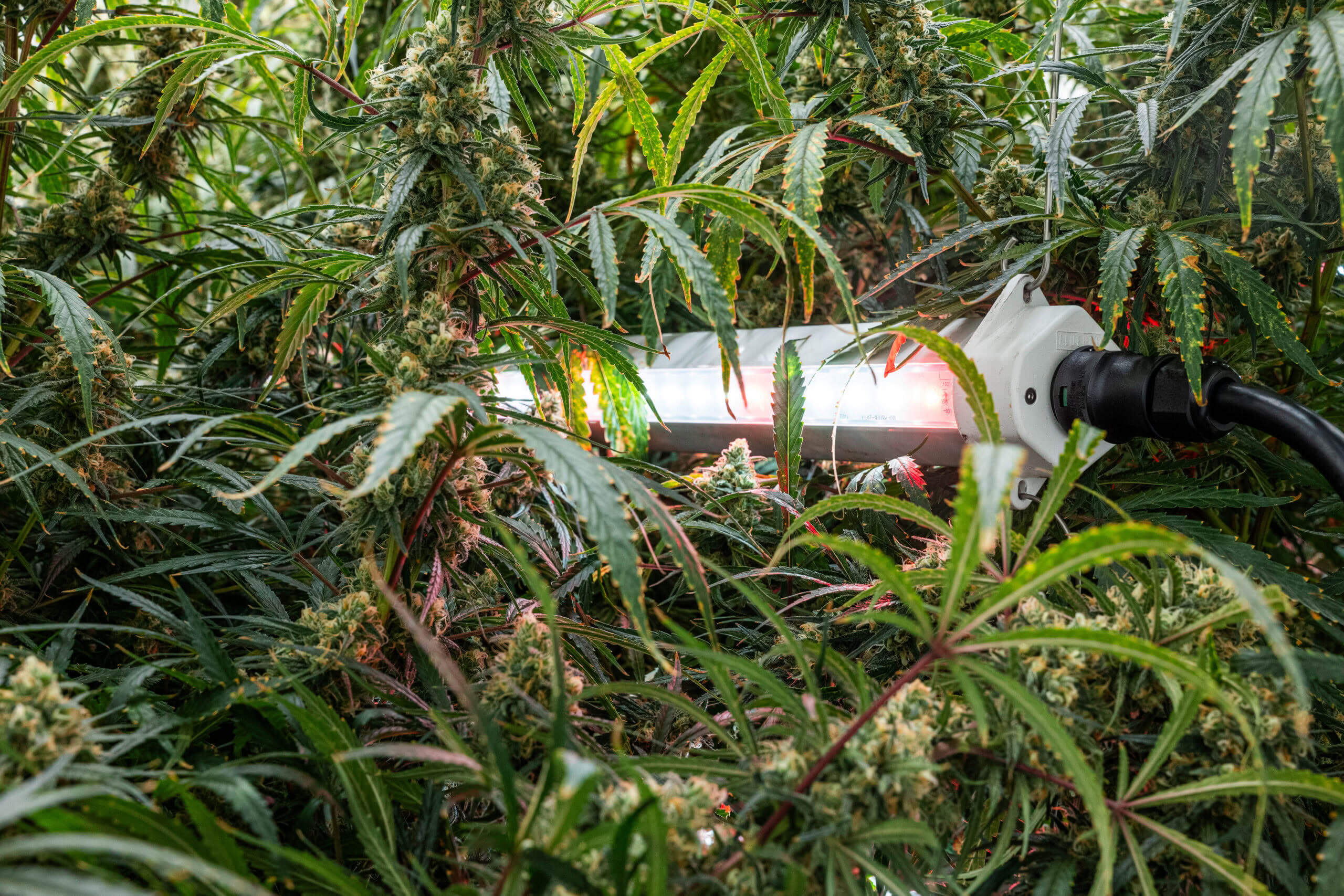
La iluminación es la piedra angular del éxito en el crecimiento y el rendimiento de las plantas de cannabis. Como bien saben los cultivadores, no toda la luz es igual. El momento, la intensidad y la adaptabilidad de la iluminación pueden tener un impacto significativo tanto en la calidad de la cosecha como en la eficiencia operativa. Aunque muchos cultivadores de cannabis utilizan controles de iluminación básicos, como temporizadores y reguladores de intensidad, la adopción de estrategias avanzadas a partir de aplicaciones comerciales de iluminación general presenta nuevas e interesantes posibilidades para optimizar la eficiencia energética, la calidad de las cosechas y la sostenibilidad general del cultivo.
Adaptar la luz a las etapas de crecimiento
Cannabis plants have different lighting needs throughout their life cycle, from seedling to vegetative growth to flowering. While standard dimming provides some flexibility, advanced dynamic dimming systems allow growers to fine-tune light intensity to match each stage more precisely. Seedlings and young plants, for example, require less light than mature plants, reducing both energy consumption and plant stress. As plants mature, they can be gradually exposed to more intense light, promoting vigorous growth and maximizing yields.
Dynamic dimming systems can be automated, removing the need for manual adjustments and allowing lighting to adapt as plants progress. This capability reduces energy usage when possible, ensures that each growth phase receives ideal lighting, and supports healthier plants, leading to measurable energy savings and improved yield quality.
Programador de iluminación SHYFT
Fluence’s SHYFT Light Scheduler enables seamless dimming control and advanced features such as Photoacclimation control, enabling cannabis growers to automatically adjust light intensity to support each growth stage while achieving energy efficiencies.
Control para cada tipo de cultivo
La iluminación específica por zonas, muy utilizada en edificios comerciales, permite a los cultivadores de cannabis personalizar la iluminación de las distintas áreas de una instalación de cultivo. Los controles básicos pueden tratar todo el espacio de manera uniforme, pero la zonificación avanzada permite a los cultivadores adaptar la iluminación a las necesidades de las plantas dentro de cada zona, optimizando el uso de la energía y mejorando la calidad de las cosechas. Esto es especialmente útil para los cultivadores que manejan distintas cepas con requisitos de luz únicos o que trabajan en instalaciones con múltiples etapas de crecimiento de las plantas.
Regulación Flex inalámbrica
Con los controles inalámbricos de Fluence, los cultivadores pueden gestionar y personalizar las zonas de iluminación sin necesidad de instalar cables de regulación y sin necesidad de recablear mucho para realizar cambios. Esta flexibilidad permite a los cultivadores controlar con precisión la intensidad de la iluminación, la duración e incluso el espectro, si es necesario, para satisfacer las necesidades específicas de cada tipo de planta o fase de crecimiento. Al crear zonas independientes, los cultivadores pueden reducir el derroche de energía, evitar el estrés lumínico y maximizar el potencial de crecimiento de cada área. Por ejemplo, las zonas de floración pueden recibir intensidades de luz más elevadas, mientras que las zonas vegetativas se benefician de una iluminación más suave y eficiente desde el punto de vista energético, lo que mejora el rendimiento general y mantiene un uso rentable de la energía.
Maximizar la luz natural
In greenhouse settings, predictive lighting adjustments allow growers to maximize the use of natural light by adjusting artificial lighting in response to weather conditions. By incorporating real-time and forecasted weather data, advanced control systems can anticipate bright, sunny periods and automatically scale back artificial lighting to balance energy savings with plant needs. For cannabis cultivators, this means artificial lighting is reduced on sunny days, cutting down on unnecessary energy use without compromising light exposure.
On a bright day, Fluence’s lighting could be dimmed in certain zones or turned off when natural sunlight suffices. This approach not only lowers energy costs but also reduces strain on equipment, promoting a sustainable and cost-effective way of meeting the plants’ daily light requirements.
Alinear los horarios de iluminación con las tarifas energéticas
Energy rates vary throughout the day, with peak rates often occurring when demand is high. While basic timers can help growers set light schedules, load-shifting strategies enable advanced control to optimize these schedules and take advantage of lower off-peak energy rates. By aligning high-demand lighting activities, such as during the flowering phase, with off-peak hours, cannabis growers can maintain consistent light levels while reducing energy expenses.
For cultivators, load shifting doesn’t disrupt plant health; it simply reconfigures timing to align with cost-saving opportunities. This is particularly advantageous for indoor cannabis operations with 24/7 lighting requirements, where even small shifts can lead to substantial savings over time.
Controladores de luz
With Fluence’s control solutions, growers can easily program lighting schedules for off-peak use, contributing to a more stable grid and enjoying financial savings.
Trabajar con proveedores de energía
Cannabis cultivators are increasingly exploring demand response programs to cut costs and support broader energy grid stability. Demand response programs provide incentives for growers who can reduce their energy use during peak demand periods. By temporarily adjusting light levels or dimming during specific hours, cultivators can reduce their operating costs while supporting grid stability.
Fluence’s wireless control systems make it easy to adjust lighting dynamically, allowing for smooth participation in demand response programs without impacting crop health. Growers can plan temporary reductions in light intensity during peak hours, aligning adjustments with plant rest periods to ensure minimal effect on growth while gaining utility cost benefits. By working with energy providers, cannabis growers can support grid stability and save on operational costs.
Cambiar la iluminación para cambiar las condiciones
Environmental monitoring is another advanced strategy gaining traction among growers looking to fine-tune lighting to match plants’ needs. By integrating sensors that track ambient light, temperature, humidity, and other environmental factors, control systems can be programmed to adjust automatically based on current conditions.
In a greenhouse or indoor farm, fluctuating environmental factors affect plant growth just as much as lighting does. Real-time monitoring allows lighting systems to respond dynamically, modifying light levels when ambient light changes or when temperatures rise, reducing energy expenditure when extra lighting is unnecessary. For example, if humidity levels are high, some crops may require less light to avoid stress or disease susceptibility.
This real-time adjustment offers a level of control that goes beyond basic automation, ensuring optimal growing conditions while minimizing waste. The integration of such environmental feedback systems represents a step toward truly smart horticulture, where systems automatically harmonize lighting with the natural environment.
Construir el futuro con controles de iluminación
Adopting these advanced lighting control strategies doesn’t just benefit energy efficiency; it creates a more adaptive and resilient growing environment. As the horticultural industry grows, so does the need for precision, flexibility, and sustainability in how we cultivate plants. For commercial growers already familiar with basic lighting controls, integrating these strategies can unlock new levels of operational efficiency and crop quality.
Transitioning to a more sophisticated lighting control approach can require some initial investment, but the long-term rewards—in terms of energy savings, enhanced crop performance, and environmental sustainability—are well worth it. Today’s horticultural lighting systems offer opportunities to go beyond the status quo, tailoring light not only to plants but also to the daily rhythm of energy usage, weather, and changing environmental conditions.
Educar y capacitar a los agricultores
As with any change, education and support are key to a successful transition. Growers partnering with lighting manufacturers, consultants, contractors, and energy providers will benefit from training and collaboration. Understanding the technology behind dynamic dimming, predictive weather-based adjustments, and demand response programs is essential to maximizing their potential.
Many of these technologies have roots in commercial lighting applications but require tailoring to meet horticultural needs. The key is to focus on learning how to integrate these controls smoothly into projects, leveraging their benefits without causing disruption to other systems. This approach ensures that the growing industry can meet new standards of productivity, sustainability, and energy efficiency.
El camino hacia el cultivo de cannabis
As growers, engineers, and lighting experts work together, the future of horticulture will be defined by smart, sustainable practices. Advanced lighting control strategies allow growers to operate with precision, responding to each crop’s unique needs while conserving energy. By combining deep horticultural knowledge with the latest lighting and controls innovations, growers can shape a future where lighting is not just a utility but a sophisticated tool for maximizing plant health and yield.
With continued research and development, horticultural lighting will become even more adaptive, with tools like AI and machine learning on the horizon to further refine and automate these controls. For now, however, the strategies outlined here—tailoring lighting to plant growth stages, implementing zone-specific control, load shifting, predictive adjustments, demand response participation, and real-time environmental monitoring—are powerful tools for today’s commercial grower, creating a sustainable path toward a brighter, more efficient future.