When light levels increase, how does a cannabis crop adapt and thrive? In this blog, you will learn the key elements needed to prepare a greenhouse environment for cannabis cultivation. In order to successfully cultivate cannabis, you will need to understand how cannabis grows, the relationship between environmental variables and how to effectively manage vapor pressure deficit (VPD) at different energy levels.
Cultivo comercial de cannabis
Cannabis cultivation requires optimal greenhouse environments, which include proper light intensities, HVAC requirements and VPD management. For the purposes of commercial cultivation, it’s important to know that cannabis is a “high DLI, short day” flowering plant.
Daily Light Integral (DLI) is a metric which analyzes the cumulative amounts of light photons a plant’s canopy absorbs over the duration of the photoperiod. This means DLI is the accumulative measurement metric, as opposed to an instantaneous measurement, like PPFD. A photoperiod is the period of time each day an organism receives illumination. Acclimating cannabis to light is a fundamental aspect of a commercial grow environment.
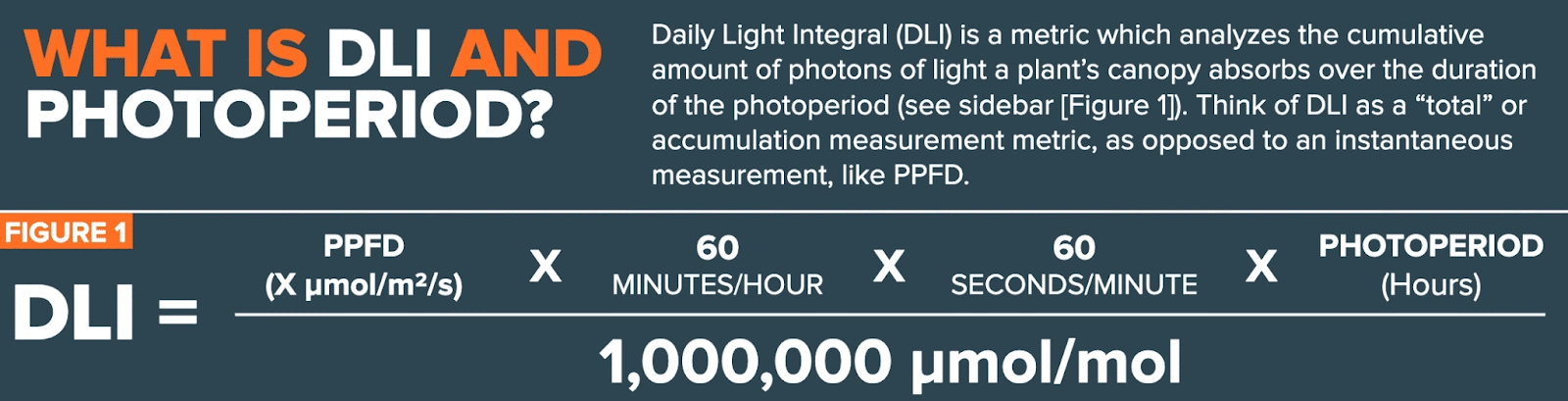
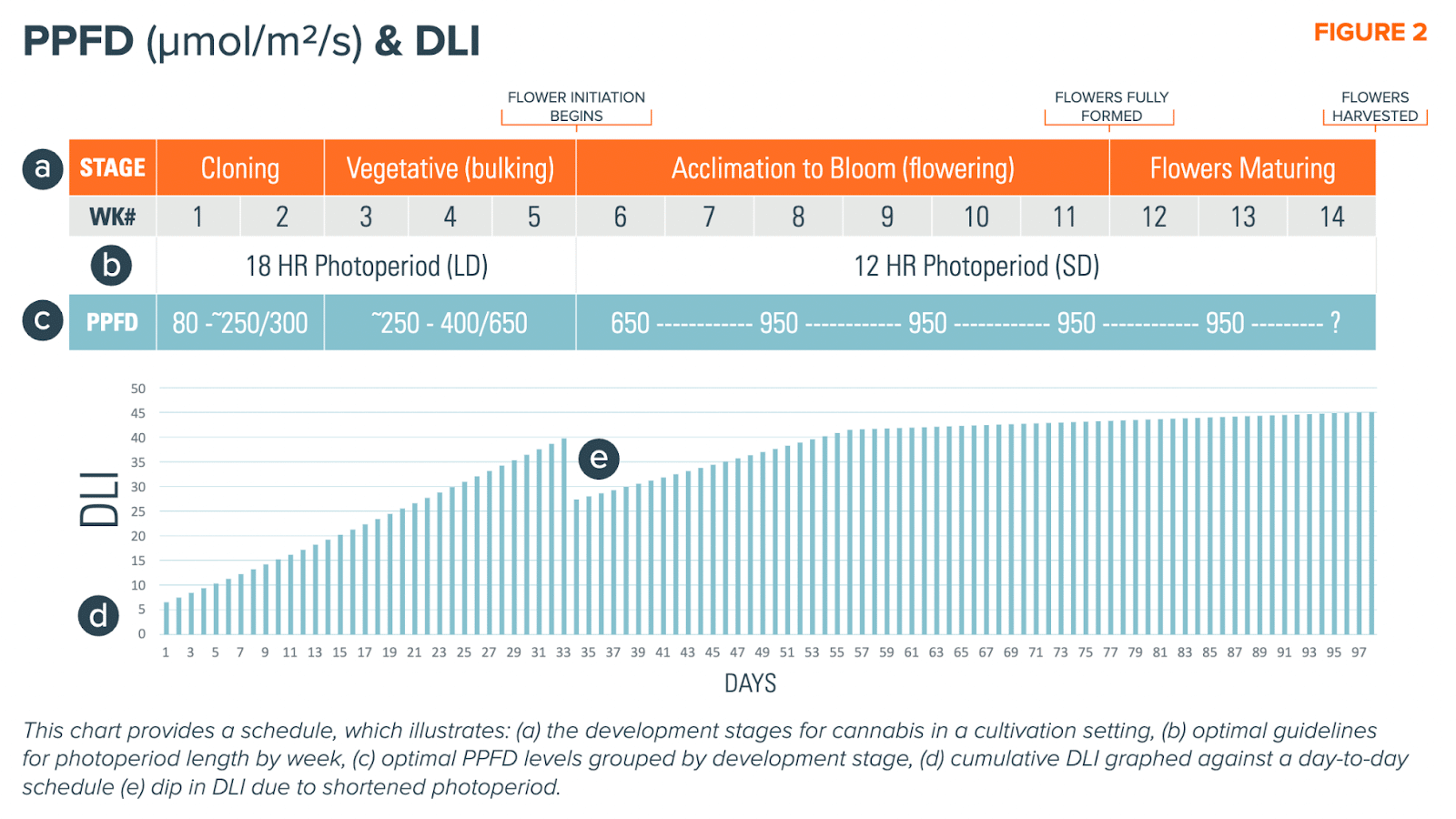
Cannabis has a high DLI because it works harder and is able to use light to drive more photosynthesis than most plants. In nature, cannabis also flowers during fall-winter months due to the longer dark periods of 12-hours or more. Key takeaway – A sufficient photoperiod schedule for cannabis cultivation consists of a long 18-hour photoperiod application during beginning stages (stock production, propagation and vegetative stages) followed by a short 12-hour photoperiod during the flowering stage.
Consejo de cultivo:
Si está pensando en instalar un invernadero, es importante reconocer que la intensidad luminosa permanece constante en el interior, mientras que en el exterior alcanza su punto máximo cuando el sol llega a su cenit al mediodía.
Cómo programar fotoperiódicamente el crecimiento del cannabis (gráfico)
Comprender la relación de las variables medioambientales
There are a variety of environmental variables that play an essential role in cannabis cultivation.
Heating, ventilation and air conditioning (HVAC) and vapor pressure deficit (VPD) are two important variables that greatly impact the cultivation of cannabis. In this section, Dr. Nadia Sabeh, president and founder of Dr. Greenhouse Inc., provides advice on how to manage HVAC paired with high-intensity lighting and the effects of VPD on cannabis plants.
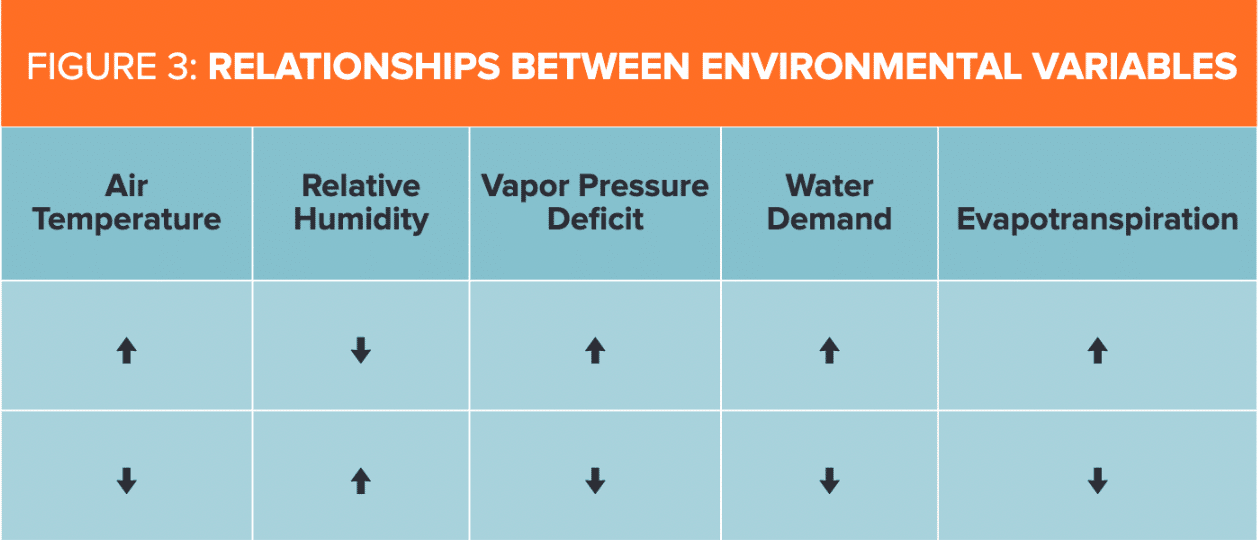
HVAC requirements change intricately when you increase light intensities in your environment. Dr. Sabeh recommends calculating the thermal conditions of a facility by addressing the facility size, heating sources and moisture sources. This analysis ultimately leads to the management of VPD, which is the measurement of the difference between saturation vapor pressure inside cells and the vapor pressure of a room’s air at a given temperature and humidity level. VPD affects how plants cool themselves by releasing moisture into the air, otherwise known as transpiration. When VPD is high, transpiration is rapid, in comparison, when VPD is low, transpiration is slow. Transpiration critically affects the diurnal balance of heat and moisture in the cultivation space (figure 3).
Consejo de cultivo:
A niveles muy bajos de VPD, puede formarse una película de rocío sobre las plantas, lo que proporciona un medio para el moho y las enfermedades. A niveles muy altos de VPD, las plantas utilizarán más agua para la transpiración, lo que afectará al riego y al uso de nutrientes.
Gestionar eficazmente la VPD con energía sensible y latente
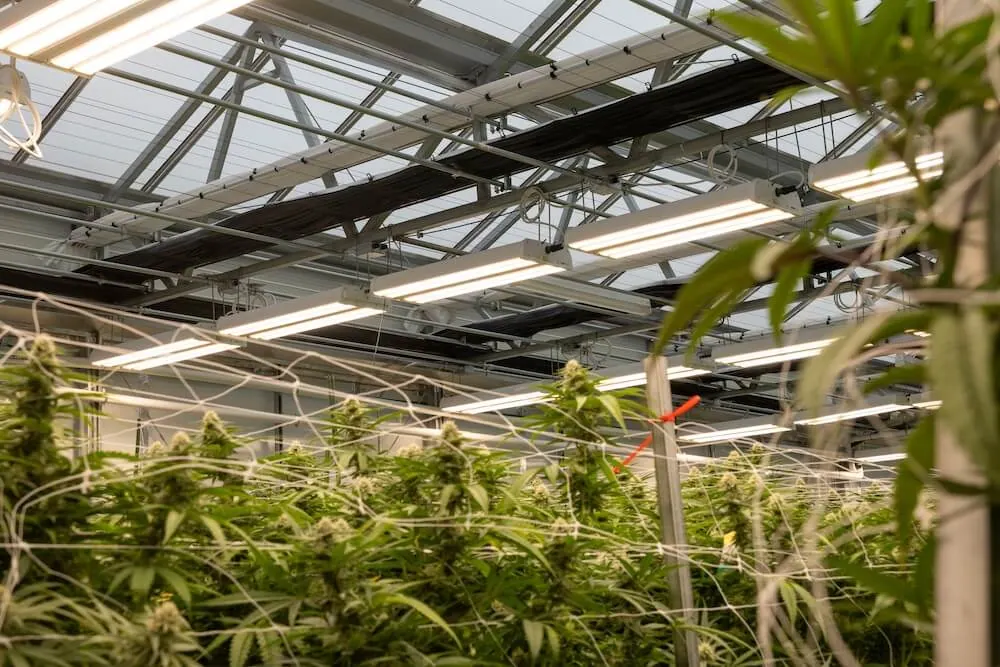
Under higher light intensities, targeting a specific vapor pressure deficit is an effective strategy for controlling transpiration and overall plant deployment. However, to effectively manage VPD, it is important to understand the dynamics of the grow room environment, including how and when heat and moisture are generated. Below are the important variables Dr. Sabeh calculates to better understand VPD management.
- La energía sensible es la forma de calor que los seres humanos y las plantas pueden percibir (o sentir). Se mide con un termómetro tradicional y se indica como "temperatura de bulbo seco".
- La energía latente es el calor asociado a los cambios de fase entre gas, líquido y sólido. El calor latente es atrapado por el agua cuando se evapora y es liberado por el vapor de agua cuando se condensa y se convierte en líquido.
- El cambio de fase se produce cuando un líquido gana energía (normalmente calor) y se evapora en un gas.
- La entalpía es la cantidad total de calor en un volumen determinado. Para una sala de cultivo, la entalpía es la suma del calor sensible y latente.
Consejo de cultivo:
Las luminarias LED generan menos calor que las lámparas de descarga de alta intensidad (HID). Esto suele significar que el espacio de cultivo necesita más deshumidificación y menos refrigeración por calor sensible. En general, Nadia calcula que los costes totales de electricidad se reducen entre un 5 y un 10% cuando se utilizan lámparas LED.
En resumen, hay algunos elementos esenciales que hay que comprender para cultivar cannabis correctamente. El primer paso es comprender el periodo óptimo de crecimiento de una planta de cannabis. A continuación, hay que conocer las variables ambientales entre la climatización y la densidad aparente de vapor (VPD). Por último, es importante gestionar eficazmente la VPD con distintas intensidades de luz. Si desea reequipar su invernadero con luces LED, póngase en contacto con los expertos de Fluence para obtener ayuda.