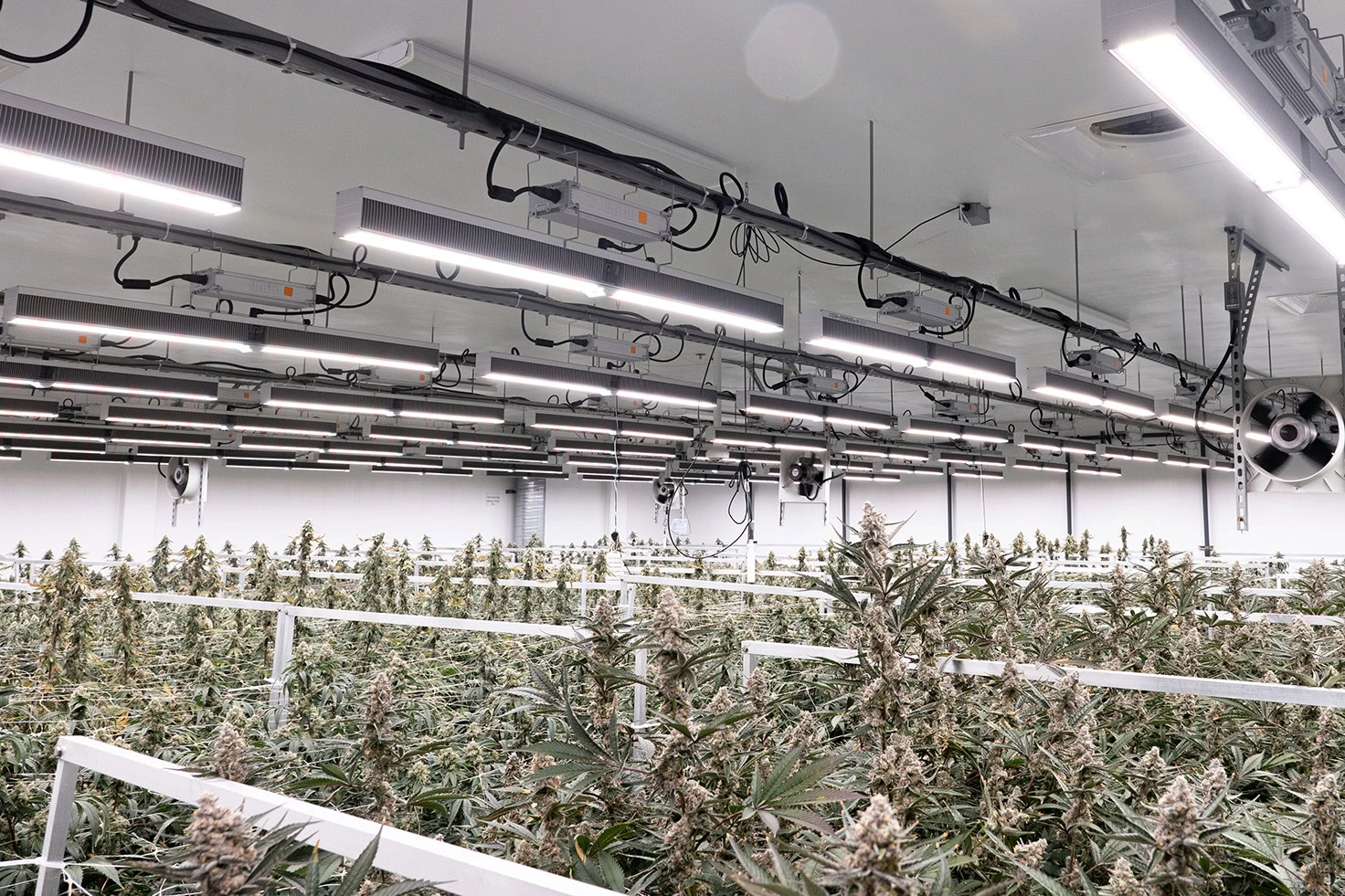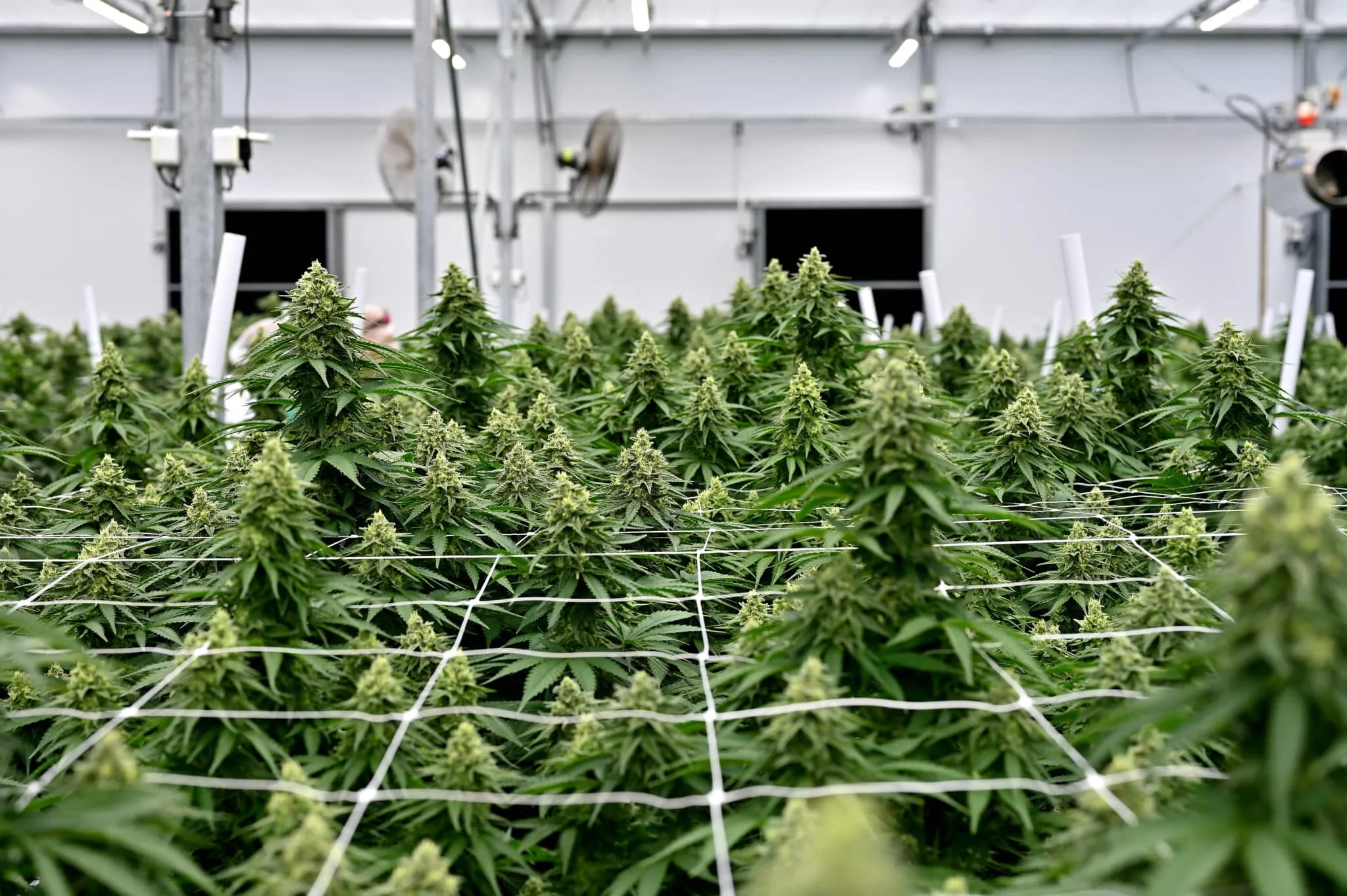
When light levels increase, how does a cannabis crop adapt and thrive? In this blog, you will learn the key elements needed to prepare a greenhouse environment for cannabis cultivation. In order to successfully cultivate cannabis, you will need to understand how cannabis grows, the relationship between environmental variables and how to effectively manage vapor pressure deficit (VPD) at different energy levels.
Kommerzieller Anbau von Cannabis
Cannabis cultivation requires optimal greenhouse environments, which include proper light intensities, HVAC requirements and VPD management. For the purposes of commercial cultivation, it’s important to know that cannabis is a “high DLI, short day” flowering plant.
Daily Light Integral (DLI) is a metric which analyzes the cumulative amounts of light photons a plant’s canopy absorbs over the duration of the photoperiod. This means DLI is the accumulative measurement metric, as opposed to an instantaneous measurement, like PPFD. A photoperiod is the period of time each day an organism receives illumination. Acclimating cannabis to light is a fundamental aspect of a commercial grow environment.
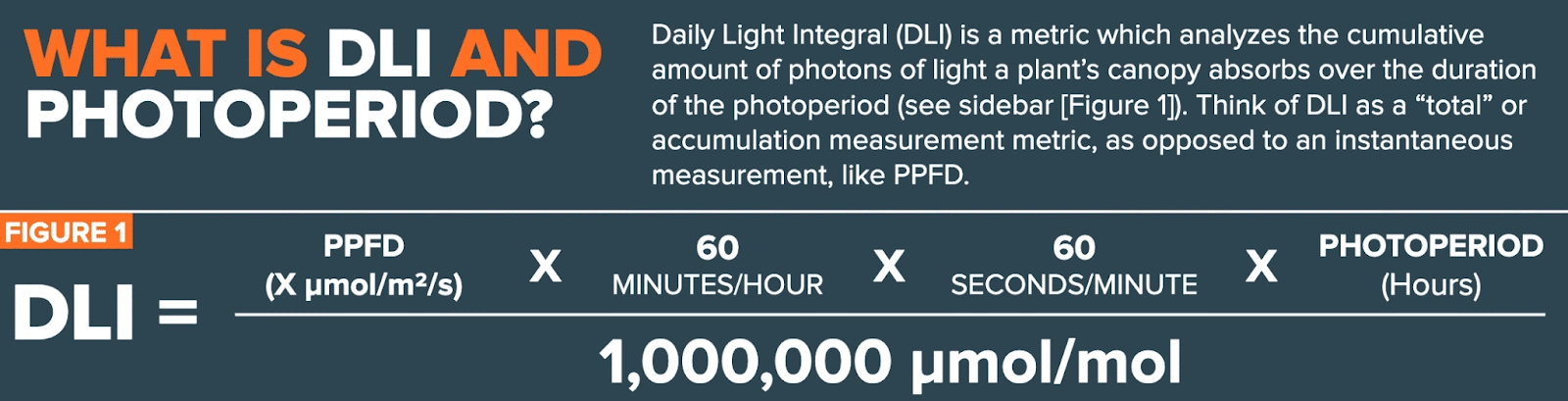
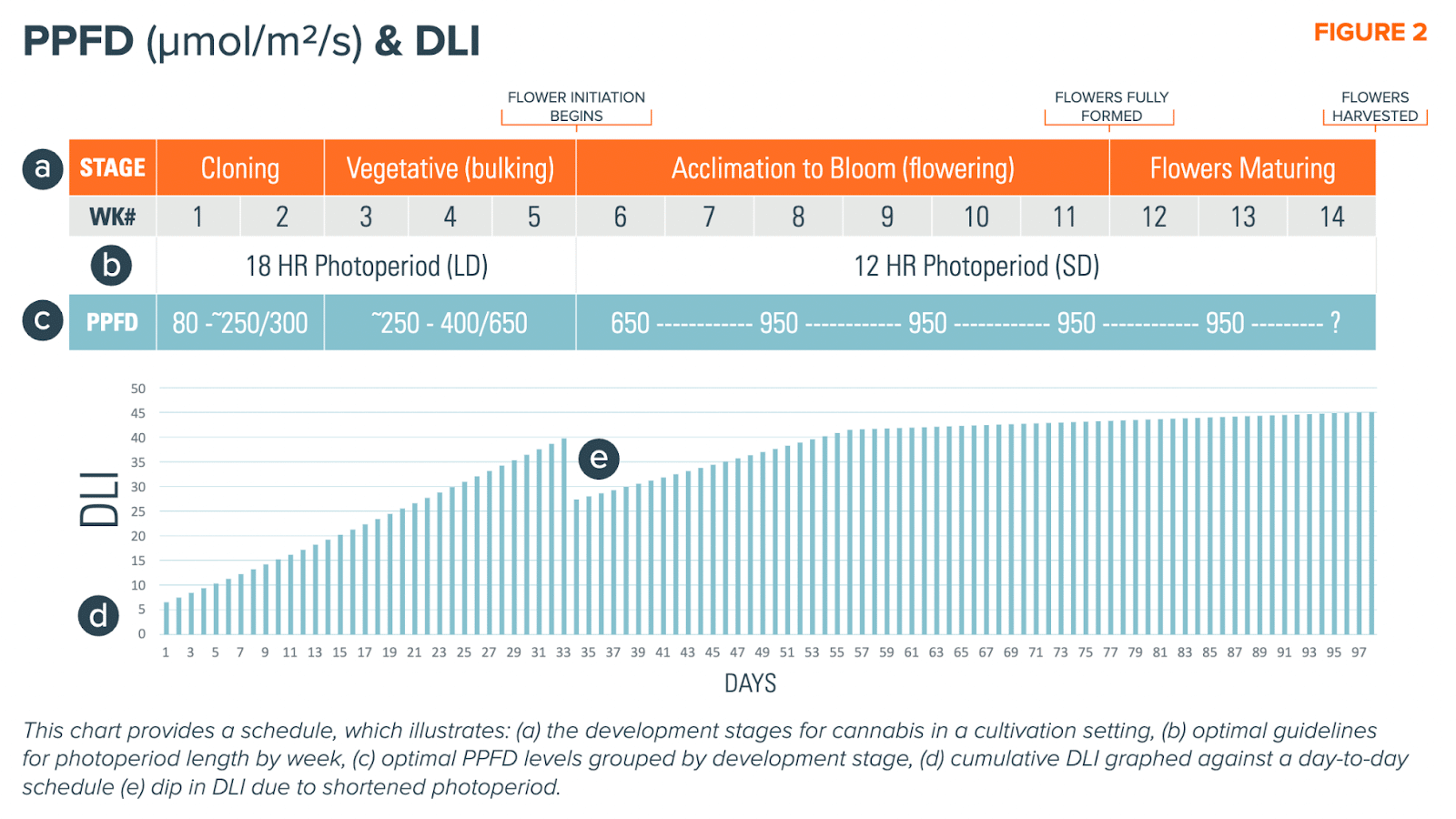
Cannabis has a high DLI because it works harder and is able to use light to drive more photosynthesis than most plants. In nature, cannabis also flowers during fall-winter months due to the longer dark periods of 12-hours or more. Key takeaway – A sufficient photoperiod schedule for cannabis cultivation consists of a long 18-hour photoperiod application during beginning stages (stock production, propagation and vegetative stages) followed by a short 12-hour photoperiod during the flowering stage.
Tipp zum Wachsen:
Wenn Sie den Einsatz eines Gewächshauses in Erwägung ziehen, ist es wichtig zu wissen, dass die Lichtintensität in Innenräumen konstant bleibt, während die Lichtintensität im Freien ihren Höhepunkt erreicht, wenn die Sonne zur Mittagszeit ihren Zenit erreicht.
Wie man das Cannabiswachstum photoperiodisch einteilt (Grafik)
Verstehen der Beziehung zwischen Umweltvariablen
There are a variety of environmental variables that play an essential role in cannabis cultivation.
Heating, ventilation and air conditioning (HVAC) and vapor pressure deficit (VPD) are two important variables that greatly impact the cultivation of cannabis. In this section, Dr. Nadia Sabeh, president and founder of Dr. Greenhouse Inc., provides advice on how to manage HVAC paired with high-intensity lighting and the effects of VPD on cannabis plants.
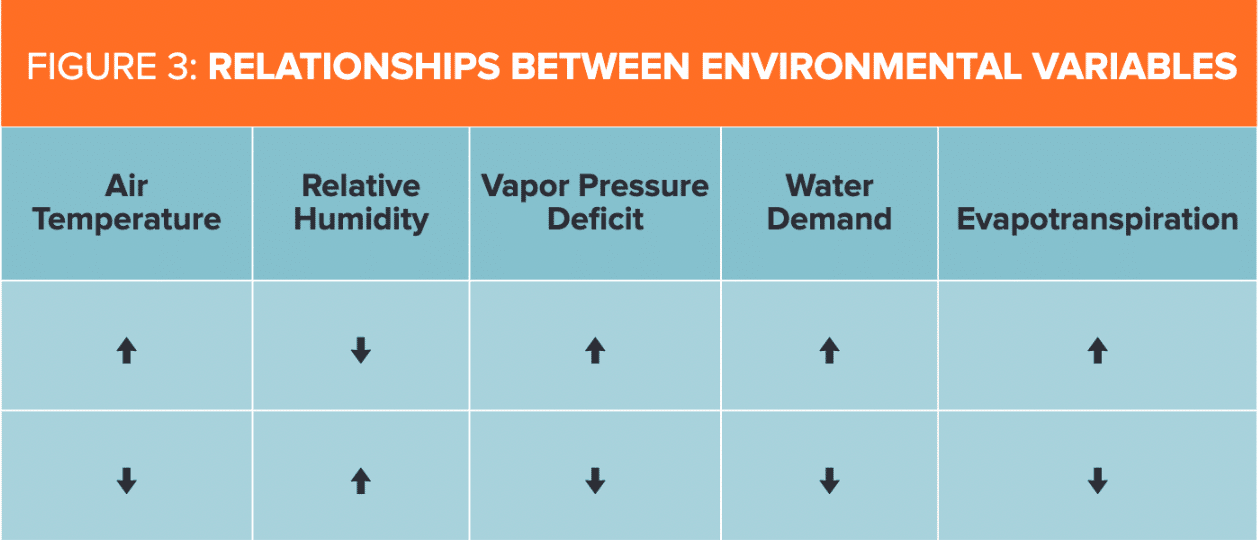
HVAC requirements change intricately when you increase light intensities in your environment. Dr. Sabeh recommends calculating the thermal conditions of a facility by addressing the facility size, heating sources and moisture sources. This analysis ultimately leads to the management of VPD, which is the measurement of the difference between saturation vapor pressure inside cells and the vapor pressure of a room’s air at a given temperature and humidity level. VPD affects how plants cool themselves by releasing moisture into the air, otherwise known as transpiration. When VPD is high, transpiration is rapid, in comparison, when VPD is low, transpiration is slow. Transpiration critically affects the diurnal balance of heat and moisture in the cultivation space (figure 3).
Tipp zum Wachsen:
Bei sehr niedrigen VPD-Werten kann sich ein Tau-Film auf den Pflanzen bilden, der einen Nährboden für Mehltau und Krankheiten bietet. Bei sehr hohen VPD-Werten verbrauchen die Pflanzen mehr Wasser für die Transpiration, was sich auf die Bewässerung und den Nährstoffverbrauch auswirkt.
Effektives Management von VPD mit sensibler und latenter Energie
Under higher light intensities, targeting a specific vapor pressure deficit is an effective strategy for controlling transpiration and overall plant deployment. However, to effectively manage VPD, it is important to understand the dynamics of the grow room environment, including how and when heat and moisture are generated. Below are the important variables Dr. Sabeh calculates to better understand VPD management.
- Sensible Energie ist die Form von Wärme, die Menschen und Pflanzen spüren (oder fühlen) können. Sie wird mit einem herkömmlichen Thermometer gemessen und als "Trockenkugeltemperatur" angegeben.
- Latente Energie ist die Wärme, die mit Phasenänderungen zwischen Gas, Flüssigkeit und Feststoff verbunden ist. Latente Wärme wird von Wasser eingeschlossen, wenn es verdampft, und wird von Wasserdampf freigesetzt, wenn er zu einer Flüssigkeit kondensiert.
- Eine Phasenumwandlung findet statt, wenn eine Flüssigkeit Energie (in der Regel Wärme) gewinnt und in ein Gas verdampft.
- Die Enthalpie ist die gesamte Wärmemenge in einem bestimmten Volumen. Für einen Anbauraum ist die Enthalpie die Summe aus fühlbarer und latenter Wärme.
Tipp zum Wachsen:
LED-Leuchtmittel erzeugen weniger Wärme als Hochdruck-Entladungslampen (HID). Das bedeutet oft, dass der Anbauraum mehr entfeuchtet und weniger mit fühlbarer Wärme gekühlt werden muss. Insgesamt schätzt Nadia, dass die Gesamtstromkosten bei Verwendung von LED-Leuchten um 5-10 % niedriger sind.
Zusammenfassend lässt sich sagen, dass es für den richtigen Cannabisanbau einige wesentliche Elemente zu verstehen gibt. Der erste Schritt besteht darin, die optimale Wachstumsperiode für eine Cannabispflanze zu verstehen. Als Nächstes müssen Sie Ihre Umgebungsvariablen zwischen HVAC und VPD verstehen. Und schließlich ist es wichtig, die VPD mit unterschiedlichen Lichtintensitäten effektiv zu steuern. Wenn Sie Ihr Gewächshaus mit LED-Beleuchtung nachrüsten möchten, wenden Sie sich an die Experten von Fluence, um Hilfe zu erhalten.