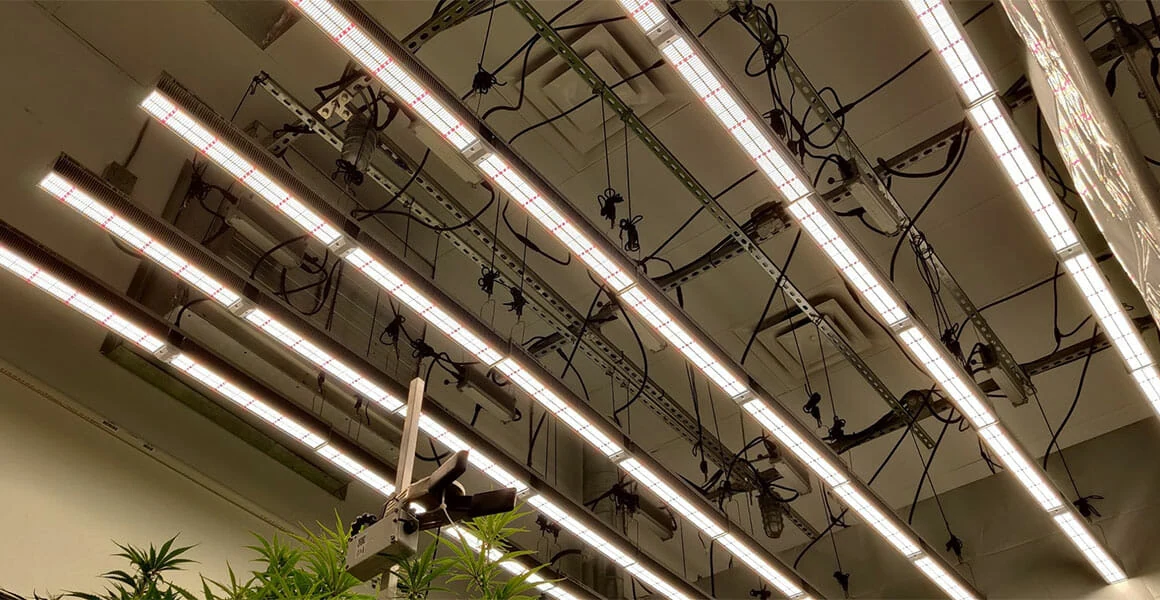
A medida que los agricultores se esfuerzan por optimizar los cultivos con el fin de aumentar el rendimiento, la intensidad luminosa se ha convertido en un parámetro fundamental para alcanzar este objetivo. Conscientes de ello, Fluence y sus socios de investigación están trabajando para respaldar con datos reales la relación entre la intensidad luminosa y el rendimiento.
Fluence recently conducted two research projects on this topic and presented the results of those studies in a webinar attended by cultivators from around the globe. This webinar summarized the results of their high light intensity trial, a continuation of their spectra research work, read more here.
Intensidad luminosa y rendimiento
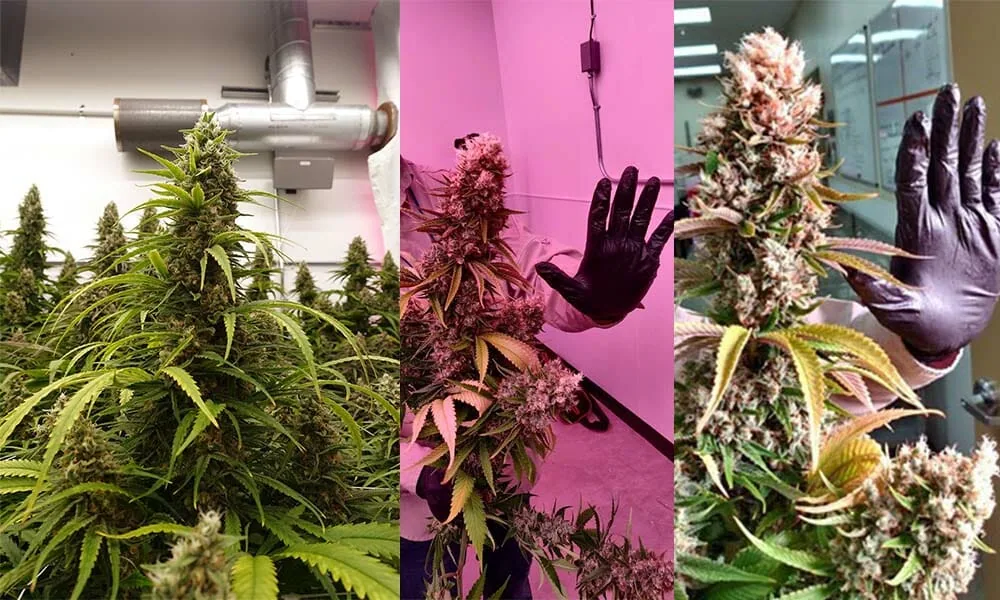
The high light intensity research trial was conducted in collaboration with Texas Original Compassionate Cultivation, a medical cannabis production facility and dispensary in Austin, Texas. Results were presented to webinar attendees by Fluence principal scientist, Dr. Dave Hawley.
El estudio se llevó a cabo con intensidades lumínicas que oscilaban entre 1100 µmol m-2 s-1 µmols y 2100 µmol m-2 s-1 µmols. Se utilizaron tres variedades: alta en THC (tipo I), equilibrada en THC y CBS (tipo II) y baja en THC (tipo III). El estudio, con tres réplicas, garantizó la máxima calidad de los datos.
In the previous light spectra study, one of key takeaways was the impact of photobleaching on flower as you add more red light into the spectra. Because of this, the research team designed the experiment using PhysioSpecTM R4 (broad white).
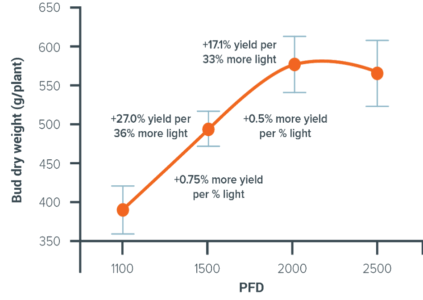 What was discovered? The largest yield increase occurred between 1100 µmol m-2 s-1 y 1500 µmol m-2 s-1 (gráfico 2). Con un 26% más de luz, el rendimiento aumentó un 27%. El rendimiento siguió aumentando hacia 2100 µmol m-2 s-1 where researched observed a yield peak.
Los parámetros ambientales se supervisaron de cerca durante todo el experimento. Los investigadores observaron que, con tratamientos superiores a 1500 µmol m-2 s-1, la gestión de estos parámetros se vuelve mucho más difícil. El equipo de servicios de horticultura de Fluence comentó posteriormente cómo deben gestionar los cultivadores estos cambios en el entorno. La relación entre el rendimiento de los brotes y la intensidad de la luz fue lineal hasta 1500 µmol m-2 s-1. El rendimiento de los brotes alcanza su máximo alrededor de 2100 µmol m-2 s-1. Las cualidades de la luz con más del 60 % de contenido rojo indujeron un fotoblanqueo severo.
Comparación entre LED y HPS
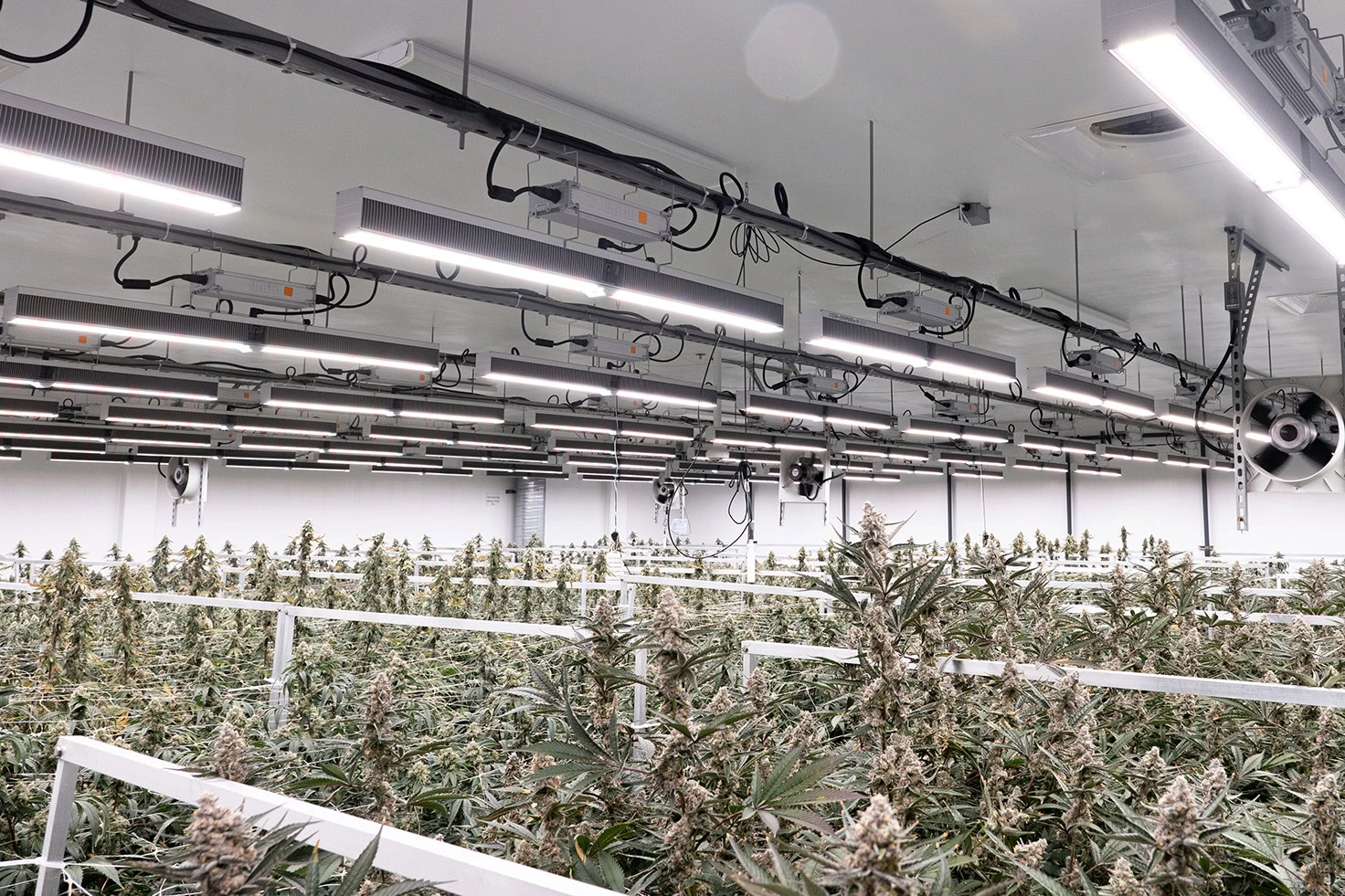
What happens in the lab is then applied in a commercial facility, taking the learnings from the study, Director of Horticulture Services, Dr. Abhay Thosar presented data from trials that compared LED to HPS and the associated results when increasing LED light intensity.
En concreto, el ensayo —realizado a lo largo de dos ciclos de floración— comparó VYPR a 1500 µmol m-2 s-1 con HPS a 1200 µmol m-2 s-1. A excepción de la temperatura del aire, los parámetros ambientales se mantuvieron iguales.
¿Los resultados? Fluence observó, en general, el mismo aumento en el rendimiento por aumento de intensidad que el demostrado en el ensayo de investigación. Con algunos cultivares, no observaron aumentos, pero con otros, los aumentos fueron mucho mayores. Además, observaron un diámetro de brote mucho mayor con LED, en comparación con HPS.
El Dr. Thosar señala que hay margen para seguir mejorando si se realizan ajustes en los parámetros ambientales, como la iluminación, la temperatura, la humedad, el VPD,el CO2, el flujo de aire, el riego y los nutrientes, por ejemplo.
Además, incluso con un aumento del 25 % en la intensidad luminosa, el estudio demostró una reducción del consumo energético del 25 %.
Wrapping up the webinar, Fluence Horticulture Service Specialist, Taylor Kirk presented information about SPYDR 2h, Fluence’s new high-intensity close proximity light. Intended to hang within 8-10 inches of the canopy, SPYDR 2h is a new solution for high intensity in vertical farms. Growers with high-bay applications can achieve their high light intensity needs with the VYPR Series.
Tras la presentación, los expertos de Fluence respondieron a las preguntas de los asistentes al seminario web. A continuación se incluyen algunas de ellas:
¿Por qué son tan importantes los ajustes de CO2 en condiciones de alta intensidad?
A: As more light is applied, it tells plants to work harder and faster. Plants need to be given more inputs and they need to increase that biomass. New findings are coming with every study.
¿Reducirías la intensidad de la luz en algún momento?
A: Under HPS, at the end of the growing cycle. In these trials, the intensity was not reduced. It depends on the grower’s goals. Light can be used as a stressor. You have to find the right balance between light stress, drought stress, or temperature. Fluence hasn’t explored this and can’t recommend it at this point.
Al aumentar la intensidad de la luz, ¿ves más inconsistencias en lo profundo del dosel floral?
A: Increases in cannabinoids have been seen at the top of plants no matter what the light intensity is. Fluence is continuing to look at how to increase cannabinoids in the lower parts of the plant — making a deliberate effort to understand.