Fluence principal scientist Dr. David Hawley spoke to indoor cultivators as part of the 2021 Virtual Plant Lighting Short Course, presented by GLASE, LAMP and OptimIA. He was one of more than 20 nationally recognized horticulture experts to provide insight on the latest agricultural research, innovations and best practices, speaking alongside Erico Mattos, executive director of GLASE and co-founder of Candidus; Marc van Iersel, University of Georgia horticulture researcher and co-founder of Candidus; Bruce Bugbee, Utah State University crop physiologist; and Erik Runkle, project director of OptimIA and a professor and extension specialist at Michigan State University.
Estas son las principales conclusiones de la sesión del Dr. Hawley para los cultivadores de interior.
Aproveche su ventaja competitiva natural
Indoor agriculture operations have one overarching advantage over outdoor farms: Localized production and distribution allow them to focus more on crop control and quality than on extending the shelf life of a crop to account for shipping and supply chain timelines.
Indoor farms simply have a different, and often better, value proposition than field production. More precise control over an environment’s lighting, substrate, irrigation, vapor pressure deficit, temperature, and nutrition naturally yields greater crop consistency. The challenge today is that most crops aren’t bred for quality—they’re bred for commercial viability, which for decades has meant crops need to survive long enough to make it to grocery store shelves while staying resistant to harvest-spoiling diseases.
Those are still critical considerations and have to be factored into both plant genetics and overall cultivation strategies for indoor farmers. But with the constraints on post-harvest shelf life lessened or removed entirely by a shift to localized production, indoor cultivators can suddenly prioritize fruit nutrition, taste, smell, and aesthetic to offer a superior product many of today’s end customers seek.
Sea especialista en iluminación, no generalista
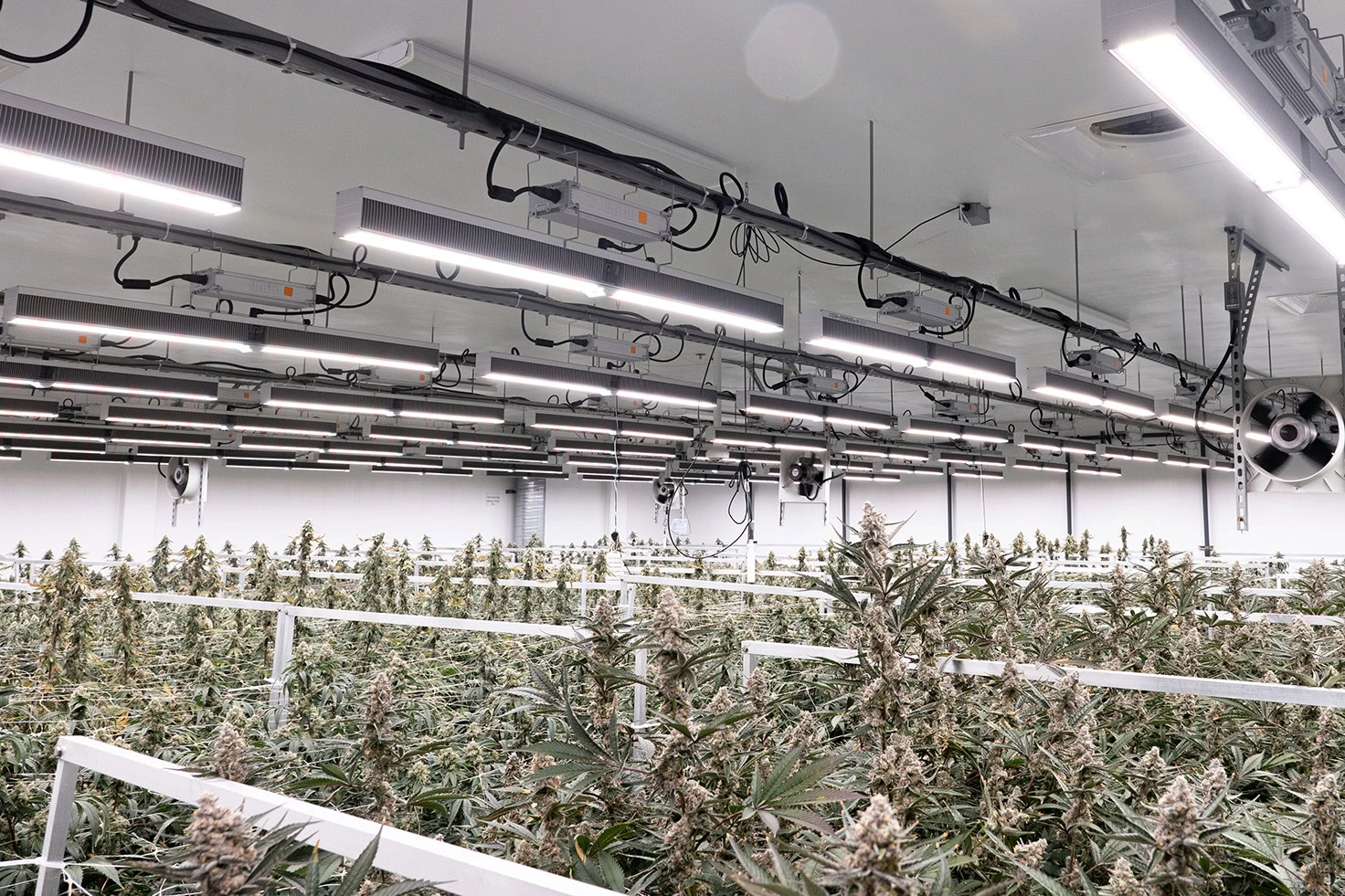
Much like an indoor farm’s overall ecosystem, a lighting strategy is defined by nuance and precision. Whether growing one crop or several, cultivators have to pay special attention to light intensity and spectrum. Every cultivar of every crop has a preferred intensity using a specific spectrum. Finding that cross-section to maximize yield and quality is every cultivator’s ultimate goal. Fluence is leading the charge in this respect, investing in the research across crops and individual cultivars to find the right combination for cultivators. While every operation is unique, we can make smart determinations about which crops prefer which combination of intensity and spectrum.
In indoor production, lettuce, for instance, should be grown at about 200 µmol/m2/s, strawberries at about 600 µmol/m2/s, and cannabis at about 1,500 µmol/m2/s. Ultimately, it’s up to cultivators to find the exact intensity for their crops—with some help, of course. Fluence’s horticulture services team can work directly with indoor farmers to identify and leverage the right intensity to achieve their cultivation goals.
The same can be said for light spectrum, which is even more nuanced and cultivar-dependent. More than almost any other factor, the spectrum a cultivator uses determines a crop’s morphology, yield and chemistry. Without sunlight, a harvest is entirely dependent on the spectra you choose. That’s why it’s critical that cultivators identify production goals before deploying a lighting strategy. Are you shooting for a certain metabolic profile to influence smell and taste? Do you need to increase yield? Are you trying to free up production space to accommodate more plants?
These larger business-critical questions have to be answered from the outset, along with more practical considerations like working environment, crop scouting, plant appearance, and overall marketability.
La eficacia es importante, pero no a expensas del rendimiento de los cultivos
LEDs run cooler than HPS lamps and at a fraction of the cost, so there’s a natural, built-in efficacy (measured as µmol/J) and advantage. Within LED systems, however, different spectra have different efficacies. Longer wavelengths like red light have greater efficacies, but that doesn’t mean cultivators should automatically turn to lighting strategies that leverage large quantities of red light to save on operational costs. In practice, most plants don’t thrive under high fractions of red light. The more sensitive a plant is to a certain spectrum, the more important it is to find the right spectrum that balances efficacy with overall plant performance.
No diseñe una estrategia de iluminación aislada
La iluminación es uno de los factores más importantes para el rendimiento de las plantas, ya que influye en todos los demás parámetros ambientales. Todo, desde la temperatura, la transpiración, el riego y la absorción y demanda de nutrientes, se verá afectado incluso por pequeños cambios en la estrategia de iluminación. Por eso es tan importante no hacerlo en el vacío. Fluence ofrece una gama de servicios y equipos para abordar cada parámetro ambiental importante y ayudar a los cultivadores a encontrar y capitalizar la estrategia adecuada, desde diseñadores de iluminación y asistencia sobre el terreno hasta expertos en descuentos que ayudan a los clientes a ahorrar en costes operativos.