Un invernadero de Virginia aumenta la biomasa y reduce el consumo de energía con el uso del espectro Fluence PhysioSpec
Before “sustainability” became a buzzword tossed around with abandon, the practice of growing good food with great respect for the environment was the foundation of Virginia-based Shenandoah Growers.Founded more than 20 years ago, the herb-producing greenhouse farm has scaled from fewer than two dozen employees delivering to a handful of Shenandoah Valley customers to a bustling enterprise serving 5,000 retail outlets.
And even as the company has grown, the dedication to responsible, organic growing practices has remained firmly in place. Recycled rainwater nourishes the fragrant-smelling herbs, while thousands of ladybugs, other beneficial insects and old-fashioned, yellow sticky “fly paper” keep pests at bay without the use of harmful chemicals.
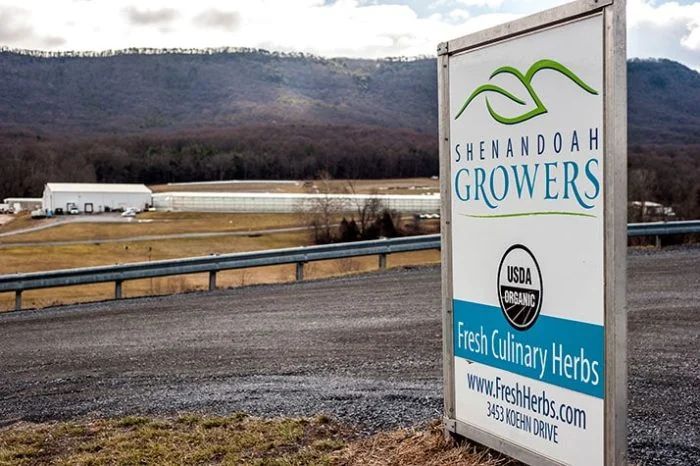
Enclavada entre los Apalaches y las montañas Blue Ridge, Shenandoah Growers produce hierbas ecológicas que disfrutan los consumidores desde la costa este hasta Texas.
Pero no nos equivoquemos: A pesar de su dedicación a la producción responsable, Shenandoah Growers es una empresa gestionada con precisión y alta tecnología, afirma Bob Hoffman, Director Científico. Los invernaderos más modernos garantizan que se satisfagan las necesidades exactas de las plantas mediante el suministro preciso de luz, temperatura, nutrientes y agua.
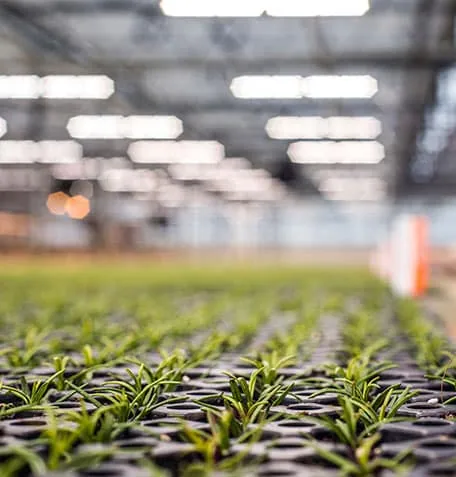
On their way to flavoring savory dishes
up and down the East Coast, rosemary plants get their start
under Fluence VYPRx LED grow lights (VYPR available Q2 2016).
Muchas hierbas a muchos minoristas
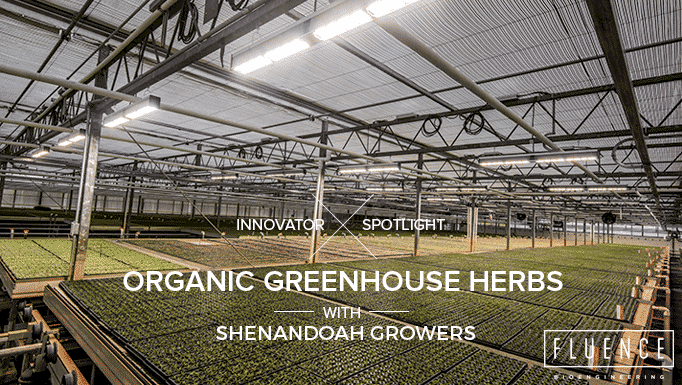
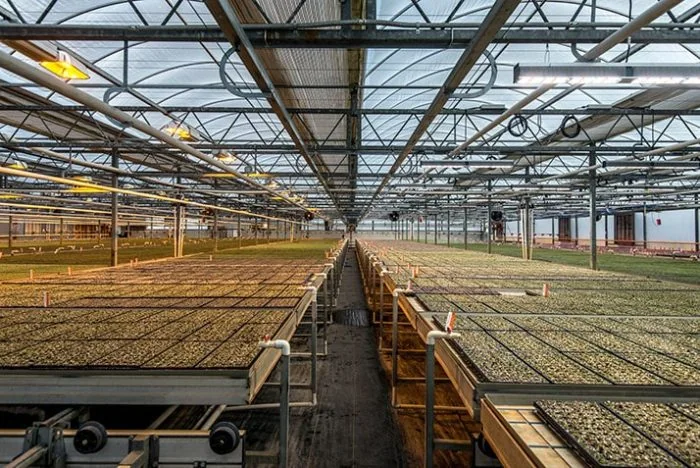
Six acres of greenhouses produce both potted and cut herbs — cilantro, dill, parsley, mint, rosemary, thyme, oregano, sage and a number of basil varieties, just for starters — for distribution to big-name grocery retailers throughout the Eastern U.S. and Texas. “We grow more than 10 million pots of herbs a year,” says Hoffman.
In addition to the greenhouses, “We’re developing some grow room concepts for plug and nursery production,” says Hoffman.
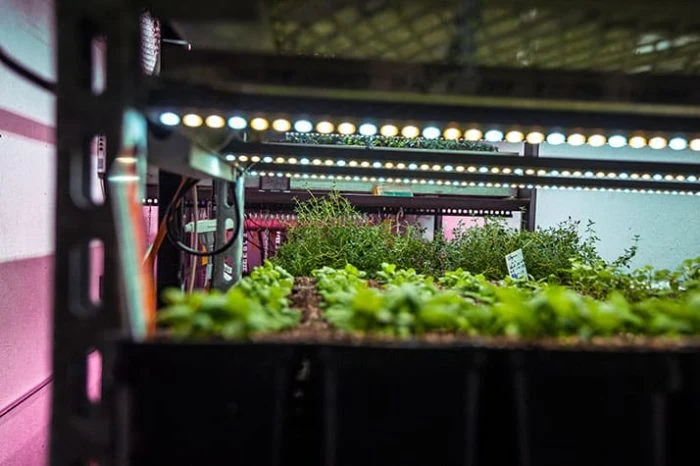
Un prototipo del sistema de propagación Fluence prepara las plantas jóvenes para su trasplante al invernadero.
And as productive as Shenandoah Growers is, Hoffman considers it his mission to increase the company’s efficiency even further. He’s proud of their growing facility and the quality of their products. Part of his strategy is to use supplemental lighting to enhance crop productivity during times when natural sunlight in insufficient — for example, during winter or on cloudy days other times of the year.
“Supplemental lighting increases the productivity as well as the quality of our crops,” says Hoffman. “When sunshine is limited, we use the lights to increase crop yield vs. what we would otherwise produce.”
Hoffman has tested various lighting systems for a number of years.

“HPS is fairly consistent, but what I see with <a href="/products/">Fluence LED systems</a> is enhanced color, reduced stretching and better flavor,” says Hoffman.
Impresionantes resultados del Fluence
“I see a more compact plant with tighter internodal spacing. Combine that with increased productivity and decreased operating costs, and going forward, we’re absolutely investing in LED,” he adds.
While Hoffman, a 45-year veteran of the horticulture industry, has tested a number of lights from a select number of LED manufacturers, he says he definitely likes what he sees from Fluence Bioengineering. “They’ve been a great partner. They have developed specialized tools to help us accelerate our production goals — a custom solution to fit our spectral needs,” he says. “They’ve worked very diligently and responsibly to find the correct solution quickly.”
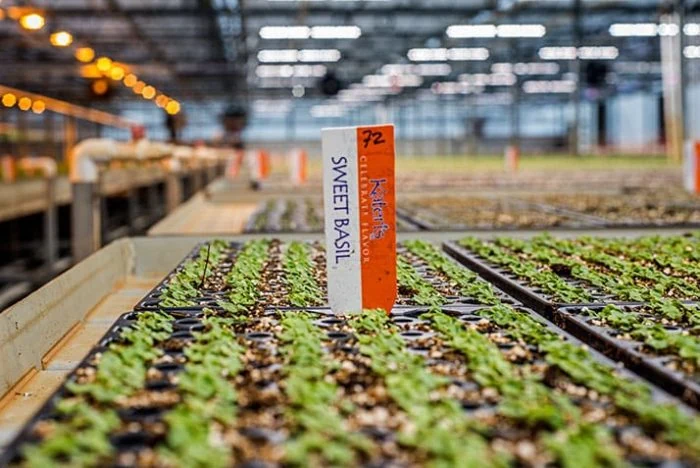
La albahaca dulce pasó de la propagación al invernadero bajo los sistemas Fluence VYPRx.
When you look at the efficacy of the electrical input vs. photon input, the low maintenance requirements and the reduction of heat output per electrical watt input, Fluence LEDs just make sense,” says Hoffman.
For a farm focused on high efficiencies, increased productivity and earth-friendly methodologies, adding LED supplemental lighting to an already successful greenhouse farming operation sounds like a business model that will sustain Shenandoah Growers well into the future. That’s great news for the millions of consumers who rely on Shenandoah’s healthful herbs for dinner every night.
Es fácil ver la diferencia entre los sistemas Fluence VYPR LED y HPS.