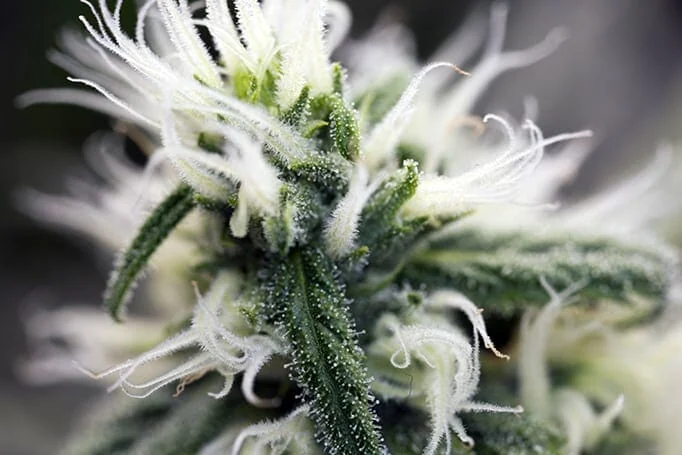
De los tricomas que vio en Super Silver Haze, Leech dice: "El desarrollo general de los tricomas es fuerte, ya que estamos viendo predominantemente tricomas capitados-acechados y formaciones densas."
Trichomes are tiny, resin-producing hairlike appendages that spring from the surface of plants. Mention that at a dinner party and, depending on who you hang out with, you may receive some puzzled looks. However, if one of the guests were Fluence consultant Ryley Leech, he’d jump right in with a dozen fascinating facts about these tiny spindles.
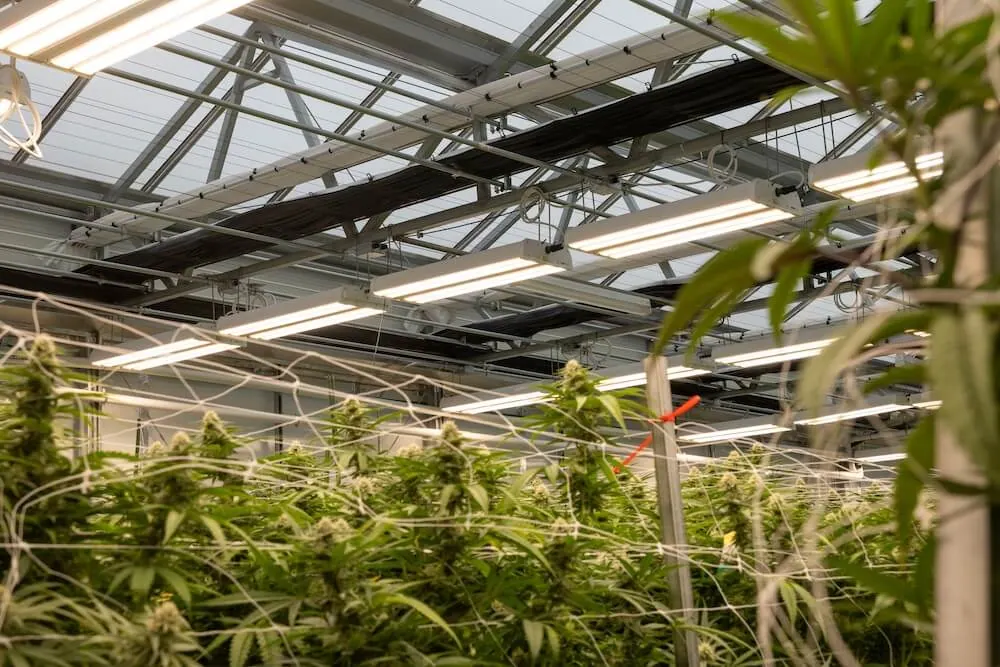
Leech recently put his trichome-loving brain — and camera; check out the beautiful images accompanying this article — to work on an analysis of a variety of cannabis genetics growing in a controlled environment in southern California. As one of the first Fluence SPYDRx PLUS clients was approaching day 47 of flower and seeing abnormally early maturation of trichomes, Leech was brought in to analyze the development and spectral impact compared to previous cycles under high-pressure sodium (HPS).
Aquí, en Blackberry Kush, podemos ver tanto tricomas con antocianina como tricomas recién formados, de color naranja.
As he got into his studies of these California cannabis plants, one of Ryley’s most interesting discoveries was that the trichomes were all unusually uniform. “In strains grown under HPS, I usually see a lot of irregularity as well as lanky, spindly trichomes,” Instead, here he was seeing a surprisingly high number of capitate stalks and dense formations — very good things, he says.
At this facility, he looked at several strains, including Super Silver Haze, THC Bomb, J1, Blackberry Kush and Dr. Who.

“Across the board, the strains had uniform capitate stalks,” says Leech. “These trichomes have nice structure with no signs of weakness.”
Leech likes to see uniform trichome production because without uniform stalk or heads, the trichomes lose potency, he says. “The uniformity I’m seeing points to more potency,” adds Leech, who has spent much of his career focusing on medicinal cannabis strains to treat seizures in children. “I pay close attention to trichome production because I’ve learned that trichome types play an important role in developing medicines for various ailments.” And then of course there’s the THC thing.
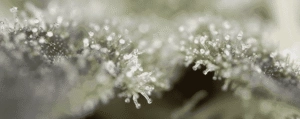
Leech está impresionado con la formación de tricomas que vio en THC Bomb. "Gran aspecto de la flor y producción de tricomas. La mayoría tienen una estructura perfecta", afirma.
Leech afirma que tiene en cuenta tres factores cuando analiza la formación de tricomas:
- Disponibilidad de nutrientes
- Genética
- Calidad de la luz
Leech examinó detenidamente estos criterios al analizar el cultivo de California. Las plantas que evaluó se cultivaron con un método de suelo orgánico vivo, alimentándose únicamente con agua y tés de compost. "Creo que este método permite el mayor movimiento de nutrientes debido a la compleja rizosfera y también permite cultivar una amplia gama de genéticas en un suelo similar y con la misma agua/té", afirma Leech.
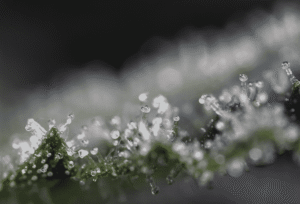
Formación de tricomas en J1 en el día 47: fuertes tricomas capitados y uniformes.
The second factor he considers when evaluating trichome development involves geographical regions and lineage. Certain genetics — from particular parts of the world — behave in predictable ways, he says. And years of experience have led him to expect particular results from particular growing scenarios, such as growing outdoors, or growing under typical HPS lights.
In terms of light quality, Leech says, not much has been studied regarding actual trichome formation under various lighting types. “However, I have studied many flowering plants — under many lighting types — for many years and have a wealth of anecdotal and photographic evidence to rely on in terms of comparison,” he adds.
But much of what he saw in terms of trichome development under the Fluence LED lighting was new and surprising.
“I saw a good, solid density of trichomes per square centimeter.“
When looking at a macro view of the plant, it’s important to notice how the trichome is progressing. Does trichome development continually push out? The further the resin gets from the flower, the more potent it is,” says Leech.
Overall, Leech said he was very impressed at the trichome production on these cannabis strains.
“I need to do more studies, but I think that light intensity seems to drive overall potency, and the specific spectrum being delivered by the Fluence lights help the plants synthesize the cannabinoids,” he says.
We’ll keep you posted on what his next studies reveal, and be sure to check out an article we’ll be publishing soon that explores Leech’s thoughts on anthocyanin formation. You’ll have to tune in to that article to find out what that’s all about and whether you should bring it up at your next dinner party.