In a compelling presentation at MJBizCon 2024, Fluence Data Scientist Dr. Jason Matlock addressed one of the cannabis industry’s most pressing challenges: how to effectively use data to improve cultivation operations without becoming overwhelmed by complexity. As the cannabis industry continues to commodify and profit margins tighten, the ability to make data-driven decisions has become increasingly crucial for success.
“The key here is to recognize that collecting data is not the same as gaining insight,” Matlock emphasizes. “There’s a lot of companies who are collecting data, and they’re drowning in it. They have all sorts of records, but they’re not learning anything from that material.”
La ciencia de datos en el cultivo de cannabis
Matlock cuestiona la idea errónea de que la ciencia de datos requiere complejos sistemas de inteligencia artificial o redes neuronales. En su lugar, presenta la ciencia de datos como un proceso accesible que comienza con la formulación de las preguntas adecuadas. Las herramientas de visualización sencillas, como los diagramas de caja y los gráficos lineales, a menudo pueden aportar información muy valiosa si se utilizan de forma estratégica.
Tipos de análisis de datos
La presentación describe dos tipos fundamentales de análisis de datos en el cultivo:
- Investigación: Se centra en hechos o resultados concretos y trata de entender por qué ha sucedido algo para repetir el éxito o evitar los fracasos.
- Supervisión de procesos: Se centra en garantizar la ejecución coherente de las mejores prácticas conocidas
Casos prácticos de análisis de datos sobre el cannabis
To demonstrate how data science principles can be effectively applied in cannabis cultivation, Dr. Matlock presented two compelling case studies. These examples showcase both investigative analysis and process monitoring in real-world scenarios, illustrating how systematic data collection and analysis can solve complex cultivation challenges. The first case study examines a temperature management issue that challenges common assumptions, while the second explores innovative approaches to standardizing defoliation practices. Both cases highlight the practical value of data-driven decision-making in modern cannabis cultivation.
Caso práctico 1: Investigación sobre la gestión del calor
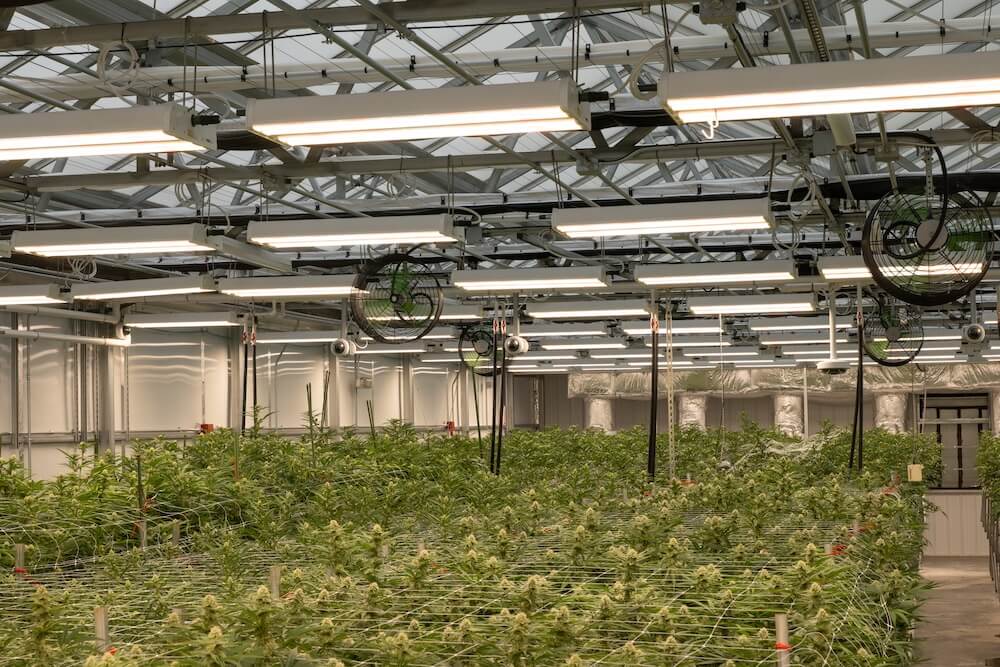
To illustrate these concepts, Matlock shared a practical example involving a client’s claim about Fluence fixtures causing excessive heat in their greenhouse. Through systematic data analysis using simple box plots, the team discovered that room location and insulation, not the fixtures, were responsible for temperature differences. This case study demonstrated how asking the right questions and following a methodical approach can reveal unexpected insights and solutions.
Caso práctico 2: Supervisión del proceso de defoliación
The second example focused on process monitoring in defoliation practices, a critical but labor-intensive cultivation task. “How do we know if defoliation is standardized and under control?” Matlock asks. “If it’s that critical and we’re investing that much into it, why don’t we know objectively if we are successfully standardizing this practice?”
He presented two potential measurement approaches:
- Control de la penetración de la luz en el dosel inferior
- Utilización de imágenes automatizadas para contar yemas visibles
La elección entre estos métodos depende de la escala y los recursos de la operación, lo que ilustra cómo las soluciones de ciencia de datos pueden adaptarse a distintos entornos de cultivo.
Proceso de aplicación
La presentación esbozó un proceso claro para implantar la ciencia de datos en el cultivo:
- Empezar con preguntas específicas y críticas para la empresa
- Aplicar la comprensión del sistema para identificar las métricas pertinentes
- Desarrollar métodos adecuados de recogida de datos
- Procesar datos para resaltar patrones significativos
- Analizar los resultados y tomar medidas
- Repetir el ciclo para medir el impacto
Conclusión
“Data science at its core is meant to be accessible and empowering,” Matlock concludes. “Start simple, ask intentional questions, take steps to measure and refine what matters the most, and you’ll be successful. You can always build from there, but if you don’t start at that point, you almost certainly will become lost.”
The presentation effectively demonstrated that data science in cannabis cultivation doesn’t require advanced degrees or complex systems. Instead, it demands a methodical approach to asking and answering questions that directly impact business success. By following this systematic process and starting with simple, focused metrics, cultivators of any size can begin leveraging data to improve their operations and bottom line.
This practical approach to data science offers cannabis cultivators a clear path forward in an increasingly competitive market, where efficiency and consistency are paramount to success. The emphasis on accessibility and intentionality provides a refreshing counterpoint to the often-overwhelming world of big data and artificial intelligence, making data-driven decision-making achievable for operations of all sizes.
Sobre el autor
Dr. Jason Matlock brings over 10 years of experience in the cannabis industry, including commercial scale cultivation, facility design and construction, and business development consultation. He excels at integrating and balancing economic, logistical, and horticultural considerations when addressing operational challenges. Dr. Matlock has a proven record of success with designing and conducting grower-participatory on-farm research trials, and is skilled at performing statistical analyses on biological datasets and presenting results in easily interpretable formats.