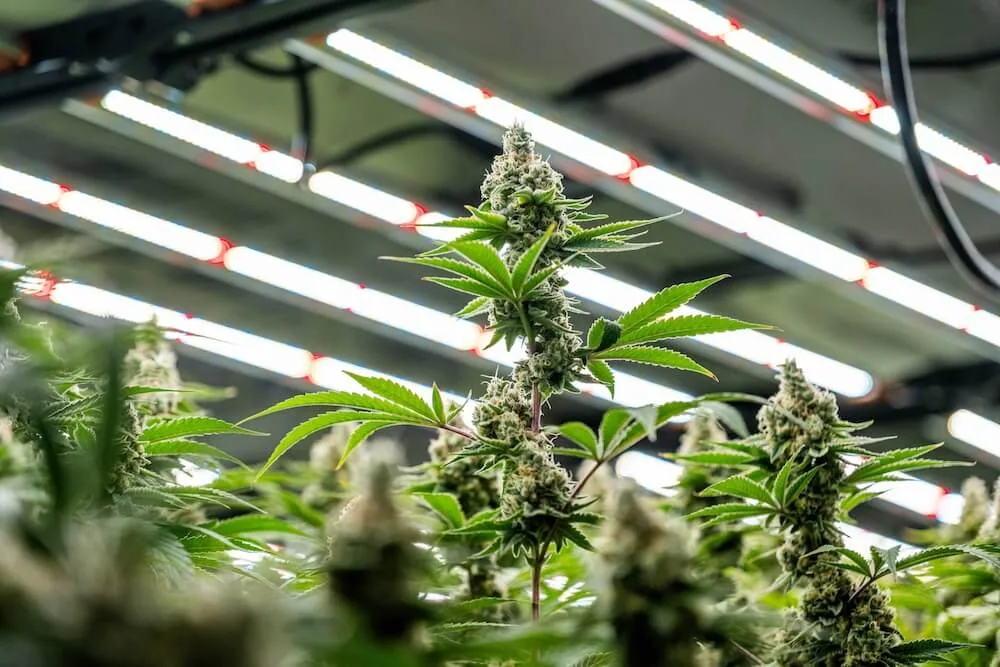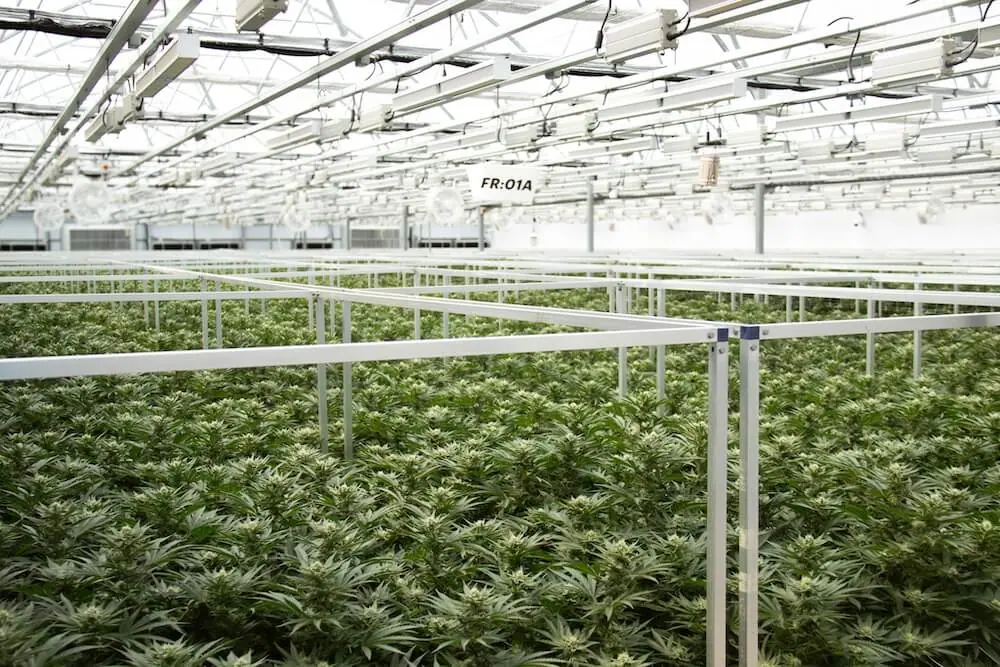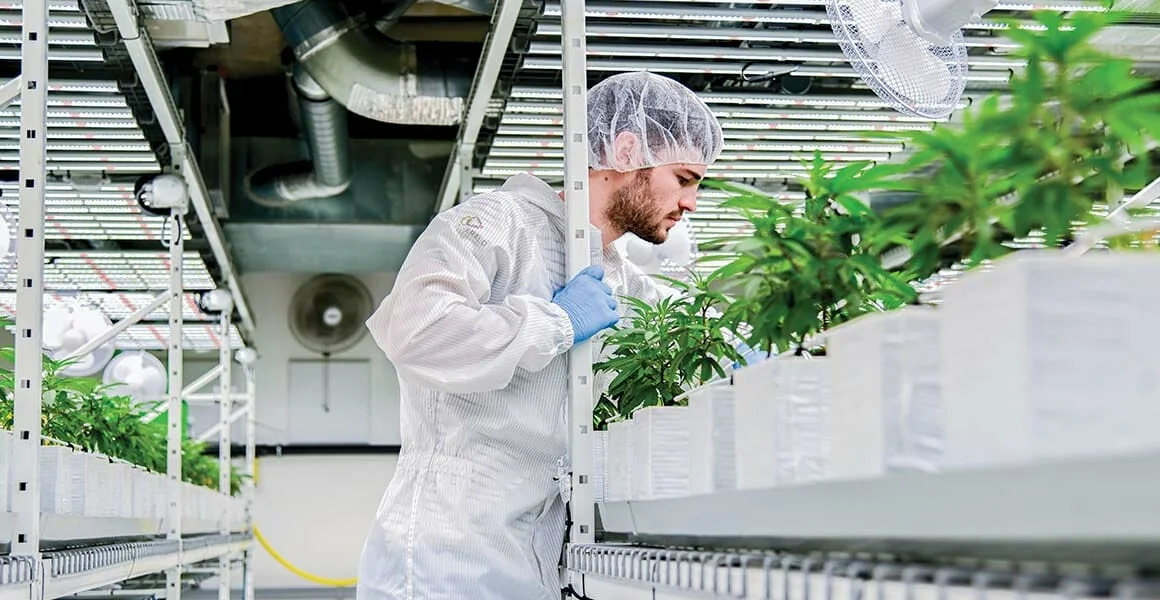
LED retrofit installations have revolutionized indoor, vertical cannabis farming for a variety of reasons, but three primary factors stand out: they produce more light with less heat using the same electrical input.

What is Vertical Farming?
Once upon a time, farming was limited to outdoor growing spaces with fertile soil. Nowadays, as arable land becomes limited and expensive around large population centers, the promises of vertical farming are becoming a reality. Vertical farming is an indoor agricultural process where plants are grown on top of each other, instead of in traditional, horizontal rows. Growing vertically allows for space conservation, resulting in a higher crop yield per square foot of land used.
Indoor agriculture depends entirely on artificial lighting to replace natural sunlight. While HPS (High Pressure Sodium) lighting has made vertical indoor farming possible for two decades, its high amount of thermal radiation creates a multitude of problems for cannabis growers, including varying microclimates, overheating and crop death, dehumidification and temperature fluctuations. The costs of repairing and replacing HPS lights also cut into profits, not to mention suboptimal PPFD levels and an inability to control an HPS bulb’s intensity. That’s why retrofit LED lights are the optimal solution for upgrading your indoor cannabis farming.
Why Vertical Farming is the Future of Growing
There are many benefits to vertical farming, including space conservation and increased crop production, but most importantly, vertical growing will reduce the stress that our current agricultural and cannabis industry puts on the environment. However, there are some critical components to consider when setting up an indoor vertical farm, including:
- Air circulation – Packed-in plants require air movement that cannot be achieved with circulating fans alone. For vertical facilities, inner-rack delivery airflow systems are critical for preventing stagnation and moving air around benching and lights. The supply of air from the HVAC, which is colder and drier than the room’s setpoints, should be mixed with the ambient air to achieve a homogeneous temperature before delivering it into the canopy.
- Spacing and workflow – Added plumbing and air ducts further reduce overhead space in a vertical farm, which require careful planning to ensure workability.
- Light distribution – Fixtures such as the Fluence SPYDR can provide corner-to-corner light distribution with minimal spillover. Hanging height and racking height are also crucial for consistent PPFD levels across the canopies.
- Irrigation and wastewater – Plumbing for irrigation lines and wastewater management require careful planning. Pumps will need to perform more work to lift hydroponic solution to each rack, and a drainage system will be needed to collect spill off.
While vertical cannabis farming presents new challenges for modern growers, it also promises to lead and feed the future. Fluence LED retrofit solutions have alleviated the struggles of vertical cannabis farming and have resulted in significant cost reductions and energy savings. Fierce competition and rising real estate costs are forcing growers everywhere to level up both their facilities and lighting systems to meet demand.


How Retrofit LEDs can Benefit Indoor Cannabis Farming
LED retrofitting is just a conversion of an existing HPS fixture to a LED light fixture. There are many benefits to retrofitting your LEDs, but most importantly making the switch can save you energy, reduce costs, maximize revenue and further environmental control.

Energy Savings
Regarding energy efficiency, commercial LED fixtures achieve 2.6 micromoles of photosynthetic photon flux (PPF) per joule of electricity over their service life–compared to HPS fixtures that average 1.9 micromoles per joule.

Reduced Costs
LEDs cut out most of the maintenance and replacement costs that legacy systems incur. These immediate and valuable cost savings began the upward trend of LED installation and use.

Increased Revenue
According to studies, a 1% increase in photosynthetically active radiation (PAR) corresponds to a 1% increase in harvestable product up to light levels of 1,500+ µmol/m2/s. In simplest terms, increasing PAR with LEDs by 15% generally results in a 15% increase in crop weight. The additional revenue gained by improving production and crop quality can outweigh the savings achieved by upgrading to LEDs–a fact that has become clear to commercial growers world-wide.

Environmental control
Beyond savings and earnings, retrofit LEDs present the greatest opportunities to exert environmental control indoors. LEDs produce more light and less heat with the same electrical input, which allows for thermal stability. By converting more electrical energy into light, LEDs reduce the total heat delivered into the growing space. So, as LED lights turn on and off, the room does not experience as much variability in thermal input, temperature, or relative humidity (RH).


In Conclusion
Retrofit LEDs are the best solution for indoor vertical cannabis growers looking to save energy, while increasing productivity. When one considers savings, earnings, and added control, it becomes easy to see why so many growers are retrofitting their LEDs.
If you are interested in retrofitting your facilities with LEDs, or a multi-tier system, or if you simply want to know more about indoor growing and vertical farming, contact Fluence experts today or read our comprehensive Indoor Retrofit Guide.