How to Identify Performance Loss, Missed Yield, and Incentive Opportunities
How to Use This Guide
This guide is designed for growers operating aging LED lighting systems. Its purpose is to help identify when an existing lighting system may no longer align with current production goals, energy efficiency targets, or available incentive opportunities. Not every facility needs an upgrade, but every facility benefits from an objective evaluation.
Why Older LED Systems Deserve a Second Look
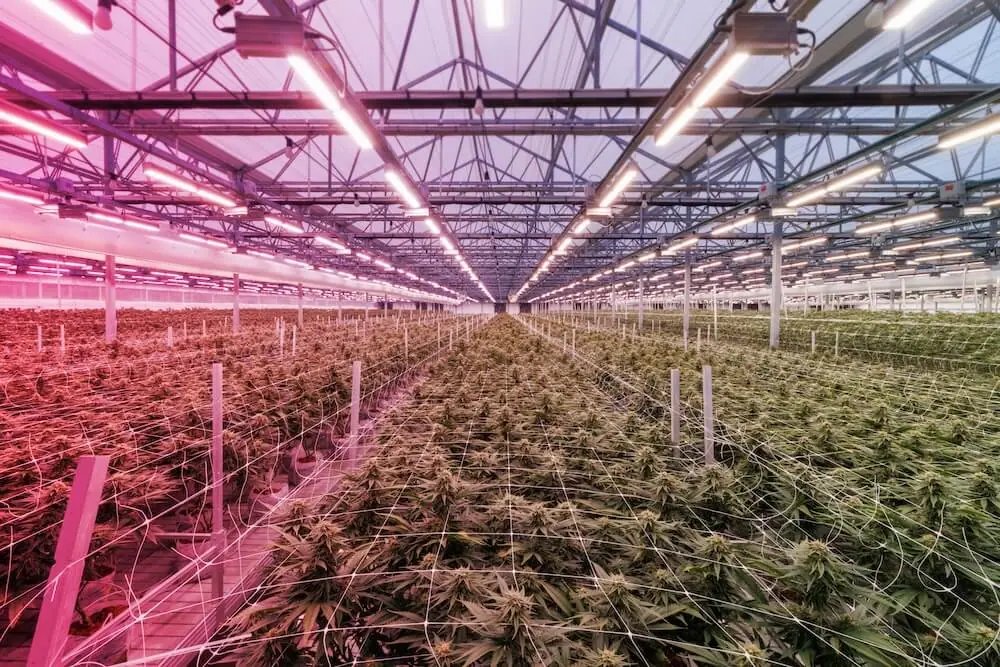
Many cannabis facilities installed LED lighting five or more years ago, at a time when cultivation targets, energy economics, and lighting technology looked very different than they do today. Those systems may still be operating, but that does not mean they are still performing at the level that modern cultivation demands. In today’s competitive landscape, it’s more crucial than ever to be able to maximize yields, create quality differentiation with consistency, and simultaneously create and maintain operational efficiencies. And while that sounds like a tall order, the ability to do so is often the difference between success and failure.
Early-generation LED systems were typically designed around lower target PPFD, less dense canopies, and fewer available lighting strategies. Since then, growers have pushed for higher productivity, tighter quality standards, and improved energy efficiency. As these goals have evolved, the gap between what older LED systems were designed to deliver and what current operations require has widened.
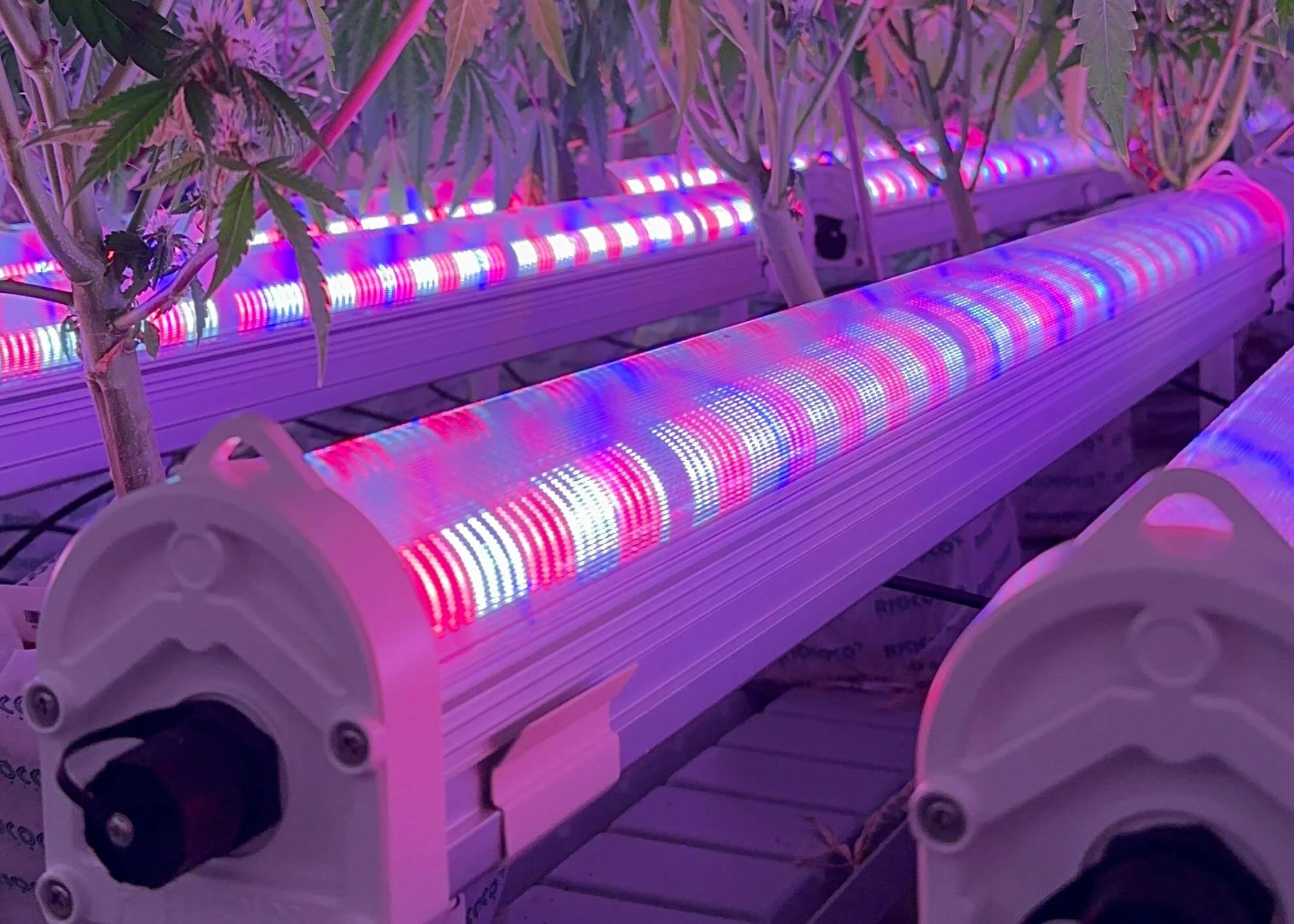
LEDs are often viewed as long-term, maintenance-free assets. While they are durable, they are not immune to aging. Over time, output can decline, uniformity can suffer, and efficiency can erode—often without obvious visual cues. This guide is intended to help growers objectively evaluate whether an older LED system is still aligned with today’s operational realities.
What Typically Triggers an LED Re-Evaluation
Most LED-to-LED replacements do not begin with rebates or excess capital. They begin when growers notice signals that their lighting system may no longer be keeping pace with the operation.
Common triggers include increasing fixture failures or maintenance issues, declining or inconsistent yields that cannot be explained by genetics or environment alone, uneven canopy development, facility upgrades or room redesigns that push lighting beyond its original design intent, and the desire to operate at higher PPFD or improve crop quality without proportionally increasing energy costs.
While rebate and incentive programs can play an important role in improving project economics, they are typically evaluated after a technical or operational need is identified. The strongest LED-to-LED projects start with performance questions, not financial assumptions.
Five Signs Your Current LEDs May Be Limiting Performance
1. Energy costs are rising without yield improvement
If electrical consumption remains steady or increases while yields plateau, usable light output may no longer match energy input. Aging fixtures can quietly reduce return on energy spend even when power draw appears unchanged.
2. You cannot efficiently reach today’s target PPFD
Modern cultivation frequently targets higher PPFD than older LED systems were designed to deliver. Pushing legacy fixtures harder can increase heat, stress components, and accelerate degradation, making higher light levels inefficient or unsustainable.
3. Light distribution is uneven across the canopy
Uniformity losses are common in aging systems and difficult to detect visually. Poor distribution can limit mid- and lower-canopy development, reducing total yield even when average PPFD appears acceptable.
4. Crop quality has plateaued or become inconsistent
As markets mature, consistency in flower structure, cannabinoid expression, and terpene profiles becomes increasingly important. Older spectral designs may not support today’s quality expectations as effectively as newer platforms.
5. Your lighting system limits new growing strategies
Many advanced cultivation approaches—such as under-canopy or inter-canopy lighting, higher-intensity top lighting, or advanced spectral strategies—were not feasible when earlier LED systems were installed. In some cases, fixture design limits what strategies can be deployed.
Why “The Lights Still Work” Isn’t a Performance Metric
A common assumption with LED systems is that if fixtures are turning on and plants look healthy, lighting performance must still be acceptable. In reality, functional lighting and effective lighting are not the same.
Visual inspection provides very little insight into how much usable light is reaching the canopy. Brightness, color, and apparent plant vigor can mask meaningful losses in PPFD and uniformity. In many cases, the first noticeable symptom of declining lighting performance is reduced yield rather than visible fixture failure.
Older LED systems can continue operating while delivering lower average PPFD than originally designed, reduced uniformity across the canopy, and inconsistent fixture-to-fixture output. Because these changes occur gradually, they often go unnoticed until production metrics begin to slip.
Objective measurement—such as canopy-level PPFD mapping and uniformity analysis—is a critical step in evaluating whether an existing LED system is still meeting operational goals.
Understanding LED Degradation and Why It Matters
All LED systems experience degradation over time. Unlike HPS lighting, where degradation is expected and widely understood, LED degradation is often misunderstood or overlooked.
LED output loss is influenced by diode quality and quantity, driver design and operating current, thermal management, and operating environment. Fixtures that rely on fewer diodes driven at higher currents tend to experience faster degradation and higher long-term risk. Systems pushed beyond their original design parameters may also see accelerated performance loss.
Degradation rarely presents as sudden failure. Instead, it appears as gradual reductions in delivered PPFD, increasing variability between fixtures, and declining efficiency at the canopy. From an operational standpoint, degradation directly affects yield potential and cost per gram.
From an incentive standpoint, degradation matters because most rebate and incentive programs focus on documented performance improvement rather than fixture age. Establishing a measured baseline helps clarify both performance gaps and potential eligibility.
Why Like-for-Like LED Swaps Often Fall Short
When replacing aging LED fixtures, it can be tempting to pursue a one-for-one swap. While this may address reliability issues, it often misses the broader opportunity and, in some cases, creates new challenges.
Lighting changes influence transpiration, heat load, irrigation demand, and canopy management. Even LED-to-LED upgrades can alter plant response if light levels increase, uniformity improves, or spectra change. Without accounting for these factors, growers may fail to realize the full benefit of newer technology.
From an incentive perspective, like-for-like replacements are often less compelling. Most rebate programs are designed to reward measurable improvement rather than simple replacement. Successful upgrades treat lighting as part of a system rather than an isolated component.
Where LED-to-LED Rebate Opportunities Typically Exist
While LED-to-LED incentives are generally smaller than HPS-to-LED programs, meaningful opportunities still exist. Utilities typically evaluate eligibility based on measurable change.
Projects are most likely to qualify when they demonstrate increased delivered PPFD at equal or lower energy use, improved fixture efficacy, enhanced control capabilities such as dimming or advanced scheduling, adoption of new lighting strategies, or documented performance improvements that support custom incentive applications.
Incentive values vary widely by region and utility. Pre-approval, documentation, and performance measurement are often required. When evaluated early and aligned with project goals, incentives can improve payback timelines without driving poor design decisions.
The Economics That Matter Most
When evaluating an LED-to-LED upgrade, fixture cost alone rarely reflects the true impact. A more complete economic assessment considers cost per gram, yield per square foot, energy efficiency at operating PPFD, maintenance and downtime risk, and the opportunity cost of operating under degraded light.
Rebates and incentives should support a sound technical decision rather than justify a poor one. When aligned with performance improvements, they can meaningfully enhance return on investment.
A Simple Framework to Evaluate Your Current Lighting System
Begin by measuring current PPFD and uniformity at the canopy. Identify degradation, distribution issues, or failure trends. Define clear production goals, including yield, quality, and efficiency targets. Assess environmental readiness, including HVAC, irrigation, and canopy management. Evaluate lighting design options alongside potential incentive pathways.
This structured approach ensures decisions are grounded in data rather than assumptions.
Final Takeaway
Modern cannabis cultivation demands adaptability. Older LED systems may still function, but they may no longer support current performance expectations or strategic goals. LED-to-LED upgrades are not about replacing working equipment; they are about ensuring lighting continues to serve the operation as it evolves.
A measured, performance-first evaluation provides the clearest path forward.