Cannabis growers are not only trying to produce more flower. They are trying to produce flower that meets a consistent quality standard across rooms, crop cycles, seasons, and cultivars. Yield still matters, but in a competitive market, quality is often what determines whether a product earns repeat purchases, holds its value, and strengthens a brand.
Lighting plays a major role in that equation. For years, growers evaluated lighting largely by fixture output, efficiency, and spectrum. Those factors still matter, but as cultivation programs become more sophisticated, more growers are asking a different question: how should light be managed throughout the crop cycle to support better crop quality?
That is where dimmable lighting systems become important. Dimmable lights give growers a practical way to adjust light intensity over time, making lighting less of a fixed input and more of a controllable part of the cultivation strategy. Used properly, that control can help growers better align light output with crop stage, environmental conditions, daily light targets, cultivar response, and quality goals.
Crop Quality Starts with Control
In a successful cultivation facility, quality is a business priority. Growers need crops to develop predictably from one cycle to the next, with consistent flower structure, canopy development, harvest timing, and product quality. When those outcomes vary, the impact extends beyond the grow room into labor planning, post-harvest workflows, sales forecasting, brand reputation, and customer expectations.
Many factors influence crop quality, including genetics, irrigation, nutrition, airflow, temperature, humidity, CO₂, and labor practices. But light remains one of the most important variables growers can manage. A static lighting approach applies the same intensity regardless of crop stage, crop response, or changing room conditions.
That is where dimmable lighting becomes valuable. Young plants do not need the same intensity as a mature flowering canopy. A crop recovering from transplant may benefit from a more gradual ramp. A greenhouse may need supplemental light adjusted as sunlight changes. An indoor room may need intensity adjusted based on HVAC capacity, irrigation strategy, or plant response.
For quality-focused growers, the goal is not maximum output at all times. The goal is to deliver the right amount of usable light at the right time; in a way the crop and environment can support.
Dimming as a Practical Form of Dynamic Lighting
Dynamic lighting broadly refers to the intentional adjustment of light over time. In cannabis cultivation, that can include adjusting light intensity, spectral content, or both, depending on the lighting system and cultivation strategy.
Some advanced systems allow growers to adjust the content of the light itself, such as dialing up more red light or changing other channels based on the desired plant response. That is one form of dynamic lighting and can play an important role in more advanced quality strategies, especially when growers are developing cultivar-specific approaches or exploring how spectrum influences plant development.
For many commercial growers, the most practical form of dynamic lighting starts with dimming, meaning the ability to raise or lower light output throughout the crop cycle. Intensity control connects directly to PPFD, daily light integral, crop-stage management, environmental response, and quality consistency. It is also often more accessible for facilities that want to make lighting more responsive without immediately building a complex spectral strategy.
Dimming is not the same as spectrum control, but the two ideas are related. Dimming gives growers control over how much light is delivered. Spectral control gives growers control over the composition of that light. When a system allows both, dimming can become part of a broader quality strategy that considers not only intensity, but also how specific light channels may support crop goals at different stages.
In either case, the goal is not to change light settings simply because the technology allows it. The goal is to use controllable light to achieve cultivation objectives, such as managing crop transitions, reducing unnecessary stress, responding to greenhouse sunlight, supporting flower development, and creating more repeatable quality strategies across rooms and production cycles.
Why Dimming Matters for Quality
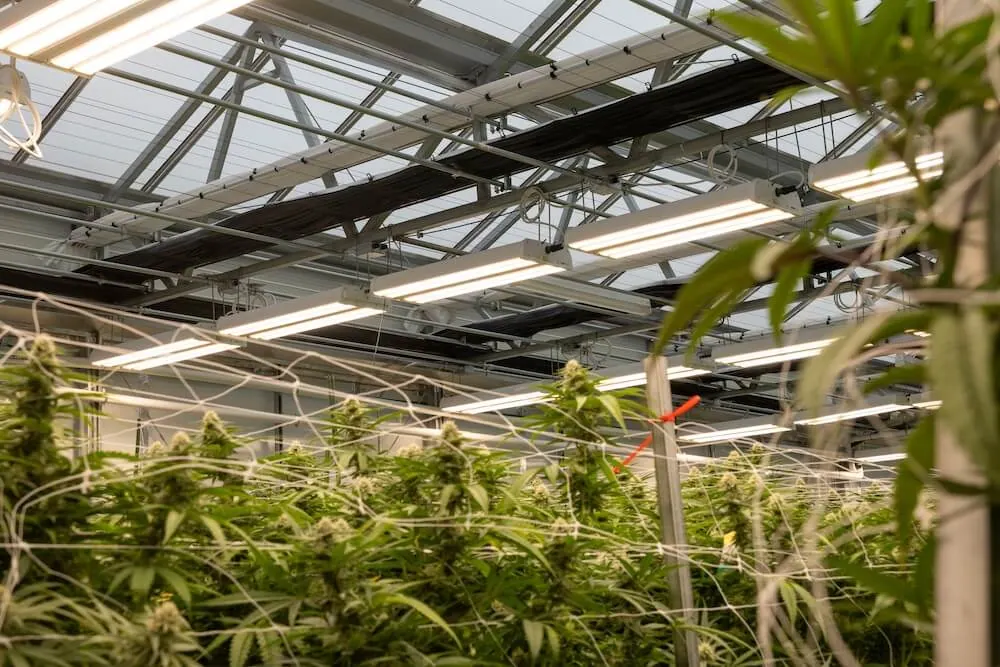
Dimming matters because the needs of the crop change over time. A plant early in development does not always require the same intensity as a plant later in flower. A crop that has just been transplanted will benefit from a more gradual lighting ramp, while a mature canopy is able to use high light intensity when the rest of the environment can support it. In greenhouse production, supplemental light should be adjusted based on the amount of natural sunlight available.
Without dimming, growers have fewer options. They can turn fixtures on or off, but they cannot precisely manage how much light is delivered during different parts of the crop cycle. Dimmable systems allow growers to manage light intensity with more precision, which supports better control of PPFD and daily light integral, two important considerations in crop quality control.
PPFD describes the amount of photosynthetically active light reaching the canopy at a given moment. Daily light integral, or DLI, describes the total amount of photosynthetically active light delivered over a day. Dimmable lighting systems give growers more flexibility to manage both.
Dimming can also help growers manage the relationship between lighting and the broader room environment. Higher light levels can influence temperature, transpiration, irrigation demand, humidity, and HVAC load. If the environment cannot support a higher intensity strategy, the crop may not respond as intended. In many cases, pushing intensity too aggressively will create stress, uneven development, photobleaching, or added environmental instability.
This is one of the most practical benefits of dimmable lighting systems. They allow growers to make lighting decisions in context. The question is not simply how much light the fixture can produce. The better question is how much light the crop and environment can use effectively at a given point in the crop cycle.
For quality-focused growers, that is the key shift. Dimming supports a more intentional approach to light management, where intensity is adjusted to support crop health, flower development, environmental stability, and consistency through harvest.
How Dimmable Lighting Supports Crop Quality
Dimmable lighting does not automatically improve crop quality. It does give a grower a tool to better manage the conditions that influence quality. That distinction matters because a dimmable fixture alone does not create better flower. The value comes from how growers use that control across the crop cycle.
In commercial cannabis production, quality is shaped by many connected variables: genetics, environment, irrigation, nutrition, airflow, crop timing, and light. Dimming gives growers a way to manage light intensity with more precision so they can better match output to crop stage, plant response, and room conditions. Instead of treating maximum output as the goal, growers can use dimming to deliver the right amount of usable light at the right time.
This is especially important because more light is not always better if the rest of the environment cannot support it. Higher intensity can influence transpiration, irrigation demand, temperature, humidity, and HVAC load. If those systems are not aligned, added intensity may create stress or inconsistency rather than better results. Dimmable lighting gives growers another lever to help balance light delivery with the crop’s actual needs and the room’s ability to maintain stable conditions.
A dimming strategy does not need to be complicated to support quality. It simply needs to match light intensity to crop stage, plant response, and the environment’s ability to keep conditions stable.
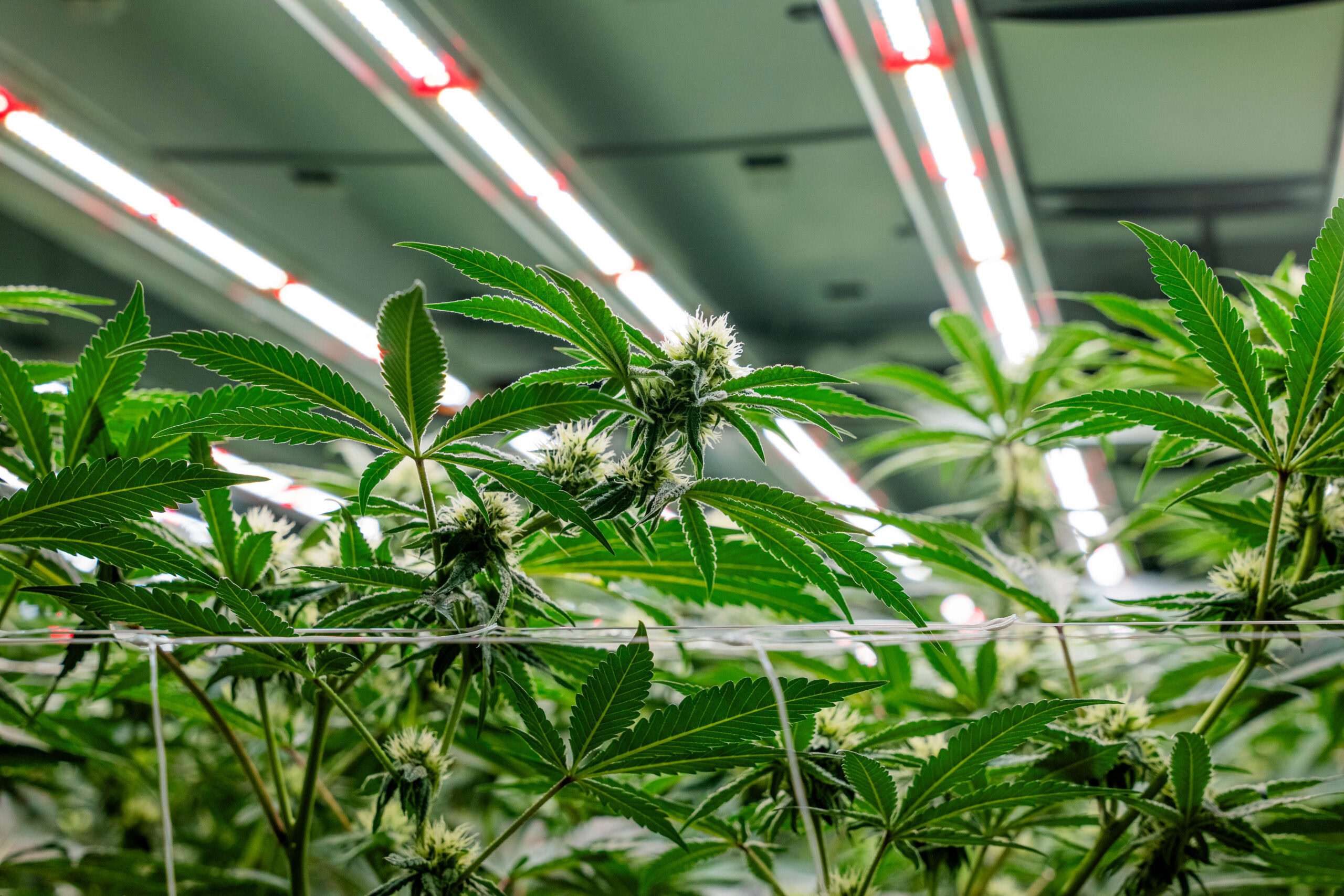
For example, an indoor cultivator using a Fluence lighting system with VYPR 4i BW4 800w top lights (TL) and PYTHN R6 120w under canopy lights (UCL) could implement a specific 60-day flower dimming strategy designed to support quality as the crop develops. The room may begin flower at approximately 60% (600 PPFD) output from the VYPR TL and 25% (100 PPFD) output from the PYTHN UCL. During weeks 1–2 as plants transition into the flowering phase both lights will be strategically increased to 90% (900 PPFD) TL and 50% (200 PPFD) UCL without adding unnecessary environmental pressure. As the canopy develops, intensity increases to 100% for both lights, (1000 PPFD) TL and (400 PPFD) UCL during weeks 3–4, giving the crop the maximum deployed light intensity. At full intensity, the grower monitors plant response, transpiration, irrigation demand, and room conditions and can use dimming to react to unfavorable environmental changes. The goal is not simply to push as much light as possible, but to deliver usable light in a way that supports plant health, strong flower development, canopy uniformity, and cultivar expression. In late flower, intensity may be reduced to help balance environmental control, crop quality and energy use through harvest. During weeks 7-8 a grower may choose to reduce light output to 75% TL (750 PPFD) and 50% (200 PPFD) UCL to support the HVACD system as the grower manages environmental parameters for ripening and finished crop quality.
These percentages are simply an example and not universal. Every facility, cultivar, and production strategy is different. The point is not that every grower should follow the same dimming schedule. The point is that dimmable lighting allows growers to build a more intentional light strategy around crop quality.
Dimmable lighting can also help growers standardize quality strategies across rooms or facilities. For multi-room or multi-site operators, repeatability is often difficult because rooms may have different layouts, environmental behavior, crop timing, or cultivar mixes. Dimmable systems allow teams to adjust lighting programs with more precision while still working from a shared strategy. That does not eliminate every variable, but it can make light management more consistent and measurable.
For growers focused on quality, dimming is valuable because it shifts the lighting conversation from output alone to control. It helps growers manage crop transitions, reduce unnecessary environmental pressure, respond to crop behavior, and build repeatable strategies that support stronger, more consistent flower quality over time.
Putting Dimming Strategies into Practice
Dimming works best when it is connected to a clear cultivation goal. Before adjusting light intensity, growers should understand whether they are trying to support flower development, protect crop quality, manage crop-stage transitions, maintain DLI targets, reduce environmental stress, respond to seasonal sunlight, manage energy use, or support a specific cultivar strategy.
That matters because dimming is not a single recipe. It is a control strategy. Growers should consider whether their environment can support the light levels they want to run. Increasing intensity without accounting for temperature, humidity, CO₂, irrigation, and airflow can create new challenges. Light should be managed as part of the full production environment, not as an isolated input.
Controls also play an important role in making dimming strategies practical. A dimmable fixture gives growers the ability to adjust intensity, but a control platform helps turn those adjustments into a repeatable strategy. With the right controls, growers can create schedules, manage light levels by crop stage, respond to greenhouse conditions, and apply consistent lighting programs across rooms or production areas. That repeatability is what helps controllable lighting move from a manual adjustment to a more reliable cultivation tool.
Measurement is also important. To use dimming effectively, growers need to track crop response over time. That may include canopy development, environmental data, irrigation response, flower development, harvest results, quality observations, and room-to-room consistency. The goal is to learn which lighting strategies produce the most repeatable quality outcomes in that specific facility.
Growers should also keep the strategy practical. Dimming does not require constant changes or unnecessary complexity. In many cases, simple, repeatable adjustments by crop stage or environmental condition may provide the most value. A clear dimming strategy that the team can understand, execute, and evaluate is often more useful than a complicated approach that is difficult to repeat.
From Light Output to Quality Strategy
Dimmable lighting systems should not be viewed as a minor fixture feature. They give growers better control over one of the most important variables in the cultivation environment: light intensity.
Instead of treating light output as fixed, growers can adjust intensity based on crop stage, environmental conditions, greenhouse sunlight, DLI targets, cultivar response, and production goals. Used well, that control helps align lighting with what the crop and facility can actually support.
For quality-focused growers, this is where dimming becomes especially valuable. A more controlled lighting strategy can support flower development, environmental coordination, consistent crop expression, and stronger confidence from cycle to cycle.
FAQs
Is dynamic lighting the same as dimming?
Not exactly. Dynamic lighting can include changes to light intensity, spectral content, or both. Dimming is one practical form of dynamic lighting because it allows growers to adjust light output over time. Some systems may also allow spectral-channel adjustments, which can support more advanced crop strategies.
How can dimmable lighting systems support crop quality?
Dimmable lighting systems help growers better match light output to crop stage, plant response, and environmental conditions. By managing intensity across the crop cycle, growers can support smoother transitions, reduce unnecessary environmental pressure, and build more repeatable lighting strategies tied to quality goals.
Does dimming affect cannabis flower quality?
Dimming does not automatically improve flower quality, but it can help growers manage conditions that influence quality. By adjusting intensity based on crop stage and room conditions, growers can better align light levels with the crop’s ability to use that light effectively.
How does dimming relate to spectrum?
Dimming controls light intensity. Spectrum control adjusts the composition of the light, such as changing the balance of certain channels. Some lighting systems may allow growers to manage both intensity and spectrum. In those cases, dimming can become part of a broader dynamic lighting strategy focused on crop quality, cultivar response, and production goals.
Is dimmable lighting useful for both indoor and greenhouse cannabis production?
Yes. Indoor growers can use dimmable lighting to create more repeatable lighting strategies across rooms and crop stages. Greenhouse growers can use dimmable lighting to respond to changing sunlight, seasonality, and daily light targets.
Does dimmable lighting automatically increase yield?
No. Dimmable lighting does not automatically increase yield. Its value comes from giving growers more control over light intensity. That control can help manage the conditions that influence crop performance, quality, and consistency.